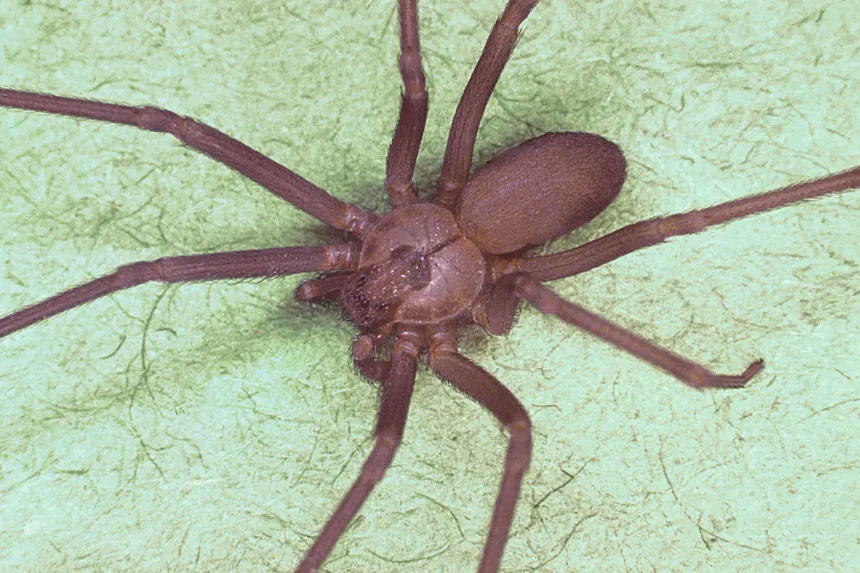
- Scientific name
- Loxosceles reclusa
- Also called
- brown recluse, violin spider, fiddleback spider
- Size
- Body about 3/8 in; with legs about the size of a quarter
- Color
- Uniform tan to brown, darker violin shape behind the eyes
- Found in
- Closets, boxes, attics, basements; south-central and midwestern US
- Harmful?
- Bites are rare but can cause a slow-healing wound
- Active
- Year-round indoors; hunts at night
The brown recluse is a shy, plain-brown spider with six eyes that hides in closets, boxes and clothes left on the floor. Bites are rare and most heal on their own, but some become a slow-healing sore. The one thing to do: check a trapped spider for all four marks below before you assume it’s a recluse.
This page covers how to identify one, where it lives, what a bite looks like and what to do. Identification here rests on University of Kentucky and UC IPM guidance; only a doctor can say whether a wound is a recluse bite.
Where Brown Recluses Live: South-Central and Midwestern US
The brown recluse is common from Kansas, Oklahoma and Texas east to Kentucky, Tennessee and Georgia. Outside that range, including California and the Pacific Northwest, it is not established, and most “recluse bites” reported there turn out to be something else.
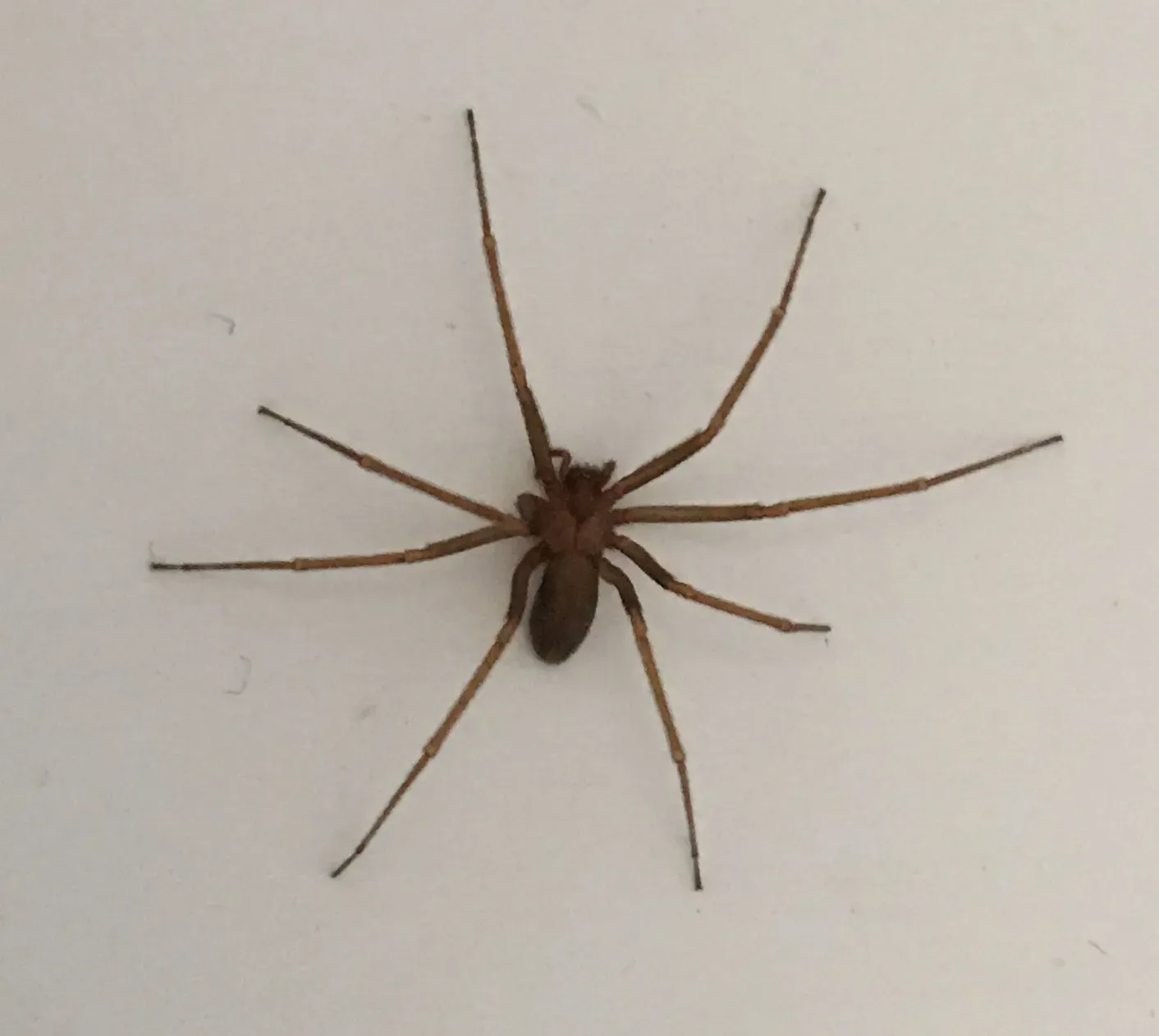
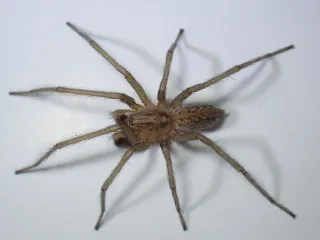
A brown recluse on an indoor wall: plain brown, long-legged, no stripes or bands on the legs. Photo: Sterling Herron (CC0), via Wikimedia Commons.
How to Identify a Brown Recluse: Check All Four Marks
Many brown spiders share one or two of these marks; a recluse has all four, not just the violin.
- Six eyes in three pairs, arranged in a curve. Most spiders have eight.
- A dark violin shape on the front body, with the neck of the violin pointing back toward the abdomen.
- Plain, uniformly colored legs with no bands, stripes or obvious spines.
- Plain abdomen with no stripes, spots or chevrons, covered in fine short hair.
Size: the body is about 3/8 inch, and with legs it’s roughly the size of a US quarter.
Brown Recluse vs. Look-Alikes: Count the Eyes
| Spider | How it differs | How to tell |
|---|---|---|
| Brown recluse | Plain tan, violin mark, plain legs and abdomen | Six eyes in pairs |
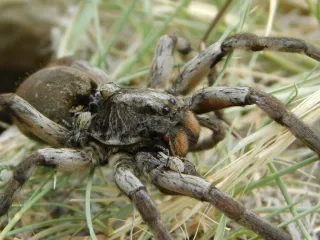
| Wolf spider | Hairy, striped or patterned, bigger | Eight eyes, two very large; runs on the floor |
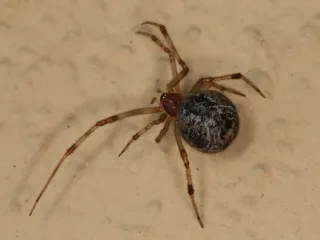
| Funnel-web and house spiders | Chevrons or mottling on the abdomen; banded legs | Builds webs; eight eyes |
| Southern house spider (male) | Long legs and a violin-like shape | Eight eyes clustered together |
Where You’ll Find Them Indoors: Undisturbed Spots
Recluses hide by day where people rarely reach, not out in the open:
- Closets, storage boxes and clothes left on the floor
- Attics, basements, crawl spaces and garages
- Behind furniture and pictures, in shoes and gloves
- Sticky traps along walls in infested homes
Are Brown Recluse Spiders Harmful? Rarely, but Some Bites Scar
They’re not aggressive and bite mainly when pressed against skin. Bites usually happen when someone puts on clothes or shoes left on the floor, reaches into a storage box, or rolls over onto a spider in bed. They don’t chase people or jump.
What a Brown Recluse Bite Looks Like: Painless First, Sore Later
A bite is often painless at first. Over the next few hours the spot can turn red and sore, and some bites form a blister. In a minority of cases the center darkens and sinks over several days as the skin dies, leaving a slow-healing sore that can take weeks to close.
Serious whole-body reactions are rare. The University of Kentucky notes that many wounds blamed on recluses are really other conditions, especially skin infections. See a doctor for any bite that worsens, and bring the spider if you can; bug bite pictures compare the common culprits.
How Big Infestations Get: Dozens, Not One
Where recluses are established, one home can hold dozens or even hundreds, because they hide well and can survive months without food or water. One spider in a region where they’re common is worth a closer look; several over a few weeks suggests an established population.
How to Confirm You Have Brown Recluses
- Set sticky traps flat along baseboards, behind furniture and in closets, and check them weekly.
- Check a trapped spider for six eyes in pairs, plain legs and a plain abdomen, not just the violin.
- Ask your county extension office to identify a specimen if you’re not sure.
What to Do: Clear Clutter, Trap, and Seal Boxes
Store items in sealed plastic bins, not open cardboard boxes, and reduce clutter. Shake out clothes and shoes in infested homes, move beds away from walls and keep bedding off the floor. Sticky traps along baseboards both catch spiders and show where they’re active. Heavy infestations call for a professional.
Often confused with
Sources
Last reviewed Oct 4, 2026.