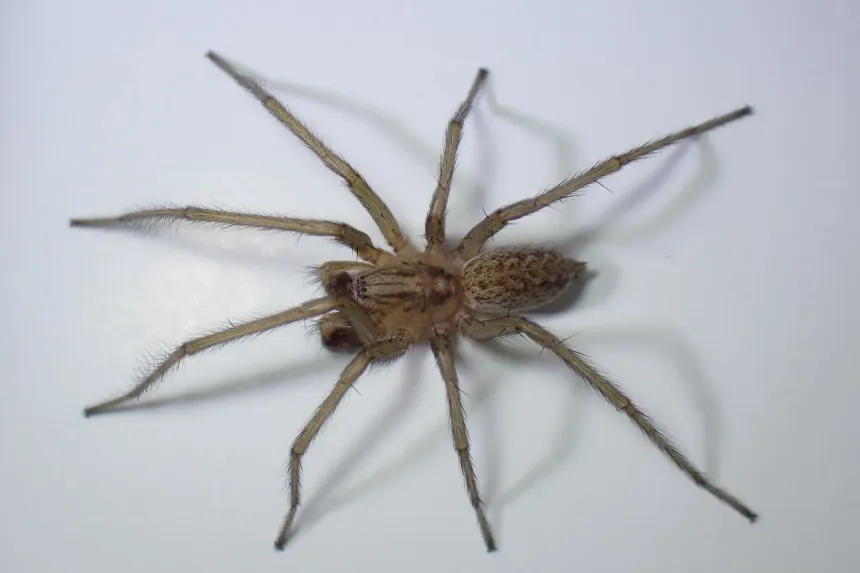
- Scientific name
- Eratigena agrestis
- Also called
- aggressive house spider
- Size
- 1–1 3/4 in including legs
- Color
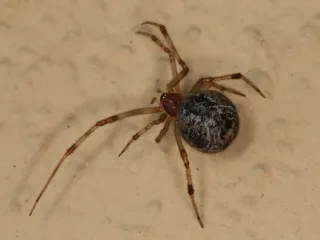
- Brown with a chevron pattern on the abdomen; plain legs
- Found in
- Basements, window wells, woodpiles; Pacific Northwest and inland West
- Harmful?
- Not shown to be harmful in recent research
- Active
- Late summer and fall, when males wander indoors
The hobo spider is a fast, brown funnel-web spider of the Pacific Northwest and parts of the inland West. For years it was blamed for serious skin wounds, but Washington State University says recent research has not shown it to be harmful to people. The one thing to do: don’t panic over a brown funnel-web spider; seal door gaps and use sticky traps where wandering males get in.
This page covers how to identify a hobo spider, why it’s so often misidentified, and how to keep it out. It rests on Washington State University, Burke Museum and UC IPM guidance.
How to Identify a Hobo Spider: Brown, Fast, Funnel Web
- Brown and fast, about 1 to 1 3/4 inches including legs.
- Chevron or herringbone pattern down the top of the abdomen.
- Plain brown legs without dark bands.
- Funnel-shaped web: a flat sheet that narrows into a tube where the spider waits. When prey struggles in the web, it dashes out to bite it (Washington State University).
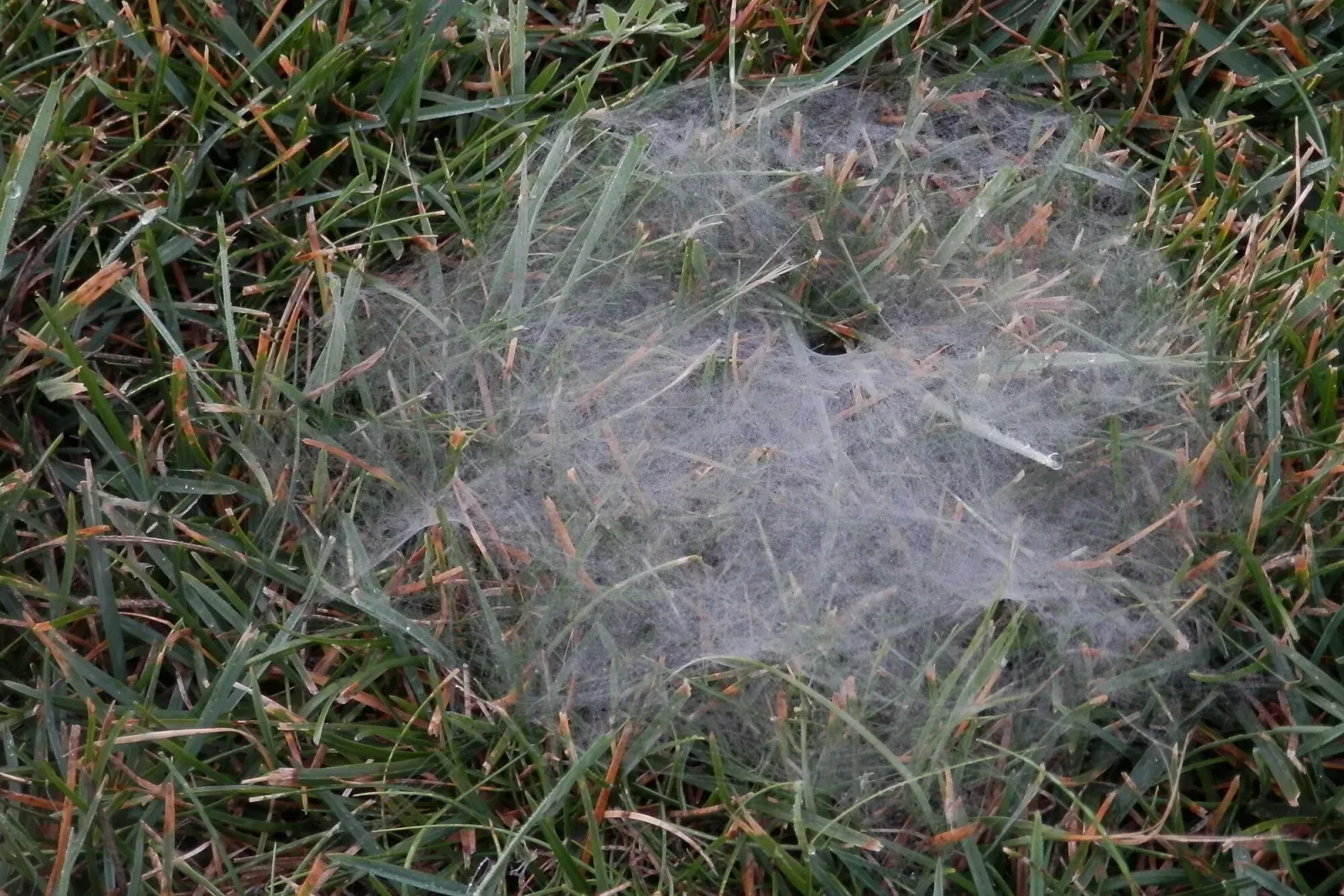
A funnel-weaver web in a lawn, the sheet-and-funnel shape hobo spiders also build. Photo: Ryan Hodnett (CC BY-SA 4.0), via Wikimedia Commons.
Why Hobo Spiders Get Misidentified: You Need a Microscope
The giant house spider looks very similar and is often mistaken for a hobo spider. The Burke Museum says a chevron pattern, “boxing-glove” palps or a funnel web don’t prove it’s a hobo spider; telling them apart takes a microscope. It also says hobo spiders aren’t aggressive, and the old name “aggressive house spider” has been dropped.
| Spider | How it differs | How to tell |
|---|---|---|
| Hobo spider | Brown, chevrons, plain legs; funnel web | Only reliably under a microscope |
| Giant house spider | Looks almost the same | Expert identification |
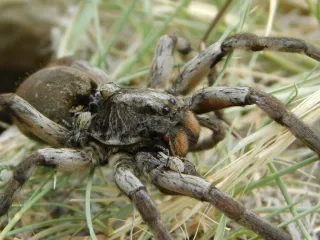
| Wolf spider | Hairy, striped, no web | Two large forward eyes; runs on the floor |
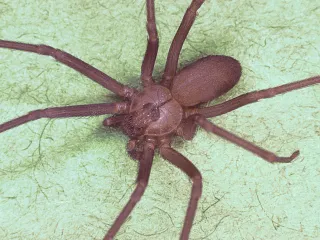
| Brown recluse | Plain tan with a violin mark | Six eyes; not found in the Northwest |
| Common house spider | Small, round, mottled | Tangled cobweb in corners |
Where Hobo Spiders Live: Pacific Northwest and Inland West
The hobo spider is common in the northwestern US and British Columbia and has spread to northern Utah, Wyoming and Colorado. UC IPM says it has not been documented in California, and the brown recluse doesn’t live there either. Indoors and around the house you’ll find it in:
- Basements and ground floors
- Window wells, foundation cracks and woodpiles
- Along baseboards in late summer and fall, when males wander looking for mates
It builds its web in dark, moist spots, often in basements (Washington State University).
Funnel Webs in the Lawn: Usually Other Funnel Weavers
Funnel-web spiders are a big family: UC IPM counts about 300 species in North America. Their sheet-and-tube webs on low plants show up most in morning light, after they collect dew. Each has 6 or 8 eyes of about the same size in two rows and waits in the tube for prey. A funnel web outdoors, especially outside the Northwest, is almost always one of these other species.
Is the Hobo Spider Dangerous? Current Evidence Says No
Spiders are beneficial predators, though often a nuisance indoors. Washington State University says the hobo spider was wrongly labeled dangerous and that recent research hasn’t shown it to harm people. If you’re bitten by any spider, clean the bite, bring the spider to an expert for identification, and see a doctor if it gets worse. Sores blamed on spiders often turn out to be something else; bug bite pictures covers the usual suspects.
How to Confirm a Spider Is a Hobo Spider
- Check your region: the Pacific Northwest or inland West.
- Look for the funnel web in a basement, window well or woodpile.
- Send it for identification: an extension office can tell it from the giant house spider.
- Don’t go by pattern alone: chevrons and a funnel web fit several harmless spiders too.
What to Do: Seal Gaps, Trap Wanderers
Seal gaps under doors and around windows, keep screens in good repair, move woodpiles away from the house, and vacuum webs. Many spiders come in with firewood, so wear gloves and check wood before bringing it in. Commercial sticky traps work well on wandering spiders like hobo spiders. Washington State University says spraying is a temporary fix unless entry points are closed, and outdoor spraying for these spiders isn’t usually advised. For other pests, browse all pest guides.
Often confused with
Sources
Last reviewed Oct 4, 2026.