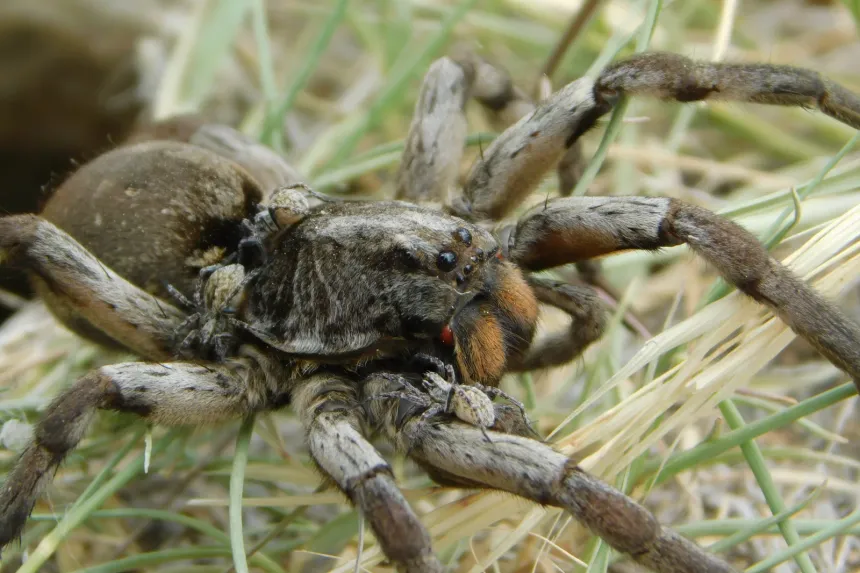
- Scientific name
- Lycosidae (family)
- Size
- Body 1/2 in to over 1 in, depending on species
- Color
- Brown, gray or black with stripes or mottled patterns
- Found in
- Lawns, leaf litter; indoors along floors, basements and garages
- Harmful?
- No. Bite is painful but not dangerous
- Active
- Spring to fall, mostly at night; comes inside in fall
Wolf spiders are big, hairy hunting spiders that chase prey across the ground instead of waiting in a web. They look alarming but aren’t dangerous: a bite hurts like a bee sting and isn’t medically serious. The one thing to do: catch it under a cup and put it outside, then seal the gap under the door.
This page covers how to tell a wolf spider from a brown recluse, how big they get, what a bite looks like and why they come inside. It rests on University of Kentucky and UC IPM guidance.
How to Identify a Wolf Spider: Big Eyes, Stripes, No Web
- Large and hairy, with a body from about 1/2 inch to over an inch.
- Brown, gray or black, usually with stripes on the front body and mottled patterns on the abdomen.
- Eyes: a row of four small eyes, with two large eyes above them facing forward.
- No web. They run fast on the floor.
- Mothers carry their egg sac attached to the tail end, then carry the spiderlings on their back.
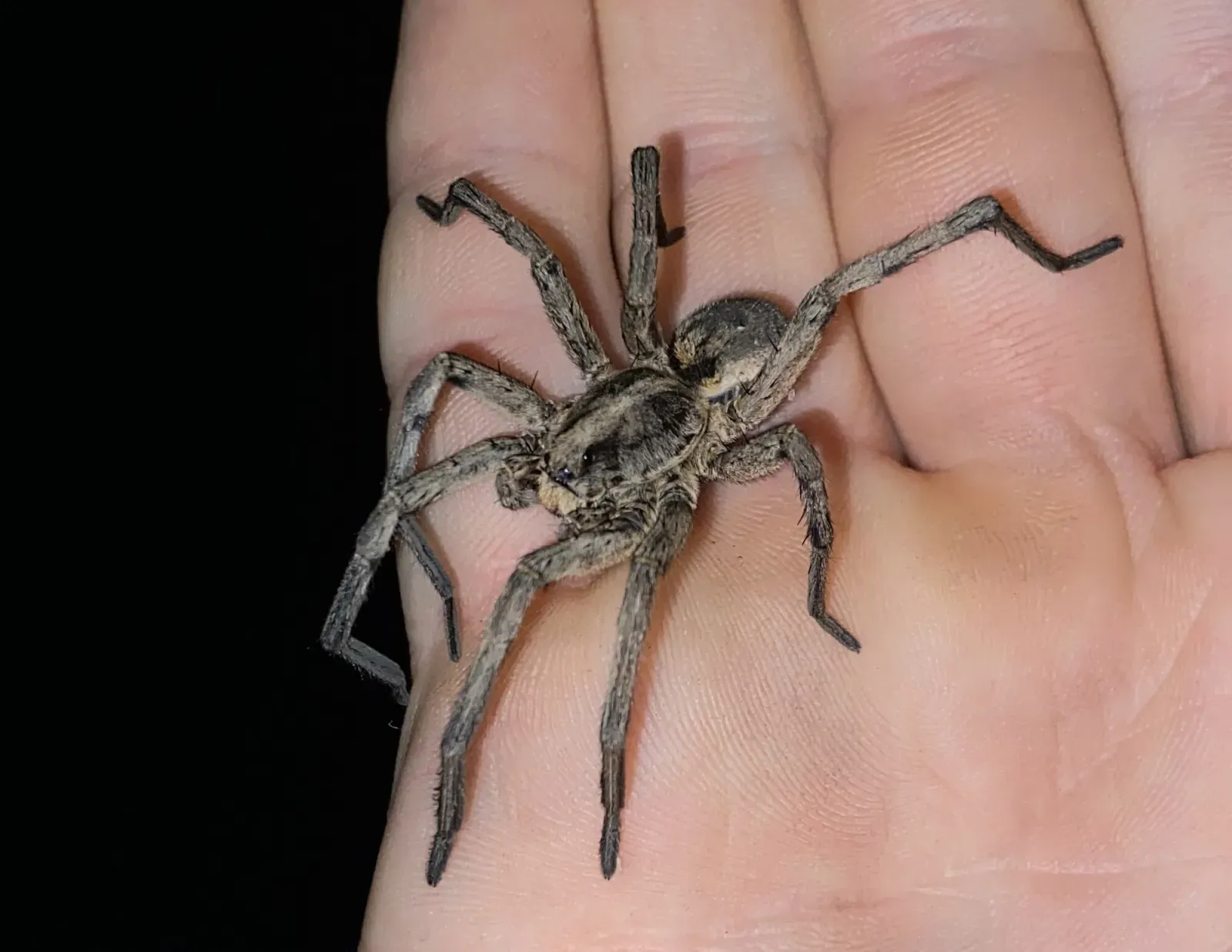
A Carolina wolf spider on a hand, for size: big, hairy and fast. Photo: Cor2ran (CC0), via Wikimedia Commons.
Wolf Spider Eyes: Two Big Ones That Shine at Night
Wolf spiders have eight eyes in three rows: four small eyes along the bottom, two very large eyes in the middle row facing forward, and two medium eyes on top. At night, a flashlight held near your eyes makes their eyes shine back like tiny green or blue sparks, a quick way to spot them in a lawn.
Wolf Spider vs. Look-Alikes: Check the Eyes and the Web
| Spider | How it differs | How to tell |
|---|---|---|
| Wolf spider | Hairy, striped front body, runs on the ground | Two large forward eyes |
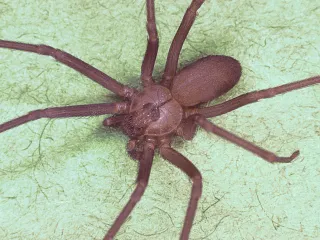
| Brown recluse | Plain tan with a violin mark; hides in closets | Six small eyes in pairs |
| Fishing or nursery web spider | Very long legs, found near water | Carries its egg sac in its jaws, not at the tail |
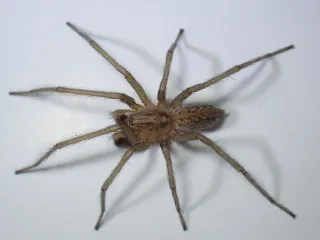
| Grass spider | Lives in lawns and shrubs | Builds a funnel web; wolf spiders build none |
| Hobo spider | Brown with a chevron pattern, plain legs; Pacific Northwest and inland West | Builds a funnel web in basements and window wells |
How Big Wolf Spiders Get: Usually Half an Inch
Most wolf spiders around homes have a body about 1/2 inch long. The largest in the US, the Carolina wolf spider, can have a body about an inch long, with legs spanning several inches. Size alone doesn’t decide anything; they’re harmless at any size.
Are Wolf Spiders Dangerous? No, but the Bite Stings
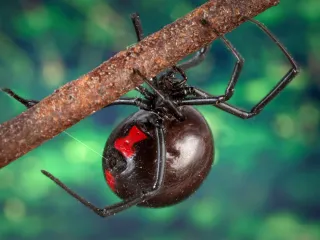
They may bite if handled or trapped against skin, and the bite can hurt like a bee sting, but it isn’t medically serious. A bite may cause brief pain, redness and mild swelling. Wash it with soap and water, and see a doctor if it gets worse, shows signs of infection or causes an allergic reaction. The University of Kentucky does not consider wolf spider bites medically serious. The spiders that matter medically in the US are the brown recluse and the black widow, a shiny black spider that hangs in a messy web; bug bite pictures help you rule out other culprits.
Wolf Spider Babies: A Ride on Mom’s Back, Not an Infestation
Females carry a round, white egg sac attached to the tail end. When the eggs hatch, dozens of spiderlings ride on the mother’s back for a week or more before dispersing. It looks alarming, but it’s one family passing through, not a nest in your house.
Where Wolf Spiders Live: Lawns First, Floors in Fall
Wolf spiders live across the US, in lawns, gardens, fields, woodland edges and leaf litter. Many dig burrows or hide under stones, logs and mulch during the day. Indoors, you’ll meet them:
- Running across floors in basements, garages and ground-floor rooms
- Under doors and along baseboards in fall
Why Wolf Spiders Come Inside: Cold Nights and Insects
They don’t build webs or nest in houses. In fall, cooler weather and the insects gathering near homes draw them toward foundations, and they wander in under doors and through gaps. They’re most visible from late summer into fall, when adults are full-grown and males wander in search of mates.
How to Confirm It’s a Wolf Spider
- Look for the two big forward eyes, not a violin mark.
- Check for a web: a wolf spider has none and runs along the floor.
- Shine a flashlight at night outdoors; their eyes reflect back.
What to Do: Catch, Release, Seal the Door Gap
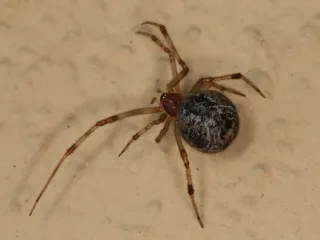
Catch it under a cup and release it outside, rather than squashing it. Seal gaps under doors and around foundations, keep grass and mulch trimmed back from the house, and reduce outdoor lights that attract their prey. They eat insects and are useful outdoors. A small brownish spider in a cobweb in a corner is a different spider, the harmless common house spider. For other pests, browse all pest guides.
Often confused with
Sources
- Common Spiders Found Around Homes and Buildings (University of Kentucky Entomology, EF622)
- Spiders (UC IPM)
Last reviewed Oct 4, 2026.