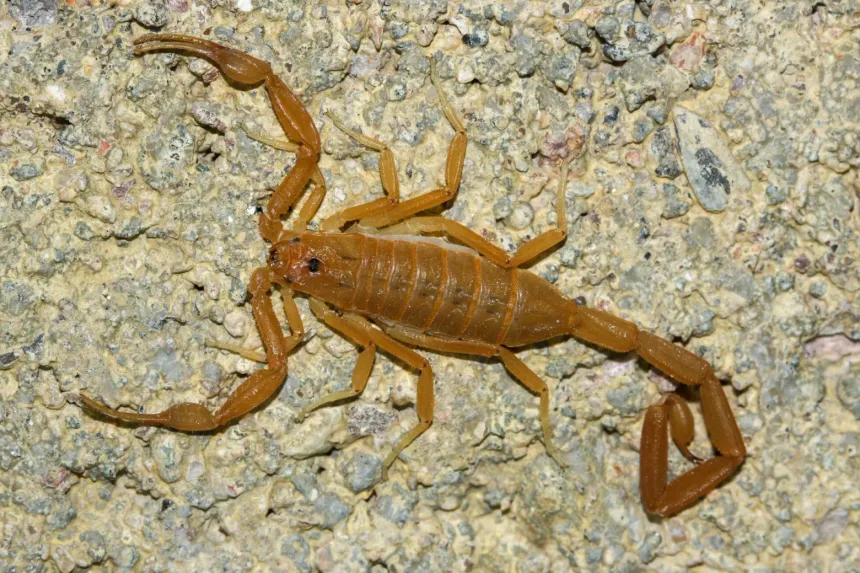
- Scientific name
- Centruroides sculpturatus
- Also called
- bark scorpion, Arizona bark scorpion
- Size
- About 2–3 in
- Color
- Light yellow-tan, slender
- Found in
- Arizona and nearby parts of California and New Mexico
- Harmful?
- Yes. Sting can be serious, especially for young children
- Active
- Warm months, at night
The Arizona bark scorpion is the one North American scorpion whose sting is considered medically serious. It lives in Arizona, the far southeast corner of California and southwestern New Mexico, and unlike most scorpions it climbs walls, ceilings and trees. The one thing to do: shake out shoes, clothing and towels before use, and get medical attention after any bark scorpion sting.
This page covers how to identify a bark scorpion, tell it from other scorpions and keep it out of the house. It rests on UC IPM and University of Kentucky guidance.
How to Identify a Bark Scorpion: Slender, Yellow, Climbing
- Up to about 3 inches long, slender, with long, thin pincers and a very thin tail, only about 1/16 inch wide.
- Yellow body without stripes or patterns (UC IPM).
- Climbs: the only common climbing scorpion; often found upside down on ceilings or high on walls.
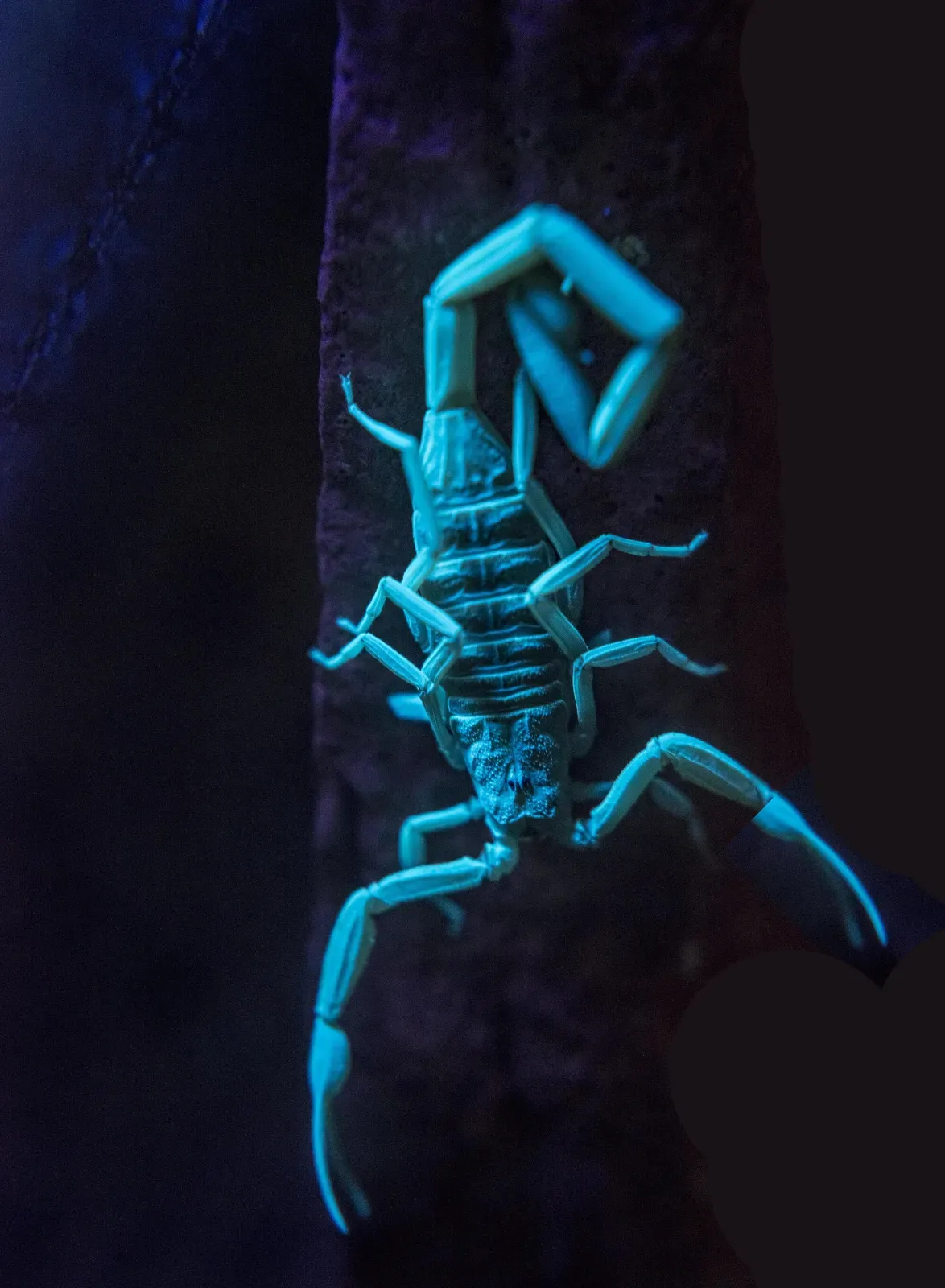
A bark scorpion glowing under a black light, which is how most people spot them at night. Photo: Therringshaw (CC BY 4.0), via Wikimedia Commons.
Bark Scorpion vs. Other Scorpions: Thin and Plain
| Scorpion | How it differs | How to tell |
|---|---|---|
| Bark scorpion | Slender, plain yellow, climbs | Very thin tail; sting can be serious |
| Stripedtail scorpion | About 2 1/2 in, striped on top | Common in Southern California and Arizona; no real danger |
| Arizona hairy scorpion | The largest North American scorpion | Big and hairy; no real danger |
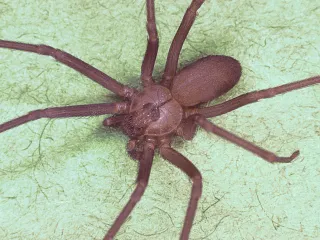
Of the 70 or so scorpion species in North America, the bark scorpion is the only one with venom dangerous to people (UC IPM). A flat, brown, eight-legged creature without pincers or a tail is something else; spiders such as the brown recluse are covered separately.
Where You’ll Find Them: Moisture, Cracks and Clothing
- Inside shoes, boots, gloves and clothing left on the floor
- Wet towels, bathtubs, sinks and dark, cool spots in bathrooms and kitchens
- Crawl spaces, attics and closets
- Walls and ceilings, especially near doors, windows and light fixtures
- Outdoors under bark, in palm trees and in crevices of rocky cliffs
The bark scorpion is drawn to moisture around and inside homes, and to outdoor lights where its insect prey gathers (UC IPM).
How Bark Scorpions Live: Night Hunters
Scorpions are nocturnal predators that eat insects, spiders, centipedes such as the house centipede, and other scorpions. They’re born live and ride on their mother’s back at first; a female may have 25 to 35 young. Scorpions take 1 to 6 years to mature and live 3 to 5 years on average (UC IPM).
Is a Bark Scorpion Sting Dangerous? It Can Be
UC IPM notes that while the sting of most US scorpions is like a bee sting, the bark scorpion’s can be serious, causing severe pain and swelling and, in rare cases, breathing trouble and convulsions. Children and the elderly are most at risk. Anyone stung by a bark scorpion should get medical attention; call Poison Control (1-800-222-1222) and get emergency care for any trouble breathing or unusual movements. Other sting and bite marks are compared in bug bite pictures.
How to Confirm It’s a Bark Scorpion
- Check your region: Arizona, southeastern California or southwestern New Mexico.
- Look at the build: slender, plain yellow, with a very thin tail.
- Search at night with a black light: scorpions glow brightly under UV light, so they’re easy to find and remove.
What to Do: Shake Out, Seal Up, Clear Out
Shake out shoes, clothing and towels before use, and don’t leave them outdoors. Keep beds away from walls with bedding off the floor, seal gaps around doors, windows and plumbing, and clear rocks, woodpiles and debris from around the foundation. Yellow outdoor bulbs attract fewer insects, and so fewer scorpions. Pesticides aren’t always effective because scorpions hide in cracks by day (UC IPM). For other pests, browse all pest guides.
Often confused with
Sources
Last reviewed Oct 4, 2026.