- Size
- Pinholes to 1/2 in round holes
- Looks like
- Holes with sawdust, powder, pellets or mud
- Where you find it
- Decks, fascia, window frames, floors, beams, furniture
- Harmful?
- Several cause structural damage over time
- When
- Year-round; bees and beetles emerge in spring and summer
Measure the hole and look at what’s below it: that tells you which wood-borer you have. Perfectly round 1/2-inch holes are carpenter bees, tiny shot holes with flour-fine powder are powderpost beetles, hard pellets are drywood termites, and shavings with insect parts are carpenter ants. The one thing to do: clean up the debris and check a week later for fresh material.
This page matches holes and debris to their likely source and says how to confirm activity. It rests on University of Kentucky guidance; structural damage needs a licensed inspector.
What’s Making Holes in My Wood? Hole Plus Debris
| Main clue (hole) | What’s below it | Wood | From |
|---|---|---|---|
| Perfectly round, about 1/2 in, on the surface or underside | Coarse sawdust; yellow stains | Unpainted or weathered softwood: fascia, decks, railings | Carpenter bees |
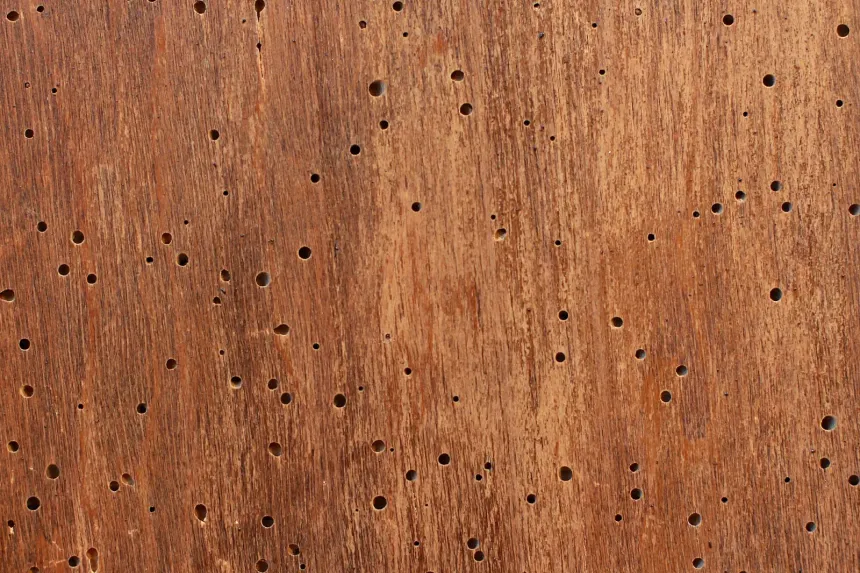
| Tiny round shot holes, 1/32–1/8 in | Flour-like powder | Seasoned wood, often hardwood floors, furniture, beams | Powderpost beetles |
| Oval holes about 1/4–3/8 in | Fine powder packed in tunnels | Pine and other softwood framing | Old house borer |
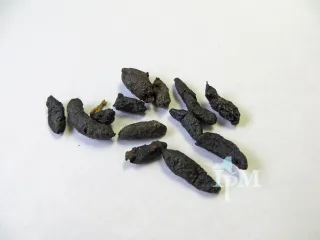
| Pinholes, often hard to see | Piles of hard, six-sided pellets | Dry wood: attic framing, trim, furniture | Drywood termites |
| Slits or small openings | Coarse shavings with insect parts | Damp or rotting wood near leaks | Carpenter ants |
| No holes; wood sounds hollow | Mud in tunnels; mud tubes on foundations | Wood near or touching soil | Subterranean termites |
| Larger, ragged holes | Wood chips | Siding and fascia, often over bee tunnels | Woodpeckers |
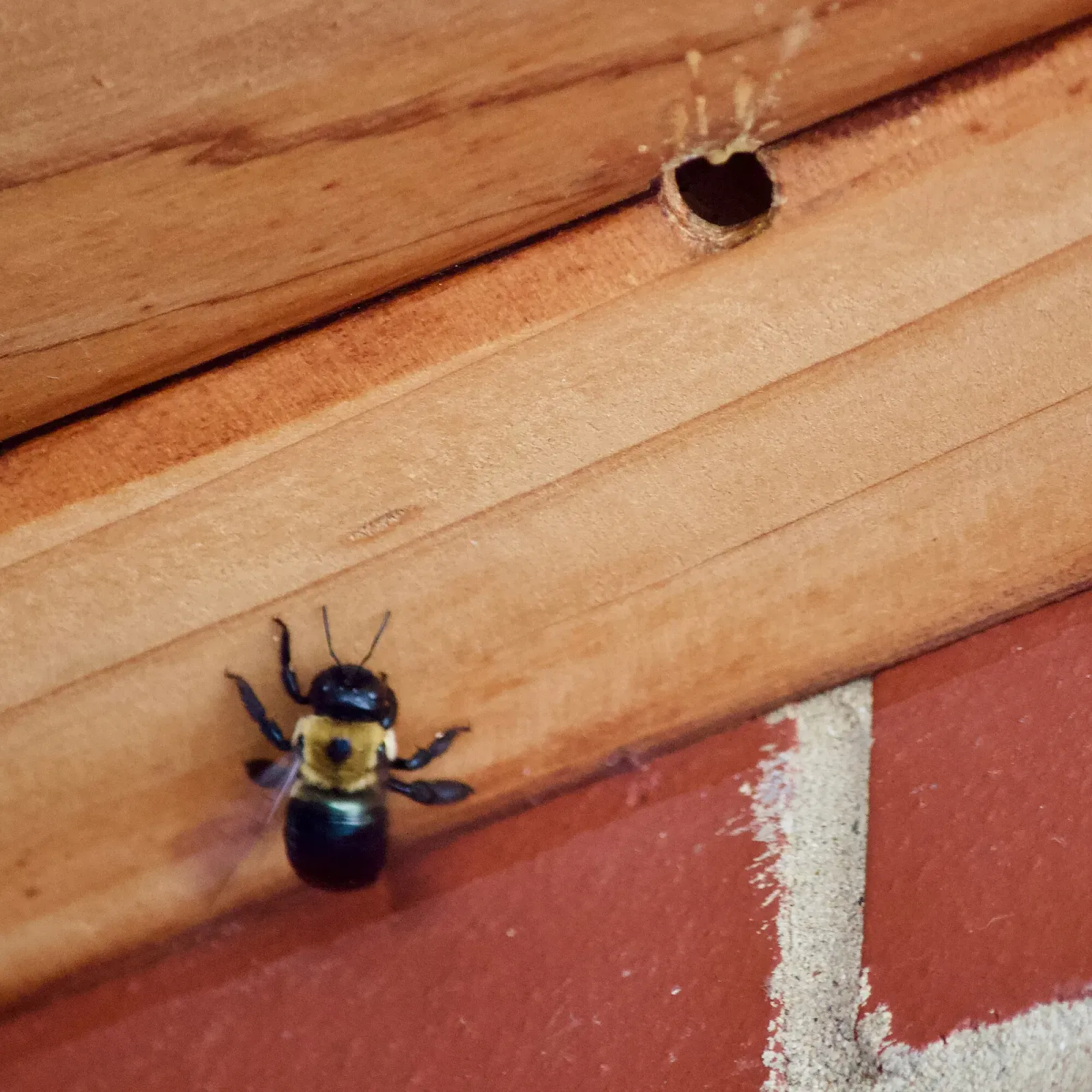
A carpenter bee below the clean, round hole it drilled into wood siding. Photo: Ahmedtahrir (CC BY-SA 4.0), via Wikimedia Commons.
Carpenter Bees: Perfectly Round Holes in Bare Wood
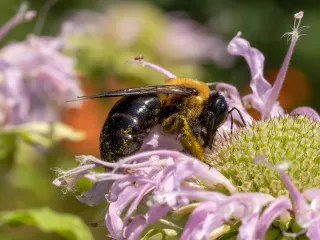
Carpenter bees bore into unpainted or weathered softwood such as fascia boards, decks and railings, often on the surface or the underside of a board. Coarse sawdust and yellow stains collect below the entrance.
Main clue: a perfectly round hole about 1/2 inch across, with coarse sawdust below it.
Termite Damage vs. Carpenter Ant Damage: Mud or Shavings
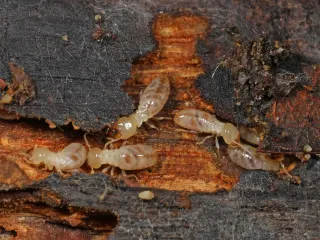
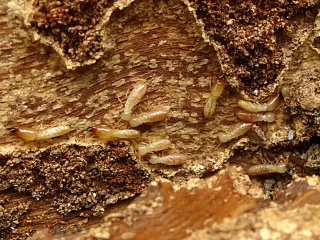
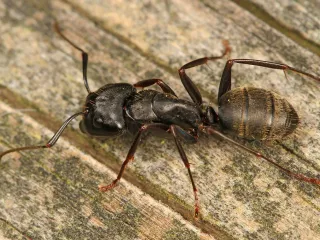
Carpenter ants chew smooth, clean galleries and push the shavings out, leaving coarse “sawdust” piles. Subterranean termites eat the wood itself and leave tunnels lined with soil or mud, with no sawdust outside (University of Kentucky). Drywood termites leave pellets instead of sawdust. Carpenter ant galleries also usually start in wet or decayed wood.
Main clue: coarse shavings with insect parts mean carpenter ants; mud-lined tunnels and no sawdust mean subterranean termites; piles of hard, six-sided pellets mean drywood termites.
Powderpost Beetles: Flour-Like Powder and Shot Holes
The University of Kentucky calls powderpost beetles second only to termites in damaging dry, seasoned wood. Infestations are usually found by the flour-like powder and small round shot holes. Light-colored fresh powder and new holes mean the beetles are still active.
Main clue: flour-like powder below tiny round shot holes, 1/32 to 1/8 inch across.
Old House Borer: Oval Holes in Softwood
Old house borers attack only softwoods like pine, fir and spruce, not hardwoods. Larvae tunnel for years and then cut an oval exit hole, according to the University of Kentucky. A faint ticking or rasping sound in framing can be larvae feeding.
Main clue: oval holes about 1/4 to 3/8 inch in pine or other softwood framing, with fine powder packed in the tunnels.
How to Confirm Activity
- Sweep up the powder, pellets or sawdust, then check a week later; fresh material means activity.
- Probe the wood around the holes with a screwdriver; soft, hollow wood shows how far damage goes.
- Watch for winged insects near windows in spring, and for mud tubes on foundations.
- Book a licensed inspector for termites or widespread beetle damage.
What to Do Next: Bees and Ants DIY, Termites to a Pro
Carpenter bee holes can be plugged and painted, as the carpenter bee page explains. Termites and widespread beetle damage need a licensed professional; start with the subterranean termite page to know what you’re dealing with.
What could have caused it
Sources
- Powderpost Beetles (University of Kentucky Entomology, EF616)
- Old House Borer (University of Kentucky Entomology, EF653)
- Carpenter Bees (University of Kentucky Entomology, EF611)
- Carpenter Ants (University of Kentucky Entomology, EF603)
- Drywood Termites (UC IPM)
- Termite Control: Answers for Homeowners (University of Kentucky Entomology, EF604)
Last reviewed Oct 4, 2026.