- Scientific name
- Reticulitermes species
- Also called
- eastern subterranean termite, termites
- Size
- Workers about 1/4 in; swarmers about 3/8 in with wings
- Color
- Workers creamy white; swarmers dark brown to black
- Found in
- Soil under and around homes, wood touching soil, mud tubes on foundations
- Harmful?
- Yes. Can cause serious structural damage
- Active
- Year-round; swarms in spring, often after rain
- Pro quotes
- $1,200–$1,900 the first year (67 shared quotes), then about $300 a year
Subterranean termites live in the soil and build pencil-wide mud tubes up into houses to eat wood from the inside. They can weaken floors and framing for years before anyone notices. The one thing to do: if you find mud tubes or a swarm indoors, call a licensed termite professional.
This page covers how to identify subterranean termites, tell them from flying ants, read the damage and confirm activity. It rests on university extension guidance; treatment itself needs a licensed pro.
How to Identify Subterranean Termites: Creamy Workers, Dark Swarmers
They dry out quickly in open air, which is why they travel inside mud tubes and wood.
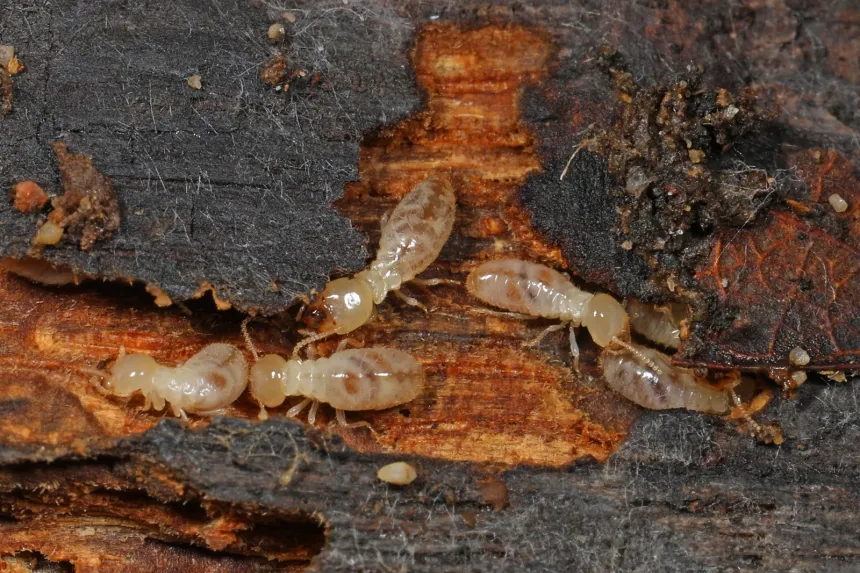
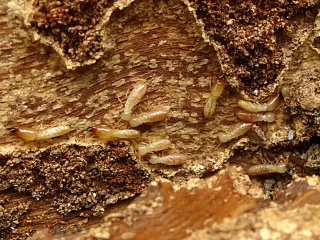
- Workers: about 1/4 inch, soft, creamy white, with no visible eyes. You see them only when you break into damaged wood or a mud tube.
- Swarmers: about 3/8 inch, dark brown to black, with four wings of equal length that break off easily.
- Straight antennae and a thick waist with no pinch.
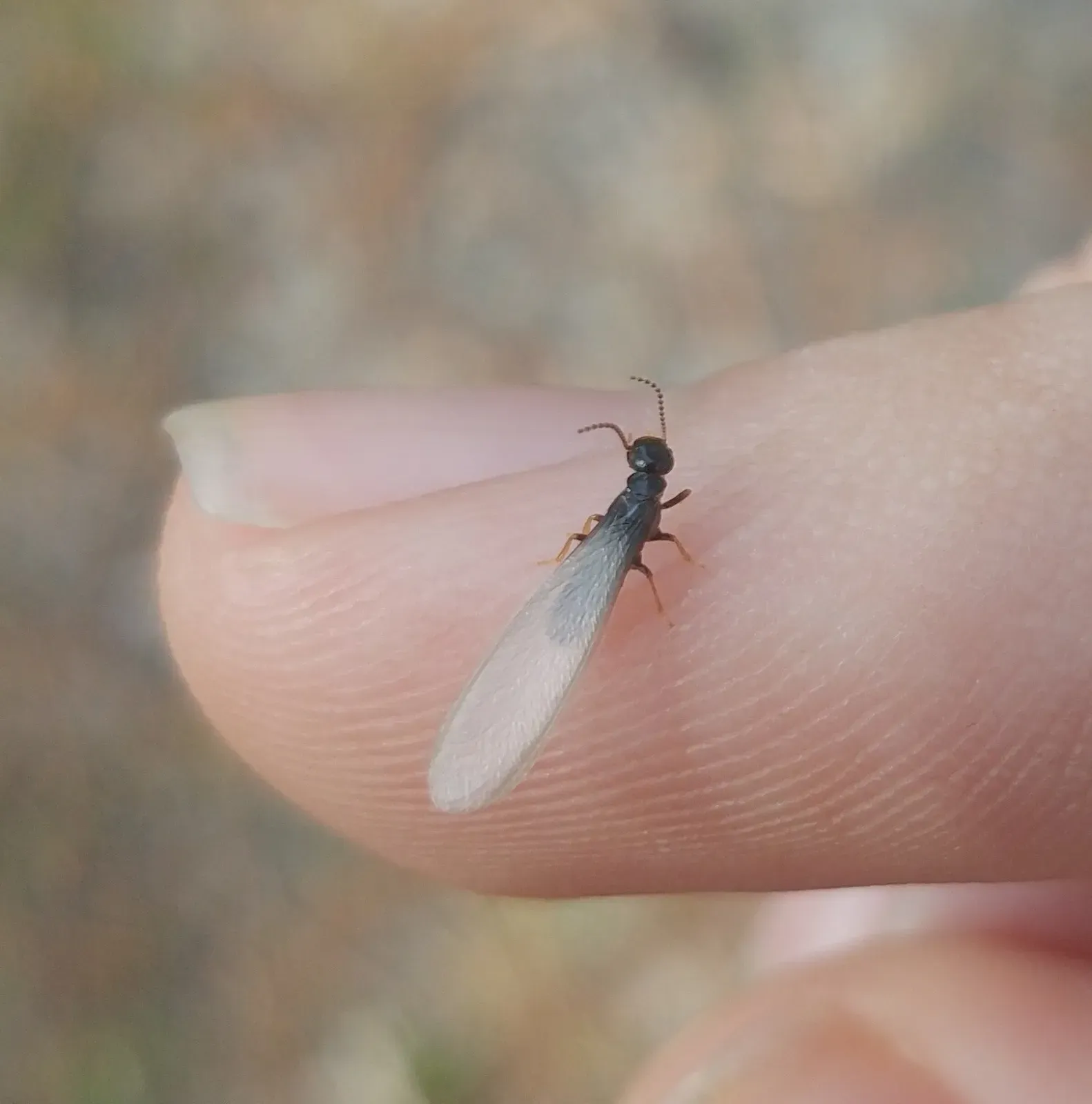
A subterranean termite swarmer on a fingertip, for size. Swarmers indoors in spring are the classic sign. Photo: Ryan Watson (CC BY 4.0), via Wikimedia Commons.
The Three Kinds of Termites in a Colony
| Caste | What it looks like | Where you see it |
|---|---|---|
| Workers | About 1/4 in, creamy white, soft, no eyes | Inside damaged wood and mud tubes |
| Soldiers | Like workers but with a large, long, yellow-brown head and dark jaws | Rushing to a break in a mud tube |
| Swarmers | About 3/8 in, dark brown to black, four equal wings | Indoors near windows and doors in spring |
Termite vs. Flying Ant: Check the Waist
| Look at | Termite swarmer | Flying (carpenter) ant |
|---|---|---|
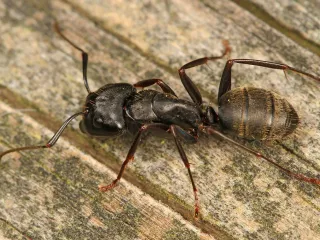
| Waist | Broad, no waist | Narrow, pinched |
| Antennae | Straight | Elbowed |
| Wings | Four, equal length, shed easily | Front pair longer than back pair |
Where You’ll Find Them: Mud Tubes and Wood That Touches Soil
- Mud tubes about the width of a pencil running up foundation walls, piers and pipes
- Wood that touches the soil: door frames, deck posts, siding
- Basements, crawl spaces and the bottoms of walls and floors
- Swarms indoors near windows and doors in spring
When Termites Swarm: Warm Spring Mornings After Rain
Eastern subterranean termites usually swarm on warm spring days, often in the morning after a rain. The winged termites fly out, drop their wings within minutes and look for a mate. A swarm inside the house almost always means the colony is feeding in or under the building.
Formosan termites, found mainly along the Gulf Coast and in the Southeast, swarm at dusk in late spring and early summer and fly to lights.
Are Subterranean Termites Harmful? Yes, Slowly and Out of Sight
They can weaken floors, framing and other structural wood, and damage often isn’t found until it’s extensive. Signs to watch for:
- Mud tubes on foundations and walls
- Piles of shed wings on windowsills
- Swarms of winged insects indoors in spring
- Wood that sounds hollow, or paint that bubbles
What Termite Damage Looks Like: Mud-Lined Tunnels, No Pellets
- Wood eaten along the grain, leaving a thin outer shell
- Tunnels lined with soil or mud, not clean like carpenter ant galleries
- A screwdriver that sinks easily into a sill plate or joist
- Mud spots or thin tubes hanging down from ceilings or along baseboards
Subterranean termites don’t push out piles of pellets. A pile of tiny, six-sided pellets points to drywood termites instead; holes in wood compares the other wood-borers.
How to Confirm Termite Activity
- Break a short section out of a mud tube.
- Watch for workers and soldiers; active tubes are often sealed with fresh mud within a few days.
- Treat an empty, dry tube as possibly old, not proof of a live colony.
- Book a licensed inspector for spots you can’t reach, such as inside walls and under slabs.
What to Do: Call a Licensed Pro, Then Keep Wood Off the Soil
Swarmers indoors or mud tubes mean it’s time to call a licensed termite professional: soil treatments and bait systems need equipment and products homeowners don’t have. You can lower the risk by keeping wood and mulch off the foundation, fixing leaks and keeping gutters draining away from the house.
Often confused with
Sources
- Termite Control: Answers for Homeowners (University of Kentucky Entomology, EF604)
- Protecting Your Home Against Termites (University of Kentucky Entomology, EF605)
- Termite Baits: A Guide for Homeowners (University of Kentucky Entomology, EF639)
Last reviewed Oct 5, 2026.