How to Get Rid of Mice Naturally: What Works, What Doesn't
To get rid of mice naturally, skip the poison and do three things at once: seal gaps ¼ inch and wider with metal, set snap traps along the walls where you find droppings, and lock up food. Peppermint oil, vinegar and a cat won’t clear mice already inside. You’re done after a week with no catches or new droppings.
Cost: about $57–71 in supplies. Difficulty: moderate. Call a pro if you’ve kept baited traps out for at least 15 days and still find fresh droppings, or the mice are somewhere you can’t reach safely.
Here, “natural” means poison-free: a snap trap is still lethal, so if you want to avoid killing, read the section on getting rid of mice without killing them first. This page covers which natural methods work, the three steps, home remedies and costs; the whole-house plan is in how to get rid of mice. We haven’t tested these methods ourselves; this rests on CDC, UC IPM, Nebraska Extension and NPIC guidance, plus store list prices.
What Works and What Doesn’t Against Mice, Without Poison
Sealing, trapping and locking up food work; smells, gadgets and pets don’t.
| Method | Works? | Cost | Main limitation |
|---|---|---|---|
| Sealing gaps with metal | Yes, keeps new mice out | $28.80 for 20 ft of copper mesh | Doesn’t remove the mice already inside. |
| Snap traps | Yes, poison-free | $2.29 a two-pack | Lethal, and the trigger must be kept away from kids and pets. |
| Electronic traps | Yes, poison-free | $24.99–$31.69 each, plus batteries | Also lethal; follow the model’s instructions. |
| Food in sealed containers | Yes, as support | Containers you already have | UC IPM says sanitation must be combined with sealing and trapping. |
| Live-capture traps | Not recommended | — | The CDC advises against them; release has survival and legal problems. |
| Glue boards | No | — | The CDC advises against glue traps at home. |
| Peppermint oil, vinegar, baking soda | No | — | No smell or kitchen recipe seals a gap or removes a nest. |
| Ultrasonic plug-ins, mothballs, a cat | No | — | UC IPM, NPIC and Nebraska Extension say these don’t clear house mice. |
Avoiding rodenticide because of pets or kids? Our guide to rat and mouse poison risks explains why no poison is pet-safe.
Step 1: Seal the Gaps Mice Use to Get In
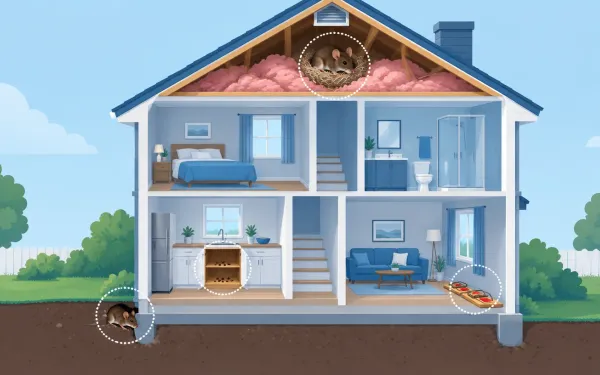
Seal every opening about ¼ inch (6 mm) wide or wider: the CDC says mice can fit through it. Look inside and outside around doors, windows, pipes, vents, utility lines, cabinets and the foundation, small openings as well as obvious holes.
Steel wool for small holes, metal for big ones. The CDC suggests filling small holes with steel wool secured with caulk or spray foam; larger openings may need hardware cloth, cement or metal sheeting. Steel wool vs. copper mesh compares the fillers.
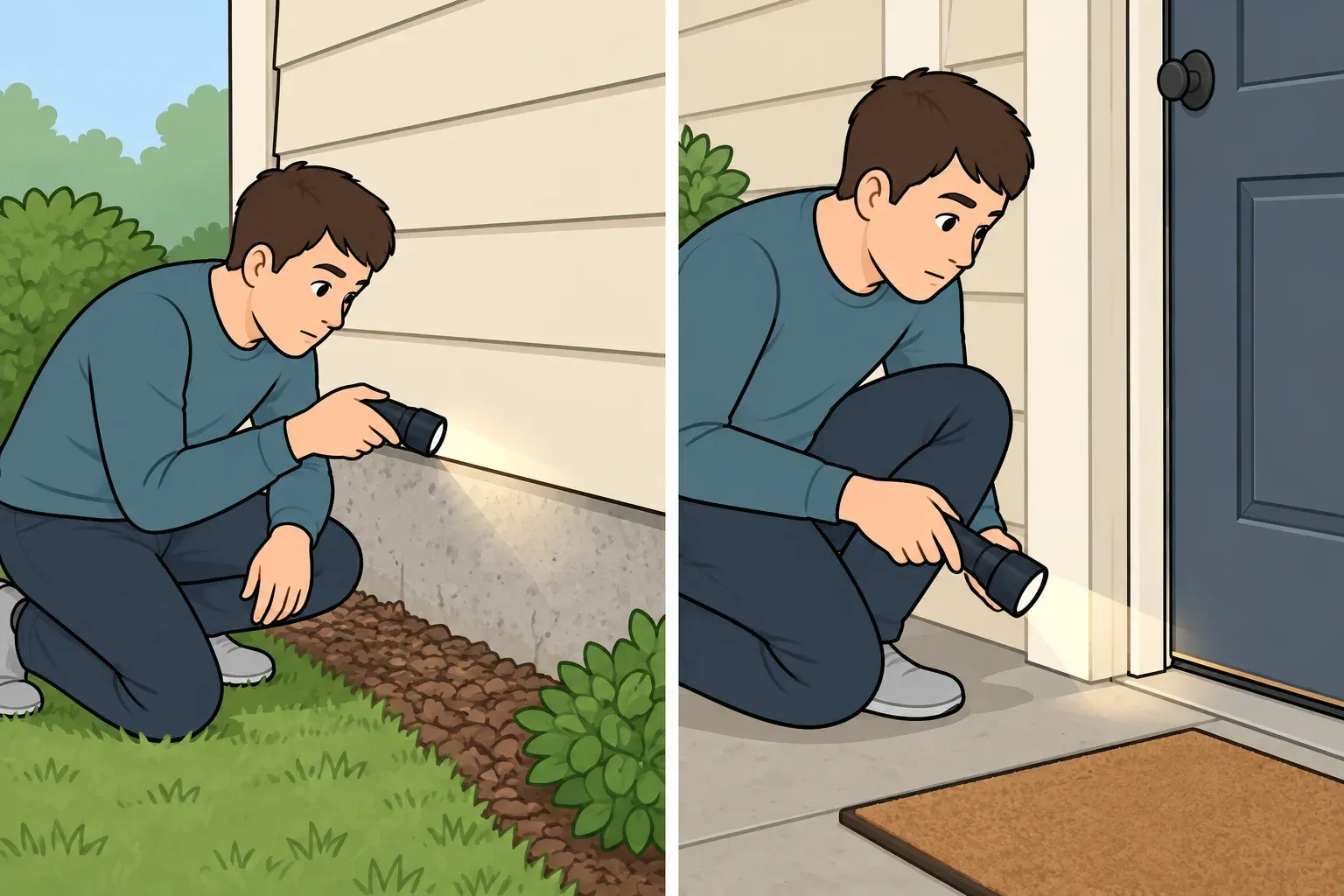
Illustration: a homeowner checks the foundation and an exterior door edge with a flashlight.
Sealing keeps new mice out, but it doesn’t remove mice already indoors, so pair it with trapping and food control.
Step 2: Trap Mice Already Inside
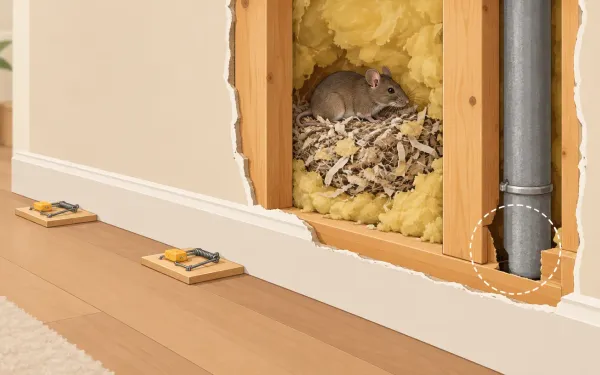
Set snap traps in a “T,” not parallel to the wall. Place the baited end next to the wall, near fresh droppings, with mouse-size traps out of reach of children and pets. The CDC recommends checking traps daily.
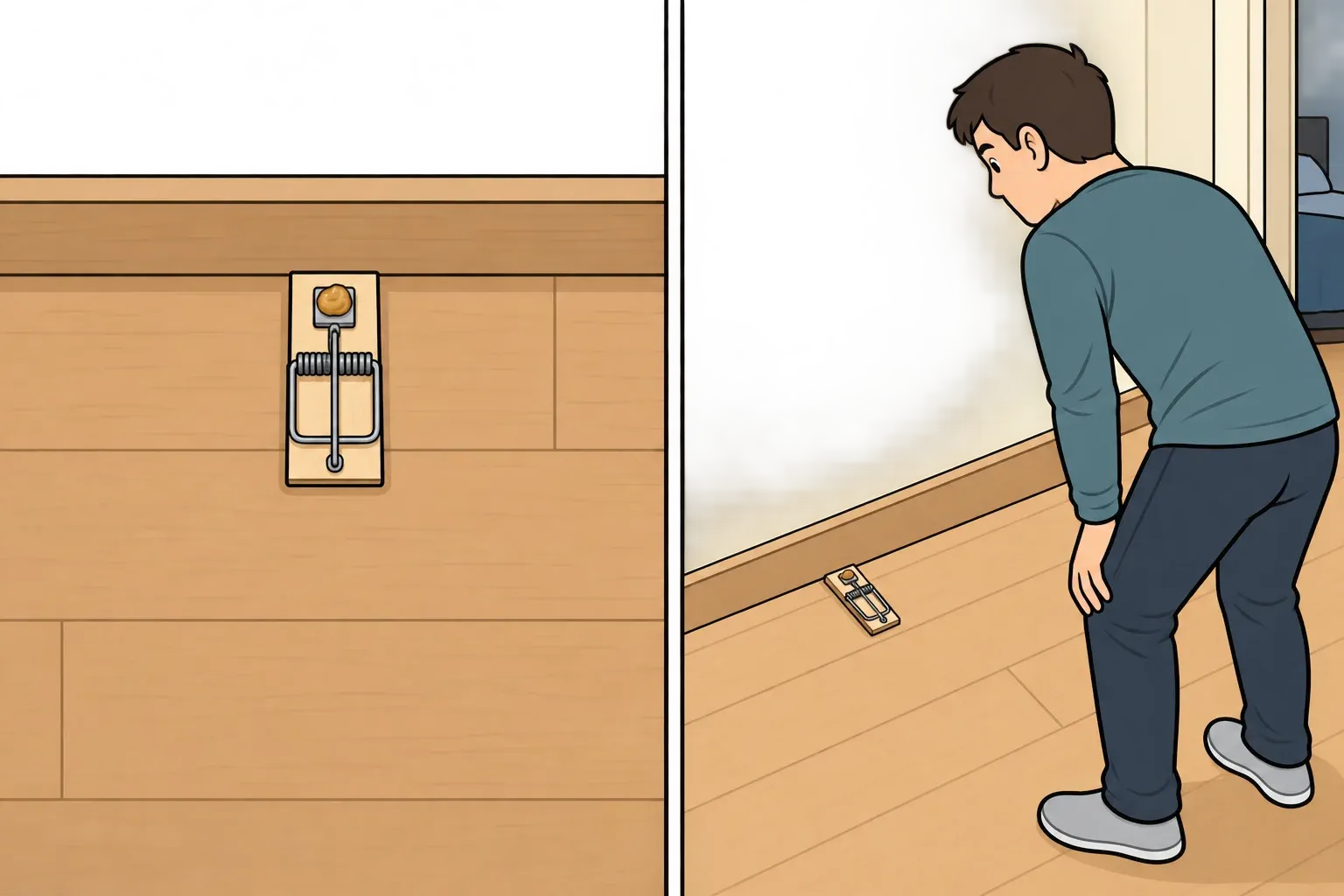
Illustration: a snap trap in a “T” with its baited end against the wall, and a homeowner checking the spot.
Know that every trap kills or catches. Wondering how to catch mice without traps? A bucket with a false floor is still a trap; see how the bucket trap works. An electronic trap is also lethal, and an enclosed device isn’t automatically child- or pet-proof.
Our guides compare mouse-trap types, show how to set a snap trap and help you choose bait.
Step 3: Reduce Food and Shelter
Store food and garbage in tightly closed containers of thick plastic, metal or glass. Clean up spills, wash dishes and put pet food away after use, as the CDC’s rodent-prevention guidance advises, and clear cardboard and loose paper where mice could nest.
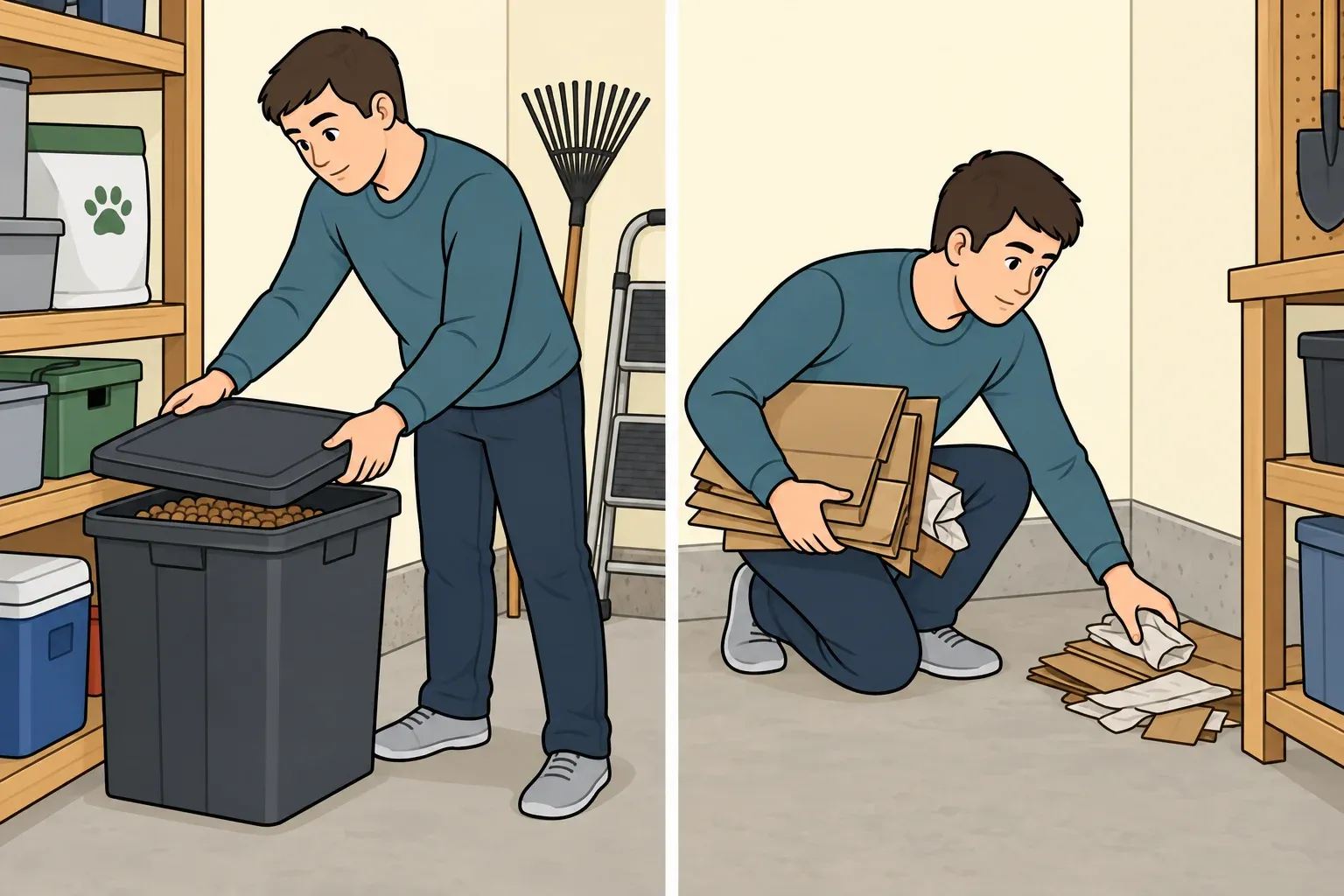
Illustration: a homeowner closes a lidded pet-food bin and clears cardboard from a garage.
Cleaning alone may not control an active infestation. UC IPM notes that sanitation should be combined with exclusion and population control such as trapping.
Do Home Remedies Work? Peppermint, Vinegar, Baking Soda and Cats
Not as a way to clear mice that are already inside.
- Peppermint oil, vinegar, dryer sheets: a smell doesn’t seal a gap or remove a nest. See what smells mice hate.
- Baking soda and “homemade poison” recipes: none of the extension or CDC guides cited here list baking soda or vinegar as a control method.
- Ultrasonic plug-ins: UC IPM says high-frequency devices are not effective for house mice. See do ultrasonic mouse repellents work.
- Mothballs: labeled only for fabric pests in closed containers, and NPIC says they have little or no effect as repellents.
- A cat or dog: Nebraska Extension says predators may kill mice but rarely control them, because mice live in spaces a pet can’t reach.
“Natural” is not a safety standard. Keep any product away from children and pets and follow its label.
How to Get Rid of Mice Without Killing Them
Sealing gaps and locking up food keep new mice out without killing anything, but they won’t remove mice already inside. Live traps are the usual next step, and they have real limits:
- The CDC advises against live traps because a frightened mouse may urinate in the trap, which can increase the chance of illness.
- UC IPM says relocation doesn’t work: house mice moved as far as half a mile away can find their way back, and released mice are likely to be attacked by other mice, killed by a predator or die from exposure.
- In California, moving a live house mouse off the property where it was caught is illegal without a permit. Rules elsewhere vary.
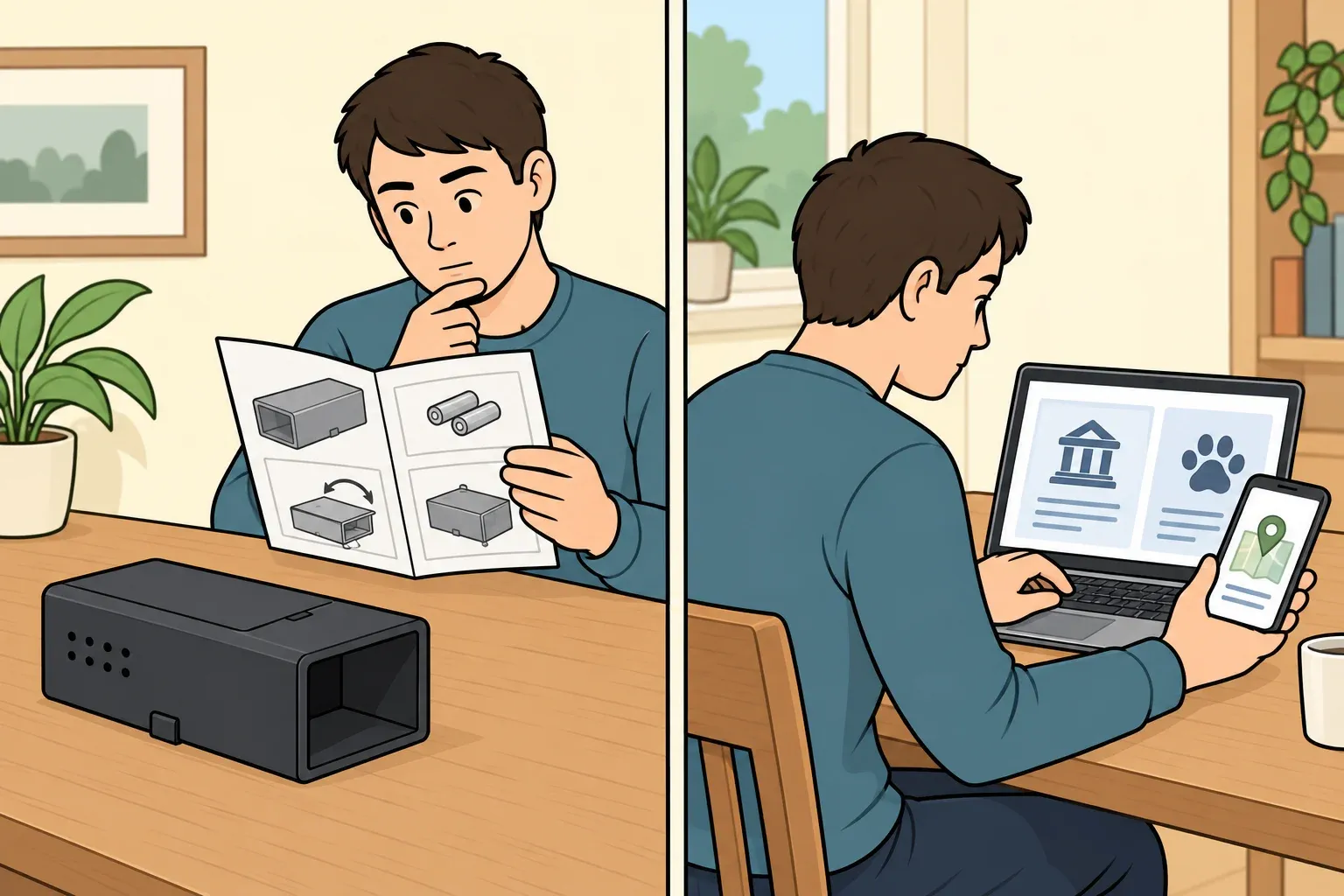
Illustration: a homeowner reads live-trap instructions and local public-health guidance.
If you’re committed to a nonlethal approach, ask your local health department or wildlife authority what is permitted before setting a live trap; humane mouse traps covers how to use one safely.
Which Plan Fits Your Situation
| Situation | What to do | Why |
|---|---|---|
| You rent | Trap and lock up food inside; report outside gaps to the landlord in writing | Outside sealing is usually the landlord’s job. |
| Kids or pets at home | Snap traps behind appliances, no glue, no poison | No poison is pet-safe, and every trap must be out of reach. |
| You don’t want to kill anything | Seal and lock up food first; ask the health department before any live trap | Release is often illegal or pointless, and the CDC advises against live traps. |
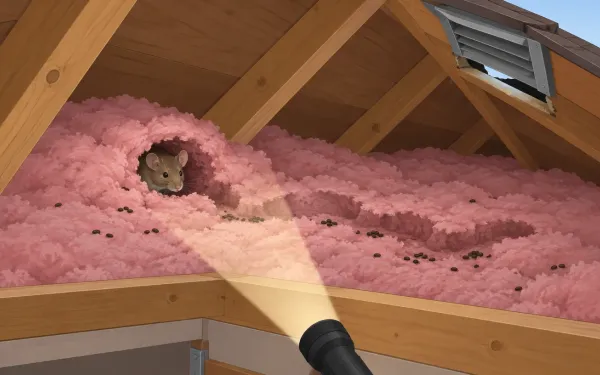
| Mice in the walls or attic | Trap where they come out, and seal the outside first | Mice travel through those spaces and come out to eat. |
| Droppings ½ inch or bigger | Use rat-size traps and heavier sealing; see how to get rid of rats | The same poison-free plan works for rats with bigger tools. |
What It Might Still Cost
| Item | Typical cost |
|---|---|
| DIY: 12–24 snap traps, 20 ft copper mesh, gloves, bleach | $57–71 |
| Pro trap-and-seal job, 53 shared quotes (middle half) | $1,400–$3,000 |
| Pro visit, price-guide range (usually no sealing) | $150–$655 |
| Pro attic insulation cleanup, if upsold | $7,500–$14,000 |
DIY figures are U.S. list prices from Victor, DoMyOwn and Target on September 30, 2026, before tax and shipping. Pro: the middle half of 53 trap-and-seal quotes homeowners shared on Reddit (see the quote table). Price-guide range: This Old House for mice (April 2026) and HomeAdvisor for rats (June 2026); it usually covers a trap-and-bait visit, with sealing extra. Attic cleanup: the middle half of 35 shared quotes that included new insulation.
Before You Start: A Quick Checklist
- Decide your goal: no poison, or no killing at all.
- Seal gaps ¼ inch and wider with steel wool, copper mesh or metal.
- Set snap traps in a “T” near fresh droppings, out of kids’ and pets’ reach.
- Lock up food, pet food and garbage in thick plastic, metal or glass.
- Skip peppermint, vinegar and plug-ins as your main plan.
- Check traps every morning until a week passes with no catches.
When to Call a Pro
Call one if you’ve kept baited traps out for at least 15 days and still find fresh droppings, or the mice are somewhere you can’t reach safely. Ask for a quote that itemizes the sealing; exterminator vs. DIY cost puts the numbers side by side.
Common questions
There’s no fixed number of days; it depends on how many mice there are and how well the gaps are sealed. The CDC’s rule for knowing you’re done: a week with no mice caught and no new signs.
Keep new mice out first: seal gaps and store food in sealed containers. For mice already inside, the CDC recommends snap traps and advises against glue traps and live traps.
The Bottom Line
Natural mouse control means metal in the gaps, snap traps along the walls and food under lock, for about $57–71 in supplies. Scents, plug-ins and pets won’t clear mice already inside.