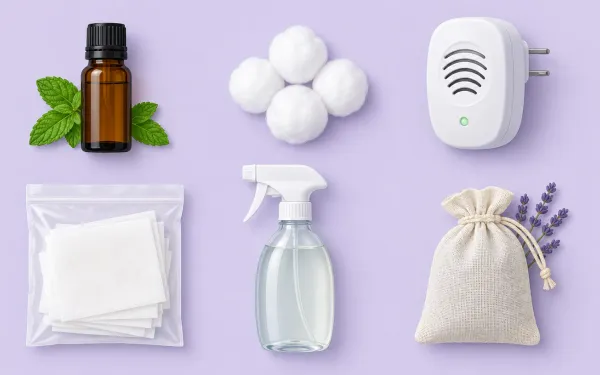
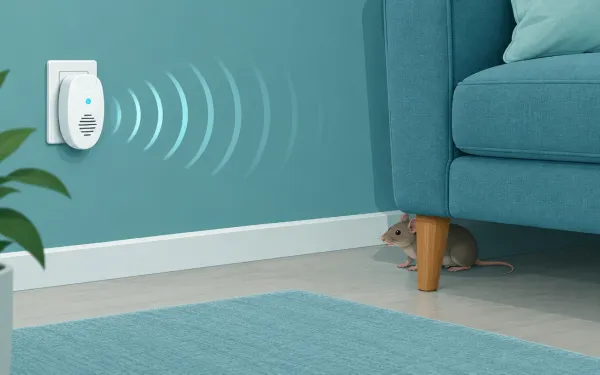
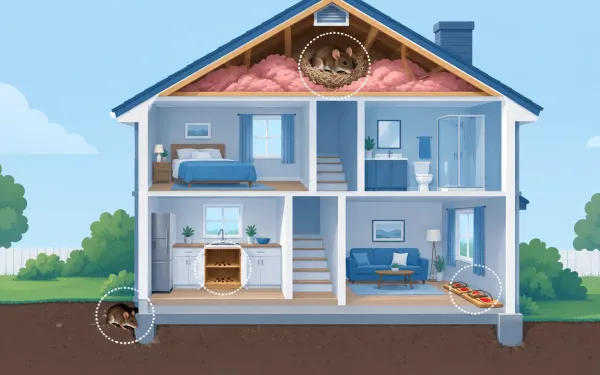
Does Peppermint Oil Keep Mice Away? What the Study Found
Not for long. In a 2022 lab study, mice avoided fabric sprayed with peppermint oil the same day, but a week later neither peppermint oil nor menthol had a significant effect (Chulikhit et al., 2022). No study we found shows peppermint clearing mice from a home, and peppermint oil can poison cats (Pet Poison Helpline). To keep mice away, seal gaps ¼ inch and wider with metal and set snap traps along the walls.
Cost: about $14–43 in supplies. Difficulty: easy. Call a pro if you still find fresh droppings after two weeks of sealing and trapping, or the mice are in walls or an attic you can’t reach.
This guide covers what the study tested, how to use peppermint if you still want to, which other scents mice are said to hate, and what works instead. We haven’t tested peppermint oil ourselves; it rests on that study, UC ANR, University of Georgia, UC IPM, EPA, Pet Poison Helpline and CDC guidance.
Already put out peppermint cotton balls? Leave them only where cats and dogs can’t reach, and set traps beside them anyway. If you find fresh droppings next to a cotton ball, it isn’t working.
What the Peppermint Study Found
Researchers sprayed 2 mL of oil on a strip of fabric and timed hungry lab mice for five minutes in a maze and in a light/dark box (Chulikhit et al., 2022). On the day of spraying, every oil worked: mice kept away from the treated fabric. One week later, only peppermint oil and menthol had stopped working; orange, lemongrass, ginger and plai oils, and a mix of all of them, still held.
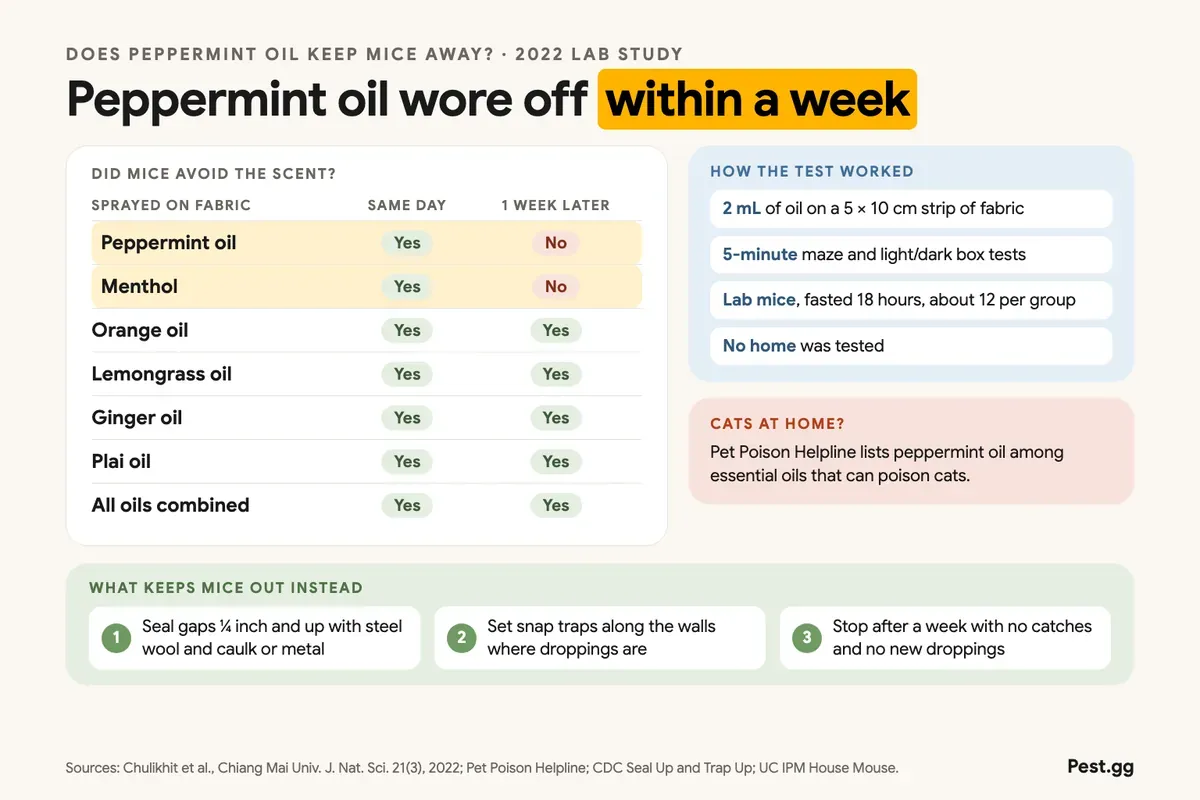
Infographic: which oils still worked a week later in the 2022 lab study. Sources: Chulikhit et al. 2022, Pet Poison Helpline, CDC, UC IPM.
The authors suggest menthol works by triggering the body’s cold sensors and that the effect fades; they didn’t test that idea directly. Either way, a five-minute test on hungry mice is a long way from a kitchen with food in it, and the study didn’t test a home.
Does Peppermint Oil Work in a House?
There’s no good evidence it does. University of Georgia IPM experts say products sold as rodent repellents are generally ineffective, homemade ones generally don’t work either, and taste and odor repellents aren’t registered for rats and mice. UC ANR adds that rodents quickly get used to smells like dryer sheets and soap and keep causing damage.
Two practical problems:
- The scent fades. Peppermint stopped working within a week in the lab, so a cotton ball you set last month is doing nothing.
- It doesn’t close the door. UC ANR says what works is sealing gaps larger than ¼ inch so mice can’t get in. A smell leaves the gap open.
Peppermint and Pets
Pet Poison Helpline lists peppermint oil among the essential oils known to poison cats, along with cinnamon, clove, eucalyptus and citrus oils. If you have a cat, skip it. If you use it anyway, keep soaked cotton balls and diffusers where pets can’t reach, and pick them up if a pet shows interest.
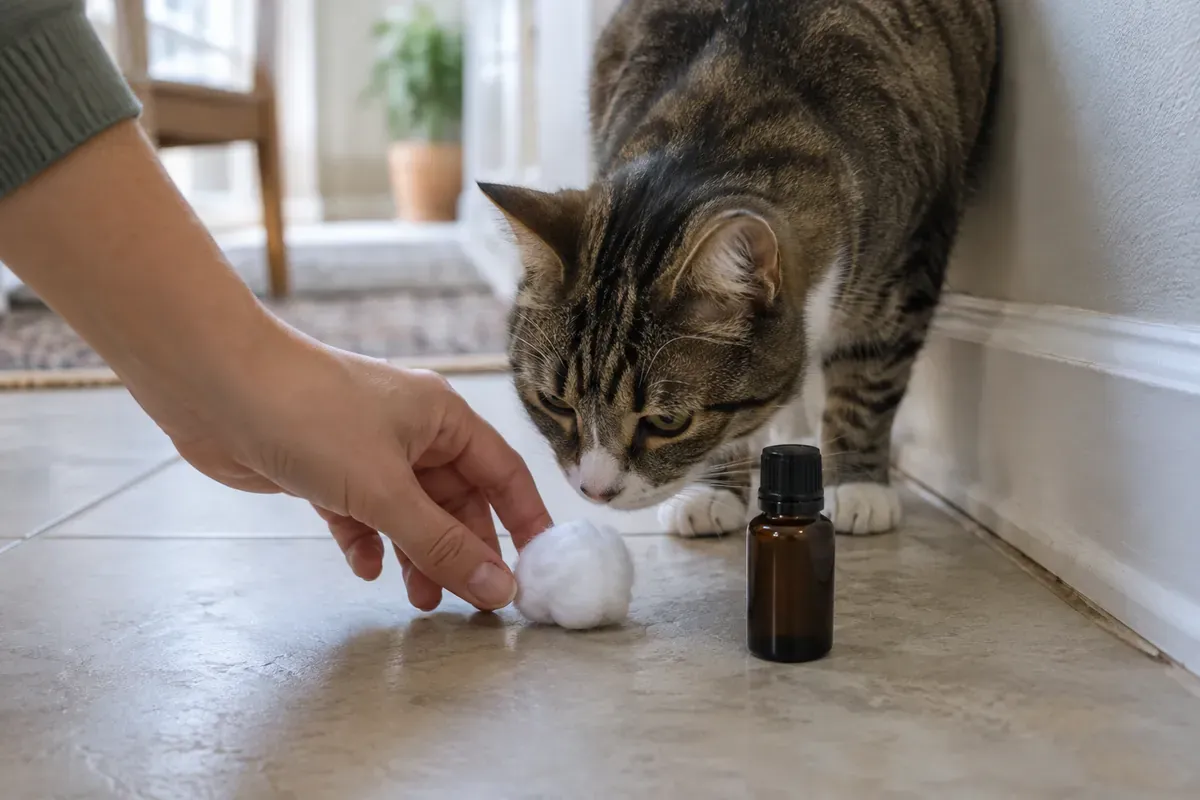
Illustration: pick up peppermint cotton balls if a cat finds them.
“EPA Exempt” Doesn’t Mean It Works
Many peppermint sprays and pouches are sold as minimum-risk pesticides, which don’t need EPA registration, and the EPA says it generally doesn’t review those products. The label tells you the ingredients are low risk, not that the product keeps mice away.
What Scents Do Mice Hate? The Evidence for Each
| Scent or product | What the evidence shows | Evidence |
|---|---|---|
| Peppermint oil, menthol | Mice avoided it the same day; no significant effect a week later (2022 lab study) | Weak |
| Orange, lemongrass, ginger oils | Still avoided after a week in 5-minute lab tests; never tested in a home (2022 lab study) | Weak |
| Predator urine | Lab mice avoid a carnivore-urine chemical (PNAS, 2011); UC ANR says it doesn’t repel rodents | Weak |
| Dryer sheets, bar soap | UC ANR says they don’t repel rodents | None |
| Vinegar, cinnamon, cloves, bleach | No controlled study found; University of Georgia says homemade repellents generally don’t work | None |
| Mothballs | Little or no effect as repellents (NPIC), and not labeled for mice | None |
| Sealing gaps and snap traps | The CDC’s method for keeping mice out and removing the ones inside | Strong |
“Weak” means a lab effect only; “none” means no study, or experts say it doesn’t work. Our full review is in what smells mice hate, and plug-in devices are covered in do ultrasonic mouse repellents work. For rats, see what smells rats hate.
What Keeps Mice Away Instead
Step 1: Seal the gaps. House mice squeeze under gaps ¼ inch tall (UC IPM). For small holes, the CDC suggests steel wool held in place with caulk; larger openings need metal, cement, hardware cloth or metal sheeting. Does steel wool keep mice out compares the fillers.
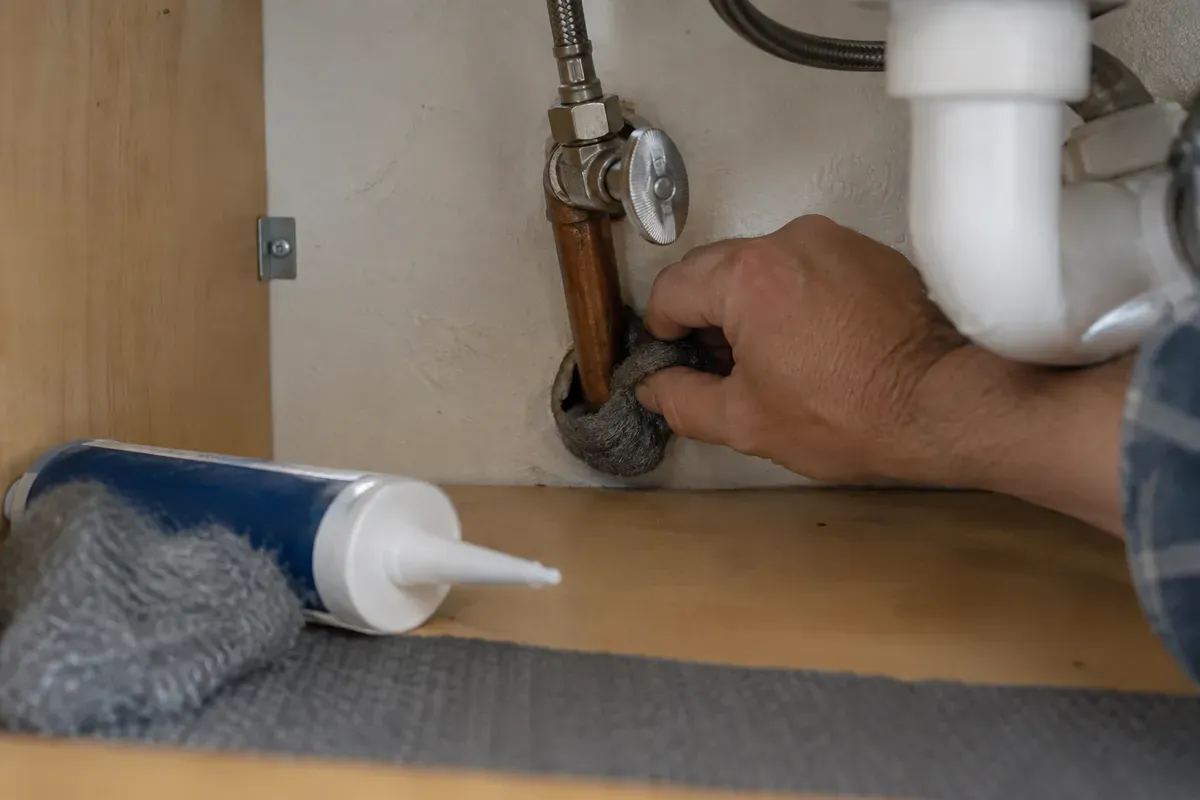
Illustration: steel wool packed around a pipe gap under the sink, ready for caulk.
Step 2: Trap the mice already inside. Set snap traps against the walls where you find droppings, no more than about 10 feet apart; pairs set 1 to 2 inches apart catch more (UC IPM). Peanut butter is a good bait. Where to place mouse traps shows the spots.
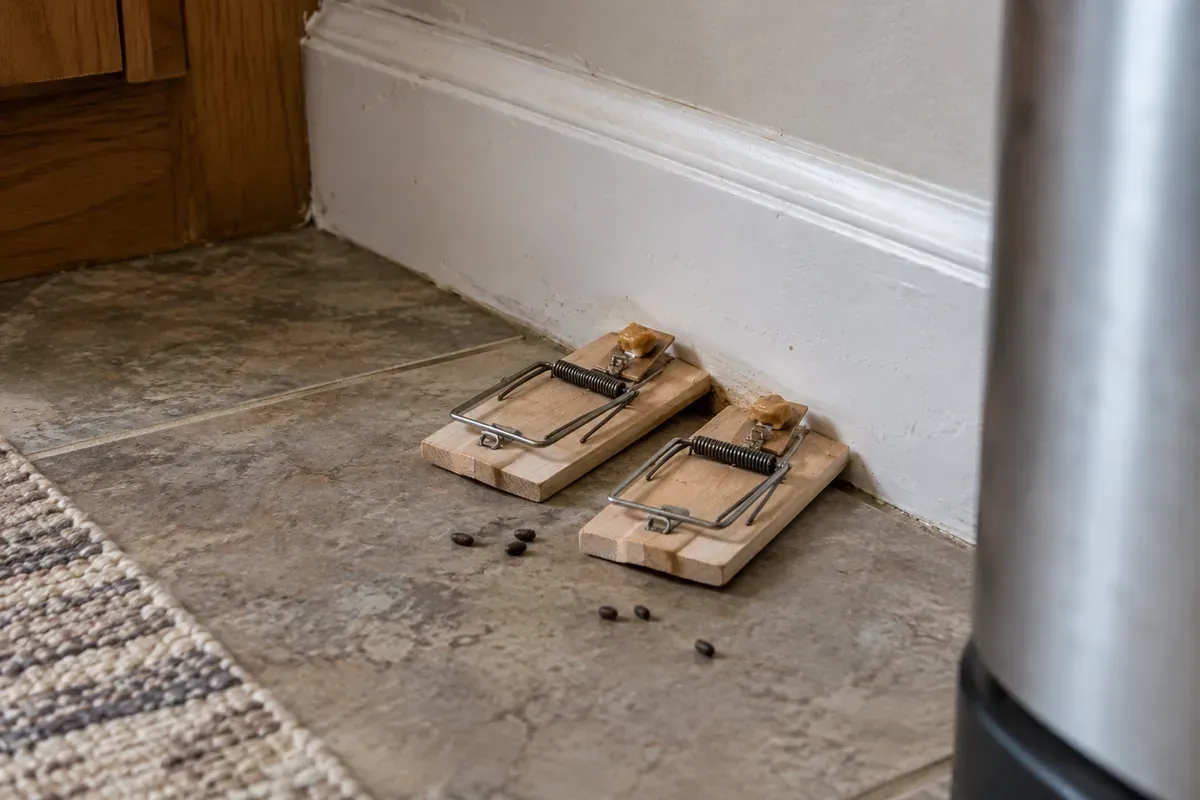
Illustration: a pair of snap traps by the baseboard where the droppings are.
Step 3: Lock up food. Keep food, garbage and pet food in closed containers (CDC).
Step 4: Know when you’re done. Keep trapping until a week passes with no catches and no new droppings (CDC). How to get rid of mice has the full plan.
What It Costs
| Item | Typical cost |
|---|---|
| 12 wooden snap traps | $13.74 |
| Copper mesh for sealing, 20 ft | $28.80 |
| DIY total | About $14–43 |
U.S. list prices, September 2026, before tax. Steel wool and caulk you may already have bring the low end close to the cost of the traps alone.
When to Call a Pro
If you still find fresh droppings after two weeks of sealing and trapping, or the mice are in walls or an attic you can’t reach.
Common questions
In the 2022 lab study, the effect was gone by the one-week test. No study we found measured it in a home, so there’s no reliable number of days.
They avoided it in a short lab test on the day it was sprayed. That’s not the same as leaving a house with food in it, and the effect faded within a week.
None has been shown to work. University of Georgia IPM experts say homemade repellents generally don’t. Seal gaps and use traps.
Closing the ways in. UC ANR says to seal gaps larger than ¼ inch so mice and rats can’t enter, and the University of Georgia calls closing entry holes one of the most effective ways to keep them out.
The Bottom Line
Peppermint oil smells strong to mice for a day or so, but in the only controlled study we found, it stopped working within a week, and it can poison cats. Spend the money on steel wool, caulk and a dozen snap traps, and call it done after a week with no catches and no new droppings.
Sources and further reading · 9
- Chulikhit et al., Chiang Mai University Journal of Natural Sciences (2022): The Repellent Potential of Herbal Oils Alone and in Combination in Mouse Behavioral Models: the oils tested, dose, test length and the one-week results.
- UC ANR: Debunking Pest Myths: dryer sheets, soap, predator scent and mothballs don’t repel rodents; seal gaps larger than ¼ inch.
- University of Georgia IPM: Rats and Mice: repellents generally ineffective, odor repellents not registered, close entry holes, use traps.
- EPA: Minimum Risk Pesticide Definition and Product Confirmation: exempt products aren’t generally reviewed.
- Pet Poison Helpline: Essential Oils and Cats: peppermint oil among oils toxic to cats.
- National Pesticide Information Center: Mothballs: little or no effect as repellents.
- PNAS (2011): carnivore urine chemical and rodent avoidance.
- UC IPM: House Mouse: ¼-inch gaps, trap spacing and bait.
- CDC: Seal Up and Trap Up: sealing materials, trapping until a week with no signs.