Where to Put Mouse Traps: The Best Spots, Room by Room
Mice run along walls, not across the room. Put traps where they already travel, and they work the first night.
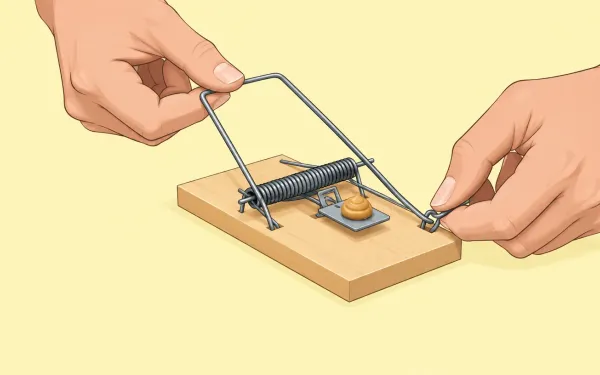
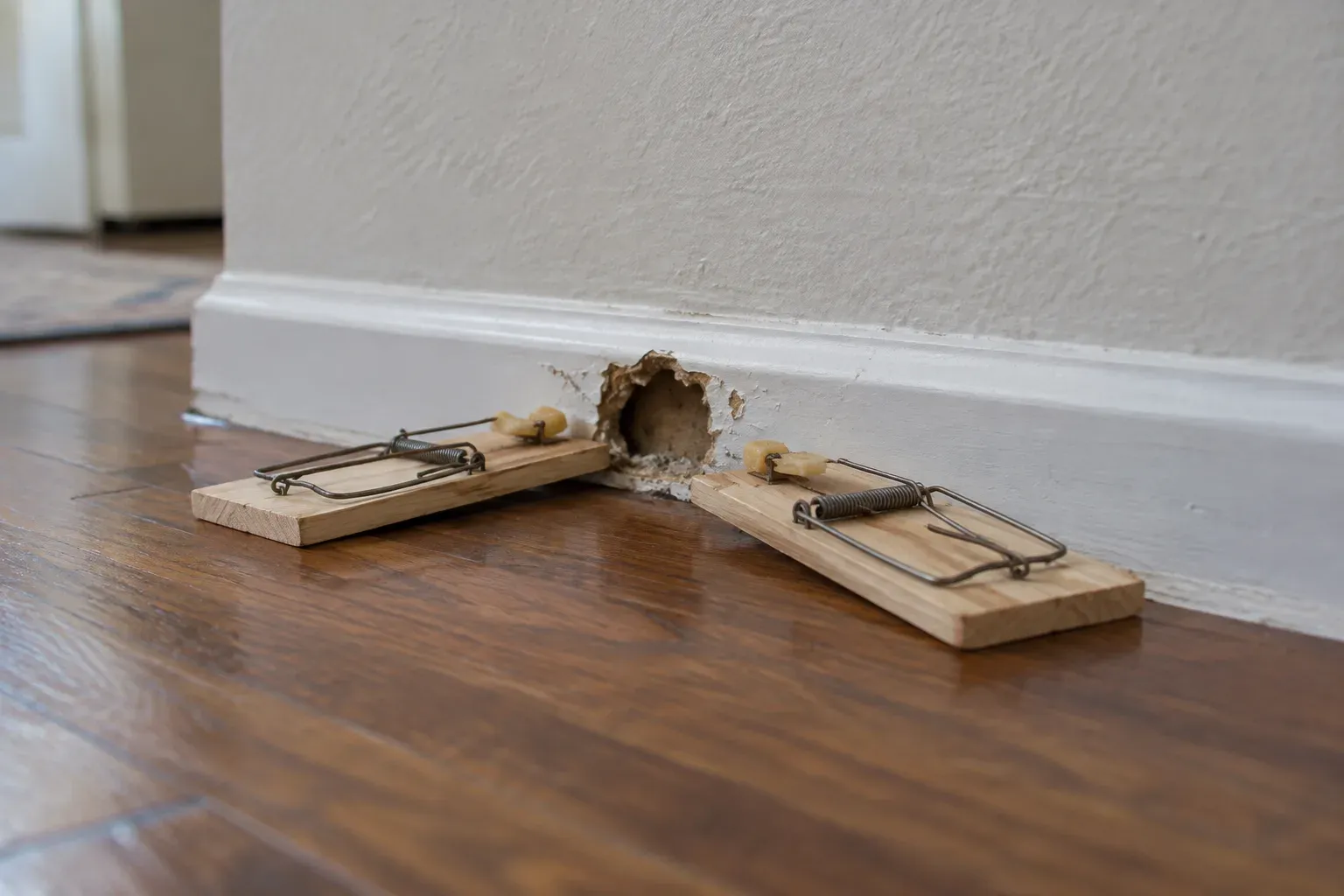
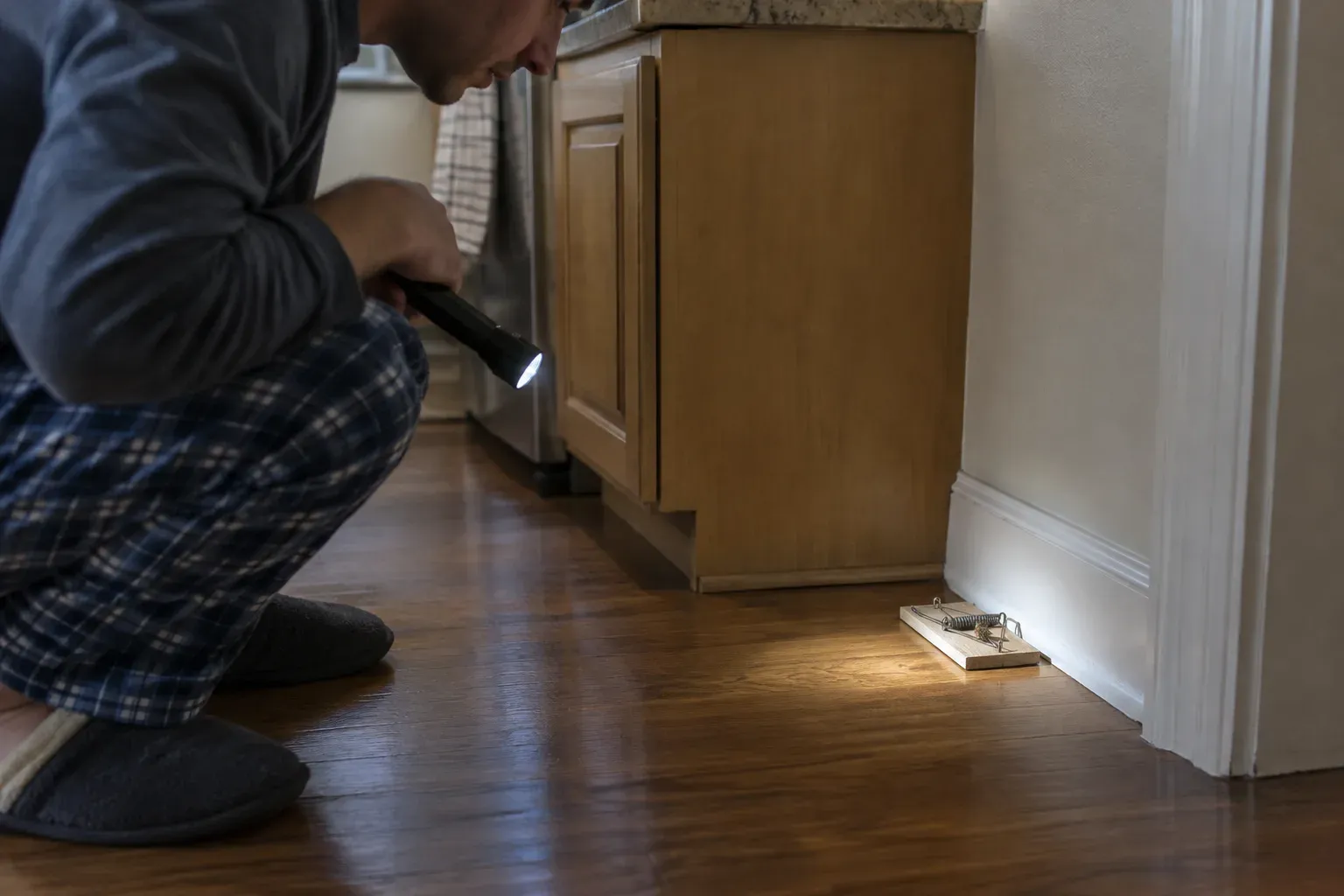
Put mouse traps against the wall where you’ve found fresh droppings, at a right angle to it with the bait end touching the baseboard. Use a small amount of bait, about the size of a pea; nesting materials such as a cotton ball tied to the trigger work too (what bait to use). The best spots are behind the fridge and stove, under the sink, inside lower cabinets, and along the walls of the garage, basement and attic. Set traps in pairs, 1 to 2 inches apart, and no more than about 10 feet from the next pair.
Cost: about $14–27 in supplies. Difficulty: easy. Call a pro if traps along every wall with fresh droppings still catch nothing after two weeks, or the mice are inside walls you can’t reach.
Placement matters more than bait or brand. Mice run along walls and behind things, and a trap in the open middle of a room usually catches nothing. This guide covers where to place mouse traps: the placement rules, the best spots room by room, where not to put traps, and when to move one that isn’t working. We haven’t tested these placements ourselves; this rests on CDC, UC IPM and Nebraska Extension guidance.
Setting traps tonight? Find the freshest droppings. Set two traps there, each at a right angle to the wall with the bait end touching it, an inch apart. Add a pair every 10 feet along that wall, and behind the fridge and stove. Check them in the morning. Not sure how to set one yet? Start with how to set a mouse trap.
The 5 Placement Rules
| Rule | Why | Source |
|---|---|---|
| Against the wall, bait end touching it | A mouse running along the wall crosses the pedal | CDC, UC IPM |
| Where you found fresh droppings | Droppings mark the runs mice use now | UC IPM, Nebraska |
| Behind objects and in dark corners | Mice travel under cover | UC IPM, Nebraska |
| In pairs, 1 to 2 inches apart | Catches mice that jump over the first trap | UC IPM |
| No more than about 10 feet between traps | Mice seldom go more than 30 feet from their nest and food | UC IPM |
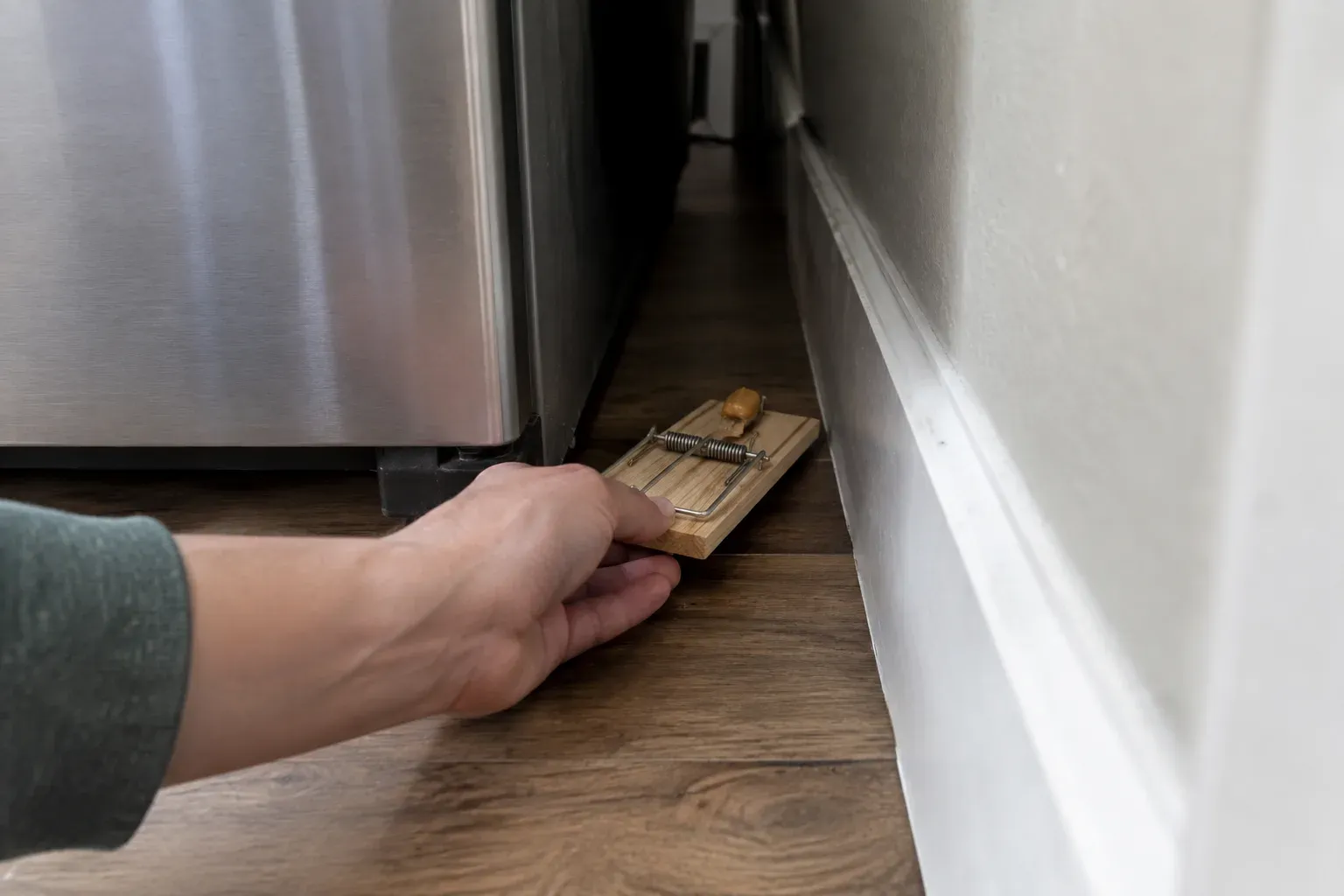
The CDC’s picture of a good set is a “T”: the trap at a right angle to the wall, with the bait end against the baseboard. A mouse coming from either direction runs straight over the pedal.
Find the Runway First
Before you put down a single trap, spend five minutes with a flashlight. Look along baseboards, behind appliances and inside lower cabinets for:
- Fresh droppings. Soft and dark means recent; dry and gray means old. The densest spots are the busiest runs.
- Gnaw marks and chewed packaging near food.
- Dark rub marks along edges and around holes, where mice brush against the wall.
- Shredded paper, fabric or insulation, a sign of a nest nearby.
If the droppings are about ½ inch long, you may have rats, which need bigger traps; see rat poop vs. mouse poop. If you’ve only seen one mouse and no droppings, if you see one mouse explains what that usually means.
Where to Put Mouse Traps, Room by Room
Kitchen: Behind the Fridge, Stove and Dishwasher
The kitchen is where most mice are caught, because that’s where the food is. Pull the fridge and stove out a few inches and slide traps along the wall behind them, where it’s warm, dark and close to crumbs. Add a pair at each end of the cabinet run, where the kick plate meets the wall. Mice in the kitchen covers cleaning up and storing food so traps don’t compete with an easy meal.
Under the Sink and Inside Lower Cabinets
Mice often come in through the gaps around pipes under sinks. Clear the cabinet floor, then set a trap against the back wall right beside where the pipes come through. Do the same in lower cabinets where you’ve found droppings. A closed cabinet also keeps traps away from kids and pets.
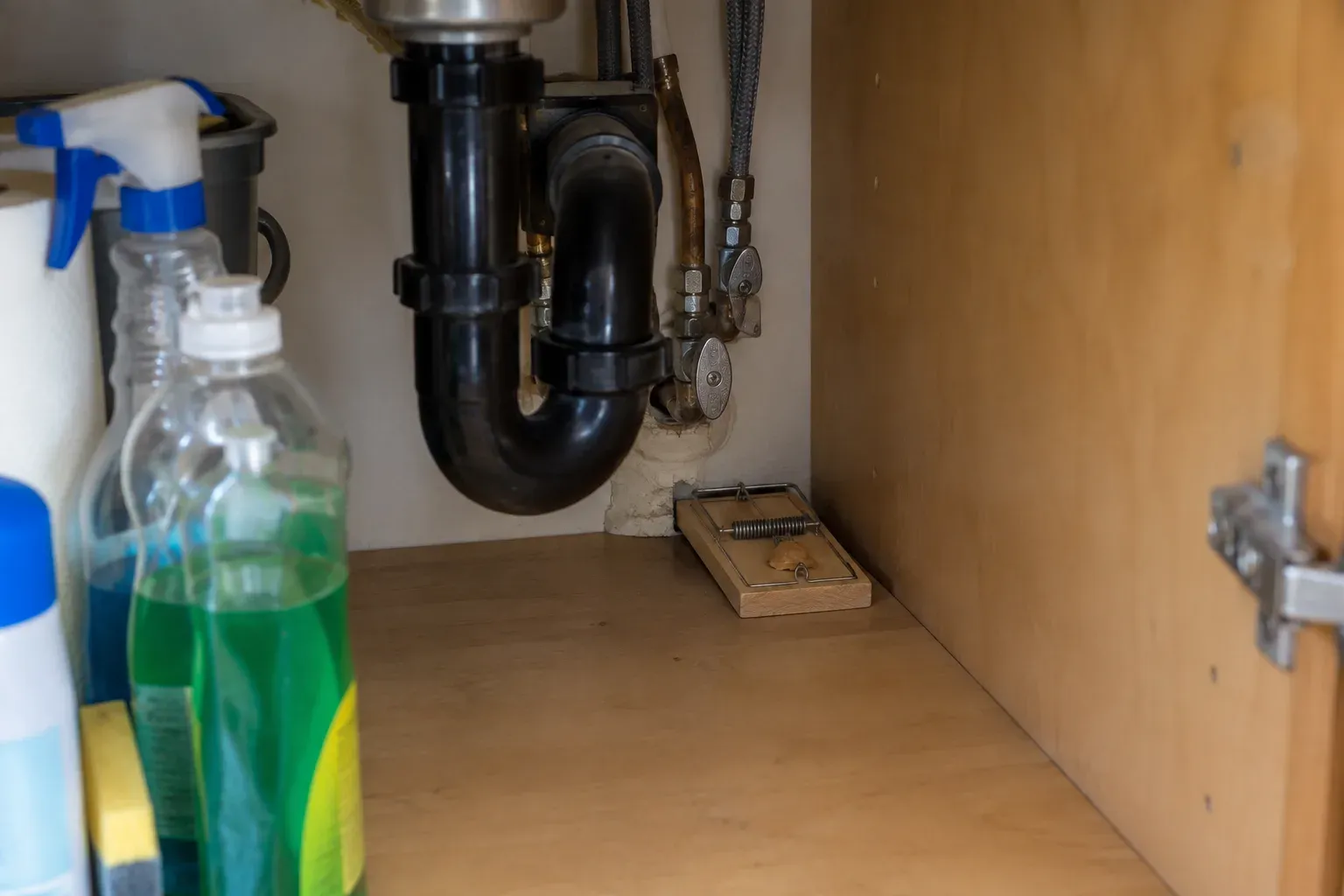
Garage and Basement: Along the Foundation Walls
In the garage, set pairs along the foundation wall, at the corners of the garage door, beside the door into the house, and behind stored boxes and shelving. In basements, follow the walls behind the furnace, water heater and storage. These are often where mice first come in, so traps here catch them before they reach the kitchen. See mice in the basement for the gaps to seal afterward.
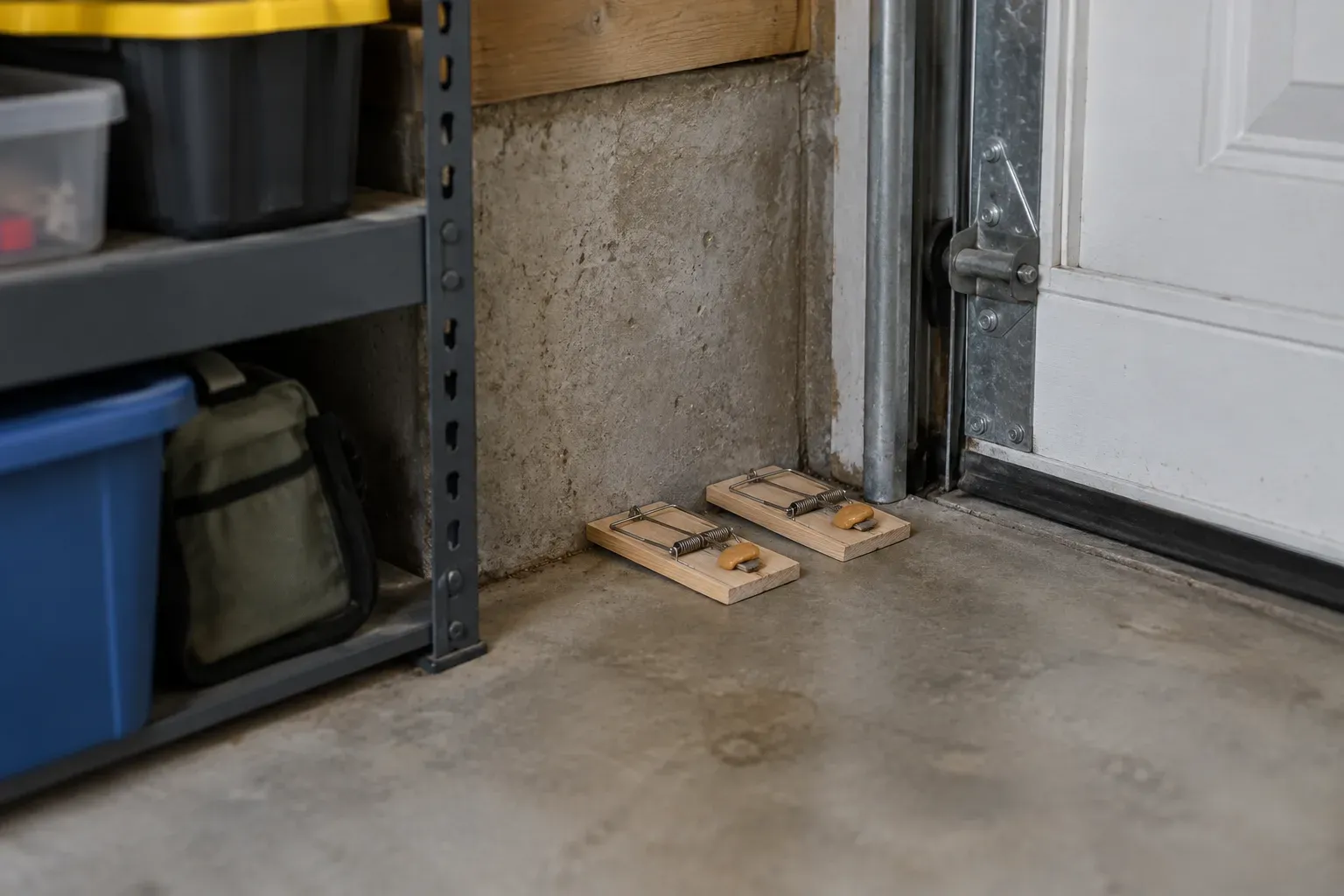
Attic: On Joists and Along the Eaves
Mice in the attic run along joists, the top of walls and the edges near the eaves, and UC IPM notes that traps can go on ledges and other raised spots where mice are active. Set traps on the joists along those edges, where you’ve found droppings or chewed insulation. Mice in the attic and mice in insulation cover cleanup.
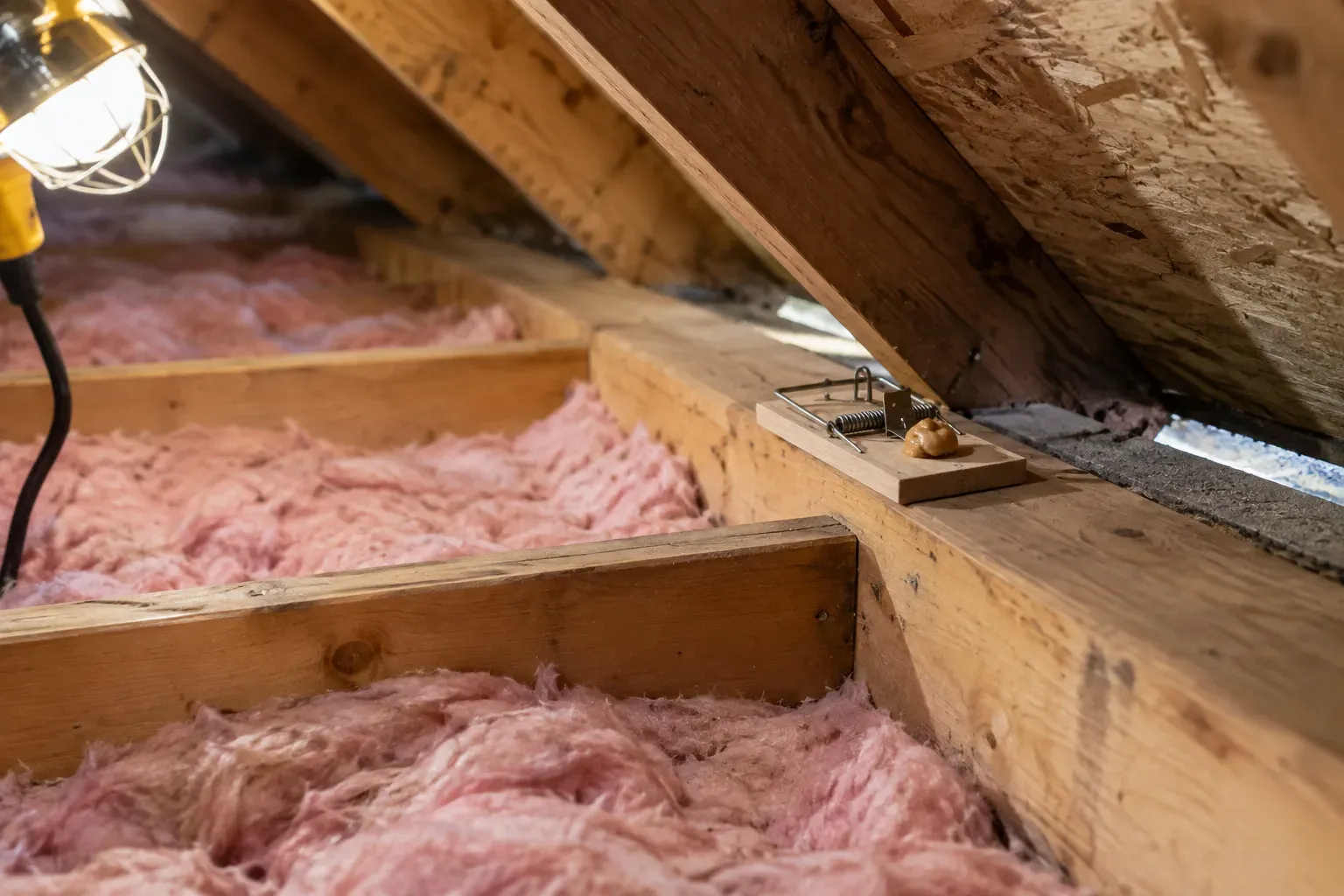
Living Room and Bedroom: Behind Furniture
Mice in living areas run behind couches, dressers and bookcases. Pull the furniture out a little and set traps against the wall behind it. If kids or pets use the room, a covered trap is the safer choice: the mouse goes in, and fingers and paws stay out. See mouse in the bedroom if one has turned up where you sleep.
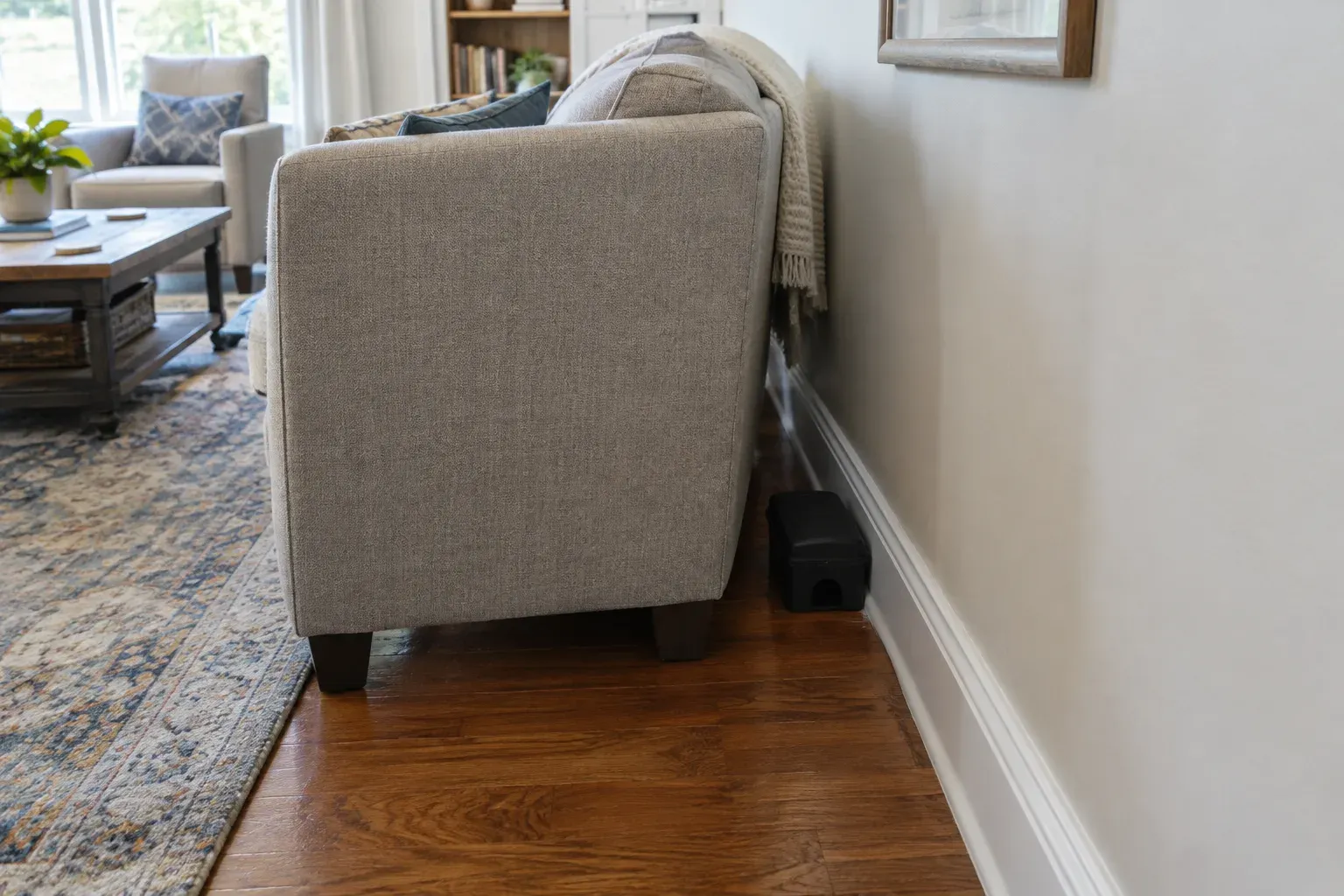
Near Holes and Gaps in the Wall
If you hear mice in the walls or find a hole at the base of a wall, put a pair of traps against the wall on either side of it. Mice coming out follow the wall. Seal the hole once the catches stop. How to get rid of mice in walls has the rest.
Where Not to Put Mouse Traps
- In the middle of the floor. Mice rarely cross open space; a trap there mostly catches your foot.
- Where kids or pets can reach them. UC IPM says to put traps where children, pets and other animals are unlikely to find them. Use a covered trap, or set traps behind appliances and inside cabinets.
- On counters or tables where you prepare food. Use the floor along the wall below them instead.
- Glue boards anywhere. The CDC advises against glue traps and live traps, because frightened mice urinate and that raises your risk of disease. See why glue traps are a bad idea.
How Many Traps, and How Far Apart?
Mice seldom go more than 30 feet from their nest and food, so UC IPM says to space traps no more than about 10 feet apart where mice are active. In practice, that means:
| Home | Starting point |
|---|---|
| One room with droppings | 2–3 pairs along the walls with droppings |
| Kitchen plus a garage or basement | 4–6 pairs: behind appliances, under the sink, garage walls |
| A new problem in a 1,500 sq ft home | About two dozen traps (Nebraska Extension) |
Wooden snap traps cost about $14–$27 for that many. More traps for a few nights beats a few traps for weeks; UC IPM recommends enough traps to make trapping “short and decisive.” One lone trap in a room rarely does it.
No Catches? When to Move a Trap
Mice are less cautious than rats and are often caught quickly, the CDC notes, so you don’t need to wait days for them to get used to a trap. Check every morning: mice are most active before dawn and after dusk (Nebraska Extension).
- Bait gone, trap not sprung: move the trap to a new spot (Nebraska Extension), and use a smaller, firmer dab of bait.
- Bait untouched for a few nights: move the trap to where the newest droppings are, flush against the wall.
- Trap sprung, no mouse: check that the pedal side touches the wall and the trap isn’t sitting at an angle.
- Still nothing after a week of moving traps: look for a different runway, or read mouse trap not working.
You’re done when a full week passes with no catches and no new droppings (CDC).
Placement for Plastic and Covered Traps
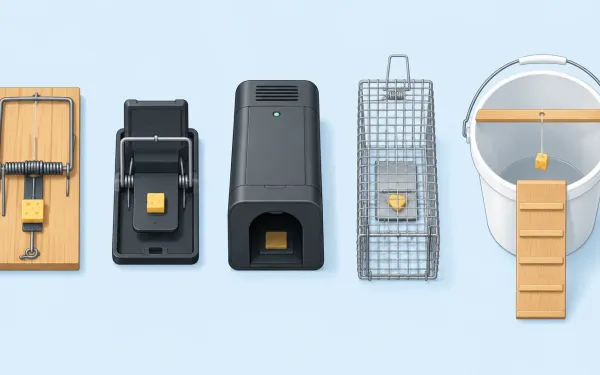
The rules are the same: along the wall, by fresh droppings, in pairs. For a plastic press-to-set trap, the bait cup faces the wall. Covered traps and boxes have openings at the ends; set them along the wall so the openings line up with the mouse’s path. Both are good choices in kitchens and living areas where kids or pets might reach a bare snap trap. What is the best mouse trap compares the types. An electronic mouse trap goes flat against a wall on their route, near fresh droppings.
Common questions
Yes. Mice run along walls, so put the trap at a right angle to the wall with the bait end touching it, in the CDC’s “T.” A trap a foot away from the wall is easy for a mouse to miss.
Set traps in pairs 1 to 2 inches apart, and keep the pairs no more than about 10 feet apart where mice are active (UC IPM).
Only if you also find droppings there. A mouse you see crossing a room is often on its way somewhere. The droppings show the route it uses every night, and that’s where the trap belongs.
The Bottom Line
Find the freshest droppings, then set traps in pairs against the wall right there, behind appliances, under the sink, and along garage and attic walls. Keep traps no more than 10 feet apart, check them every morning, and move any trap that catches nothing for a few nights.
Sources and further reading · 3
- CDC: Trap Up: trap at a right angle to the wall, mice vs. rats, glue and live traps, when to stop.
- UC IPM: House Mouse (Pest Notes 7483): placement along walls, behind objects and on ledges, 30-foot range, 10-foot spacing, paired traps, children and pets.
- Nebraska Extension: Controlling House Mice (G1105): two dozen traps, moving traps when bait disappears, checking in the morning.