How Long Do Mice Live? House Mouse Lifespan and Breeding
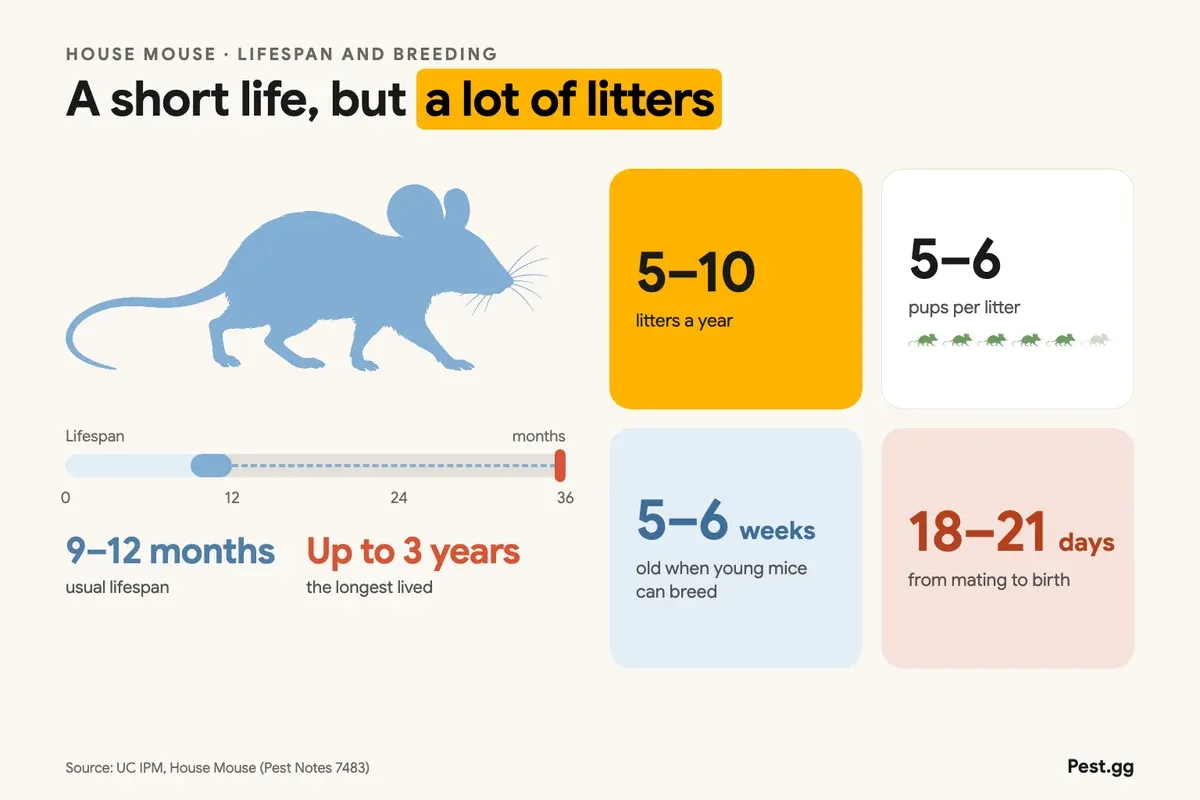
A house mouse usually lives 9 to 12 months, though some have lived up to 3 years (UC IPM). Pet mice average 18 to 24 months (Merck Veterinary Manual). That short life doesn’t help you: a female can have 5 to 10 litters a year of about 5 or 6 pups each, and her young can breed at 5 to 6 weeks old (UC IPM). Mice in your house won’t die out on their own; trapping is what ends it.
Cost: about $14–27 in supplies. Difficulty: easy. Call a pro if you still find fresh droppings after 15 days of steady trapping, or the mice are in walls or an attic you can’t safely reach.
This guide covers house mouse lifespan, how fast mice breed, how long they last without food or water, and what that means for getting rid of them. We haven’t run our own trials; it rests on UC IPM, Merck Veterinary Manual and CDC guidance.
Mouse Lifespan at a Glance
| Mouse | Typical lifespan | Source |
|---|---|---|
| House mouse | Usually 9 to 12 months | UC IPM |
| House mouse, longest lived | Up to 3 years | UC IPM |
| Pet (fancy) mouse | 18 to 24 months on average | Merck Veterinary Manual |
The pet figure is for mice kept with steady food, water, warmth and no predators. A house mouse in your walls has the food and warmth too, which is part of why it can live and breed year-round.
How Fast Do Mice Breed?
Fast enough that “one mouse” rarely stays one. UC IPM gives these numbers for the house mouse:
- Litters: 5 to 10 a year, about 5 or 6 pups each.
- Pregnancy: young are born 18 to 21 days after conception.
- Grown up: sexually mature 5 to 6 weeks after birth, sometimes as late as 12 weeks.
- Season: with plentiful, stable food and shelter, they breed year-round.
Put those together and a pup born in your kitchen can be raising her own litter about two months later. That’s why seeing one mouse is a reason to check for more, and why waiting for mice to leave on their own only adds mice.
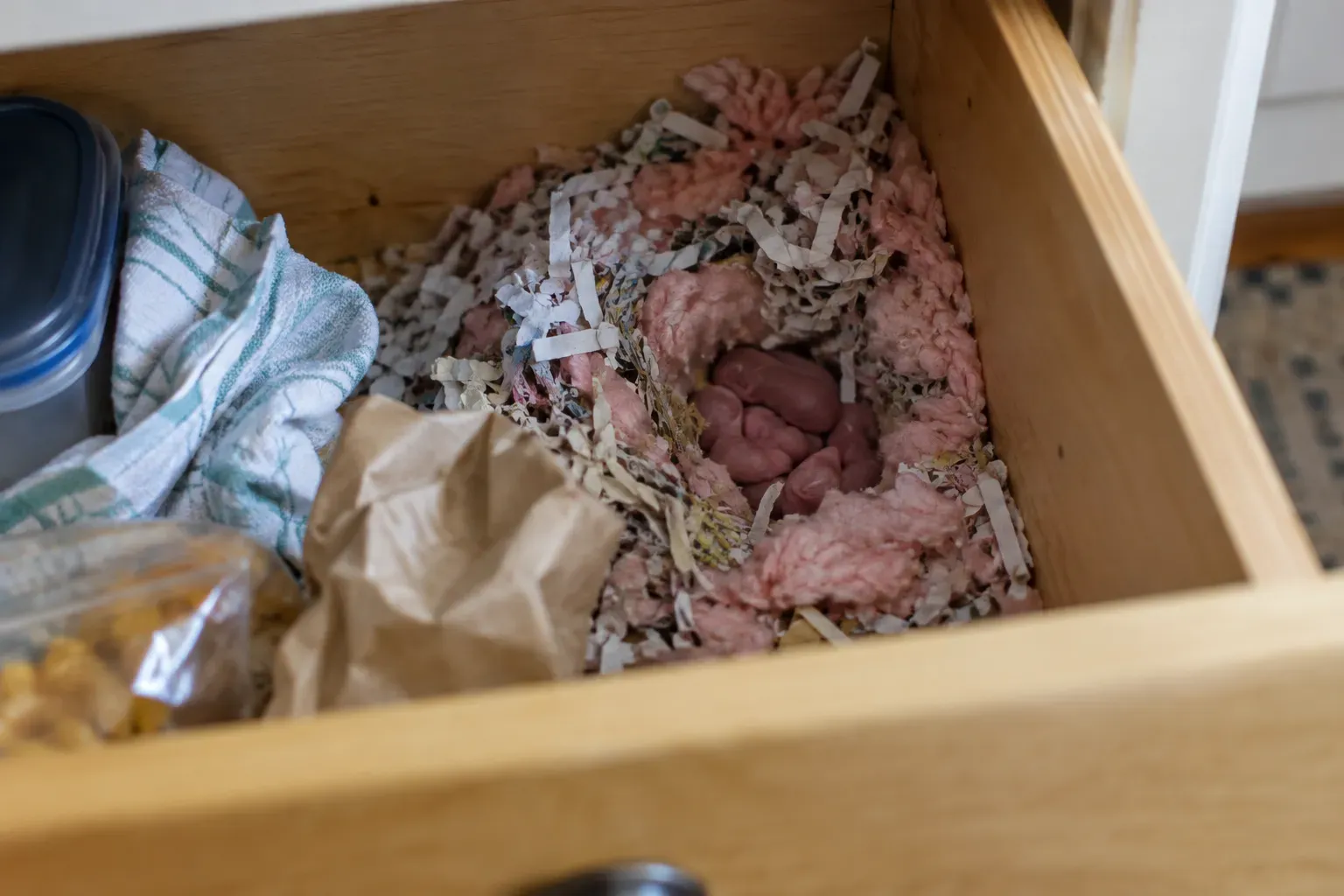
Illustration: a nest of shredded paper with a litter of pups at the back of a drawer.
How Long Can a Mouse Live Without Food or Water?
Not long without food, and water barely matters to them.
Food: none of the extension or health agency guides we checked gives a number of days. The closest data is a 2007 lab study in which mice given water but no food lost about 30% of their body weight in three days. Mice eat about 200 small meals a night (UC IPM), so they need food often, but a house nearly always has a crumb somewhere.
Water: house mice don’t need to drink to survive; they get enough moisture from food, and look for liquids only when their food is too dry (UC IPM). Taking away water won’t drive them out.
So you can’t starve or dry them out. What mice eat covers the foods to lock up, which makes the traps more tempting rather than ending the problem on its own.
What Their Lifespan Means for Getting Rid of Them
Mice live within about 30 feet of their nest and food (UC IPM), and they’re mostly active at night. With months to live and new litters every few weeks, the population keeps growing until something removes it.
Step 1: Set enough traps. Snap traps in pairs along the walls where you find fresh droppings, about $14–27 for a dozen or two. Where to place mouse traps shows the spots.
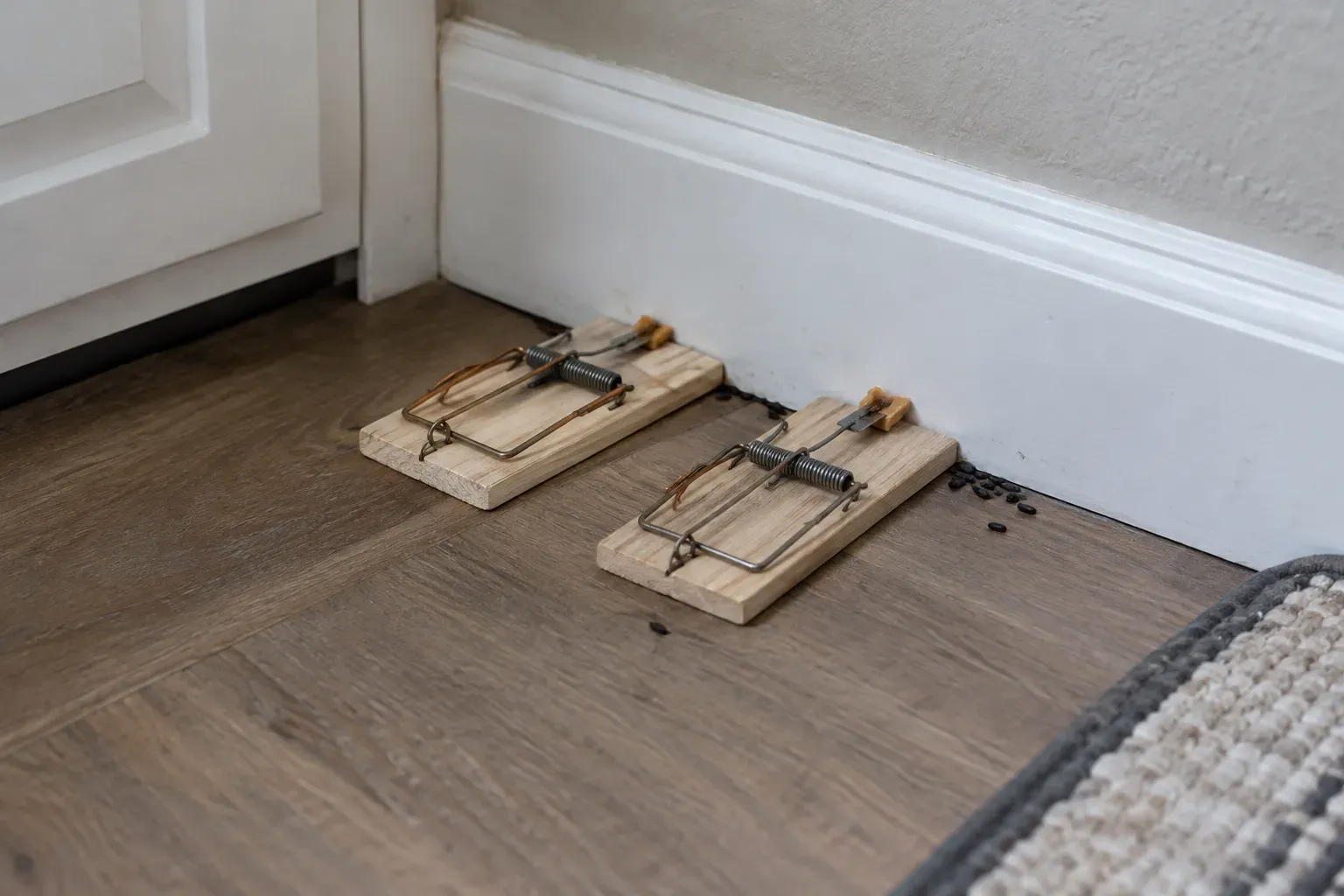
Illustration: a pair of snap traps against the baseboard, bait ends to the wall.
Step 2: Seal the way in. Close gaps about ¼ inch and larger with steel wool or copper mesh plus caulk, so new mice can’t replace the ones you catch.
Step 3: Keep going until a week is quiet. The CDC’s rule of thumb is a week with no catches and no new signs. Our 5-day mouse rule explains where the shorter number comes from.
Step 4: Deal with the ones you don’t find. A mouse that dies inside a wall can smell until it dries out, usually a few weeks; dead mouse smell covers finding it and clearing the odor. That’s one reason to skip poison and trap instead.
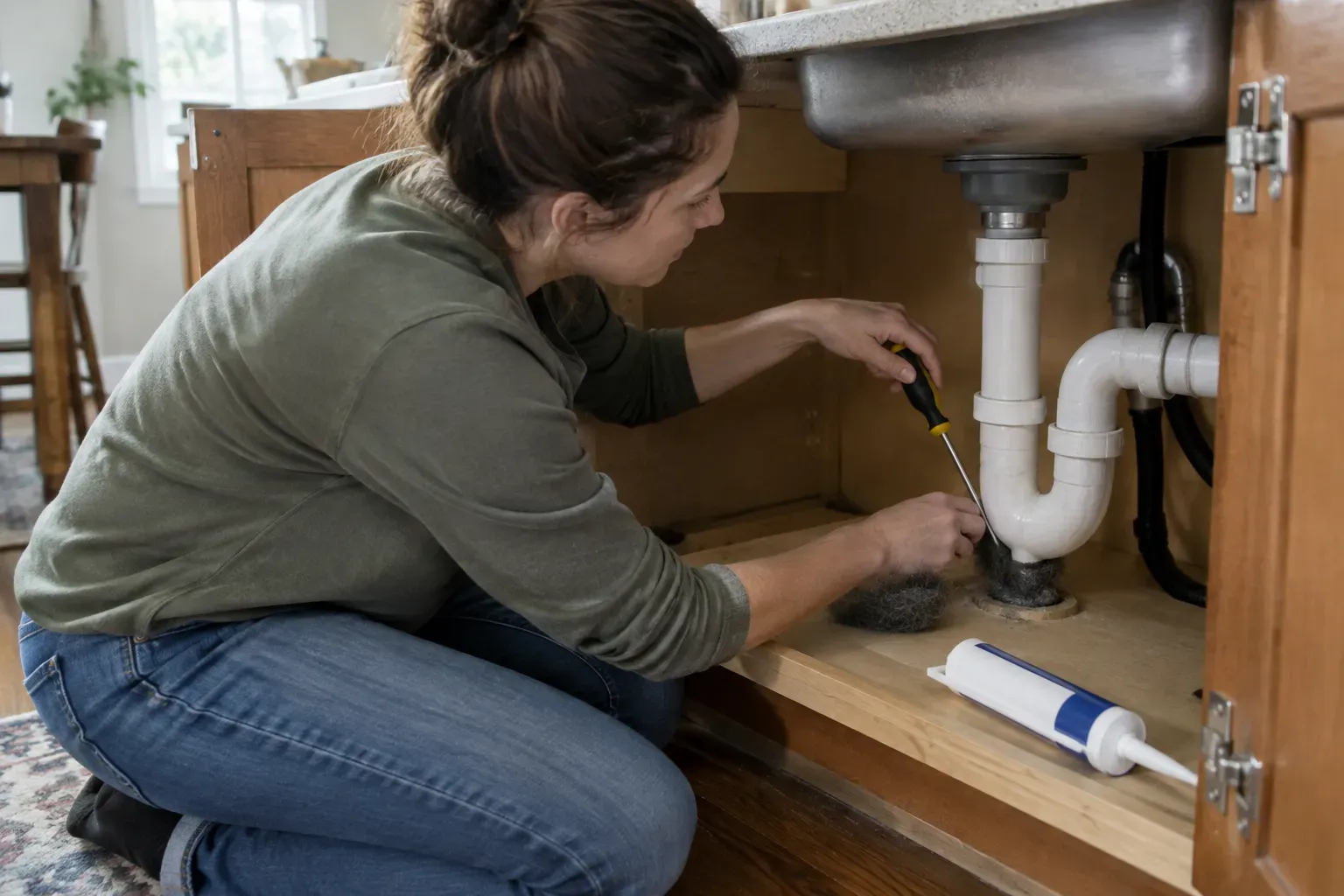
Illustration: packing steel wool around a pipe gap under the sink before caulking it.
When to Call a Pro
If you still find fresh droppings after 15 days of steady trapping, or the mice are in walls or an attic you can’t safely reach.
Common questions
Not indoors. House mice with stable food and shelter breed year-round (UC IPM), and cold weather is what keeps them inside.
Don’t find out. A live trap should be checked at least every 12 hours, because trapped mice can suffer, injure themselves trying to escape or starve, as the animal welfare group UFAW warns. If you can’t check that often, use snap traps; see humane mouse traps.
Usually 9 to 12 months, and some live up to 3 years (UC IPM). A house gives them food, warmth and shelter, so indoor mice tend to do well.
Only a few days without losing a lot of weight: in a 2007 lab study, mice with water but no food lost about 30% of their body weight in three days. No extension guide we checked gives an exact number.
The Bottom Line
House mice usually live less than a year, but they breed so fast that a few mice become many within weeks. Trap along the walls, seal the gaps and keep going until a full week passes with no catches and no new droppings.
Sources and further reading · 5
- UC IPM: House Mouse (Pest Notes 7483): lifespan, litters, maturity, year-round breeding, water needs, meals, home range.
- Merck Veterinary Manual: Mice and Rats as Pets: pet mouse lifespan.
- CDC: Trap Up and Seal Up: trapping until a week passes with no signs, sealing gaps.
- Sokolović et al., BMC Genomics (2007): Fasting induces a biphasic adaptive metabolic response in murine small intestine: weight loss without food.
- UFAW guidance on live traps, as summarized in our humane mouse traps guide.