Mouse in Kitchen? Stove, Dishwasher, Fridge and Food Safety
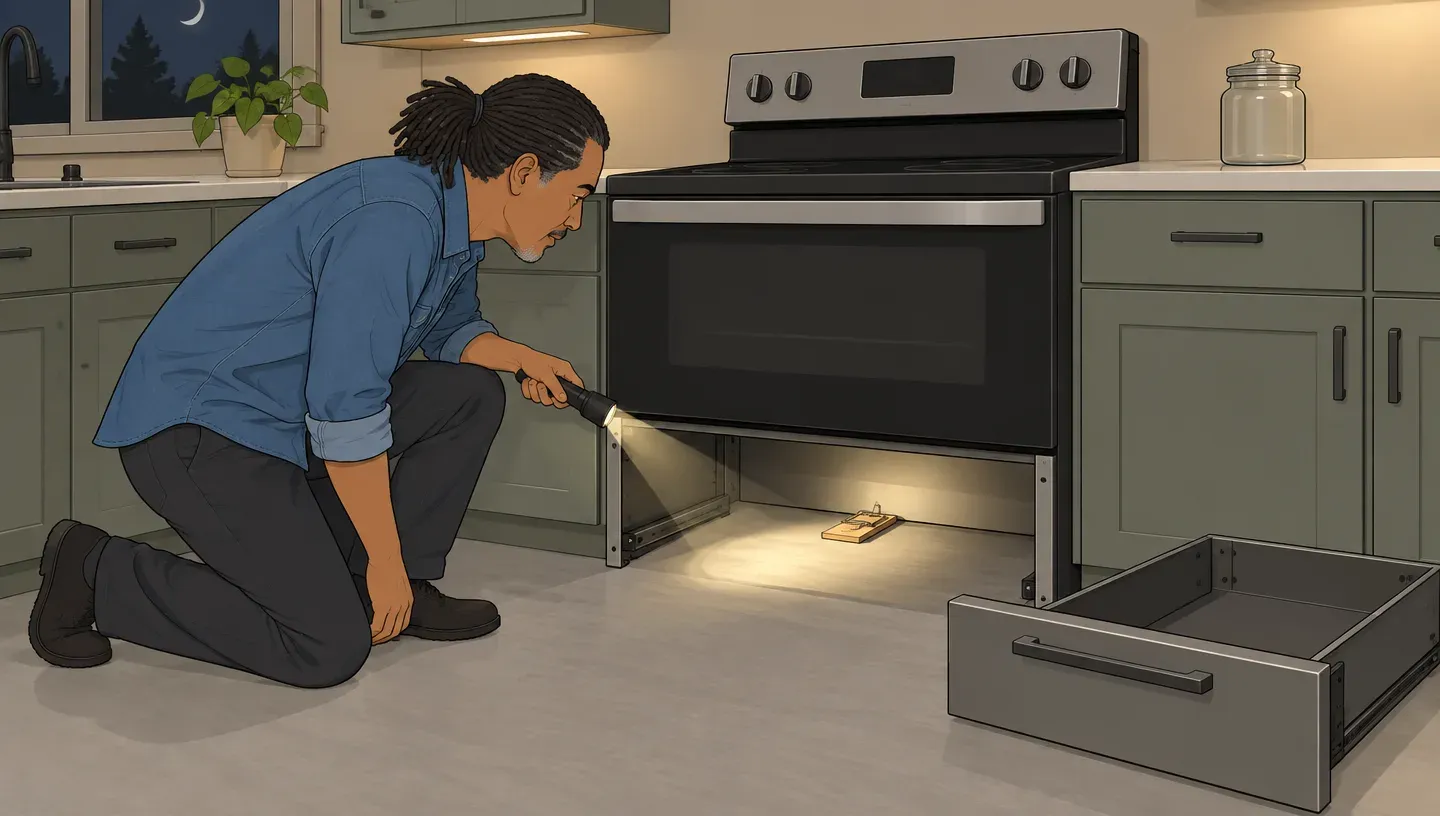
Illustration: with the range drawer out, a flashlight shows a snap trap against the wall under the stove.
A mouse in the kitchen is usually nesting close by: behind the stove or fridge, under the dishwasher or in a cabinet base. Throw out food it could reach, set snap traps along those walls instead of poison, and seal gaps around pipes. Skip glue traps and plug-in repellers. It’s gone after a week with no catches and no new droppings.
Cost: about $57–71 in supplies. Difficulty: moderate. Call a pro if mice are nesting inside the stove or another appliance, rodents are in your heating or cooling ducts, or at least 15 days of steady trapping hasn’t stopped new droppings.
This guide covers what food to throw out, where kitchen mice hide, trapping, safe cleanup and sealing. We haven’t tested these methods ourselves; this rests on CDC, FDA, UC IPM and university extension guidance and September 2026 list prices. For the rest of the house, follow our plan to get rid of mice.
Saw a mouse in your kitchen? Tonight: put all open food and pet food in sealed containers, and set 8 snap traps in pairs behind the stove and fridge, under the sink and in a lower cabinet (Step 3). With gloves on, spray droppings with any cleaner labeled “disinfectant” and wipe them up; don’t sweep or vacuum. A 12-pack of wooden snap traps costs about $14.
What Works and What Doesn’t in the Kitchen
| Method | Works? | Cost | Main limitation |
|---|---|---|---|
| Snap traps in pairs | Yes, the CDC’s pick | $13.74 for 12 | Daily checks; keep away from kids and pets |
| Throwing out exposed food (FDA rule) | Yes | The food you lose | Only undamaged cans and sealed jars can stay |
| Pipe collars, copper mesh, hardware cloth | Yes, the lasting fix | Part of the $57–71 kit | Foam alone won’t stop a mouse |
| Glue and live traps | No | — | Scared mice urinate, raising your risk (CDC) |
| Poison | Skip | — | Never store pesticides next to food (EPA) |
| Ultrasonic plug-ins | No | — | Little evidence they drive mice out (UC IPM) |
| Peppermint oil | No | — | Mice stopped avoiding it within a week in a 2022 lab study |
Is a Mouse in the Kitchen Dangerous?
The risk is what mice leave on food and counters, so droppings get wiped up wet, never swept.
House mice can carry salmonella and lymphocytic choriomeningitis (LCM), a virus people catch from fresh urine, droppings or nesting material; about 5% of U.S. house mice carry it, estimates UC IPM. Most healthy people who get LCM have mild or no symptoms, the CDC says, but it’s more serious in pregnancy and for weakened immune systems.
Hantavirus? House mice are unlikely carriers; deer mice, mostly in rural and wooded areas, carry it (University of Arizona Extension).
What Food to Throw Out After Mice
The FDA’s rule for food exposed to rats and mice:
- Throw away anything in paper or plastic packaging, including pet food and bird seed.
- Also throw away cans or jars that are dented, swollen, cracked or have a broken seal.
- Keep undamaged metal cans and sealed jars. Wash them with soap and water, then boil them for 2 minutes or soak them in the weak bleach mix below.
| Job (per gallon of water) | Unscented bleach |
|---|---|
| Soaking food cans and jars, 15 minutes | About 3 tablespoons |
| Spraying droppings and nests, 5 minutes | 1.5 cups |
Food in a lidded container with no chew marks can stay. More on what mice go for in what attracts mice.
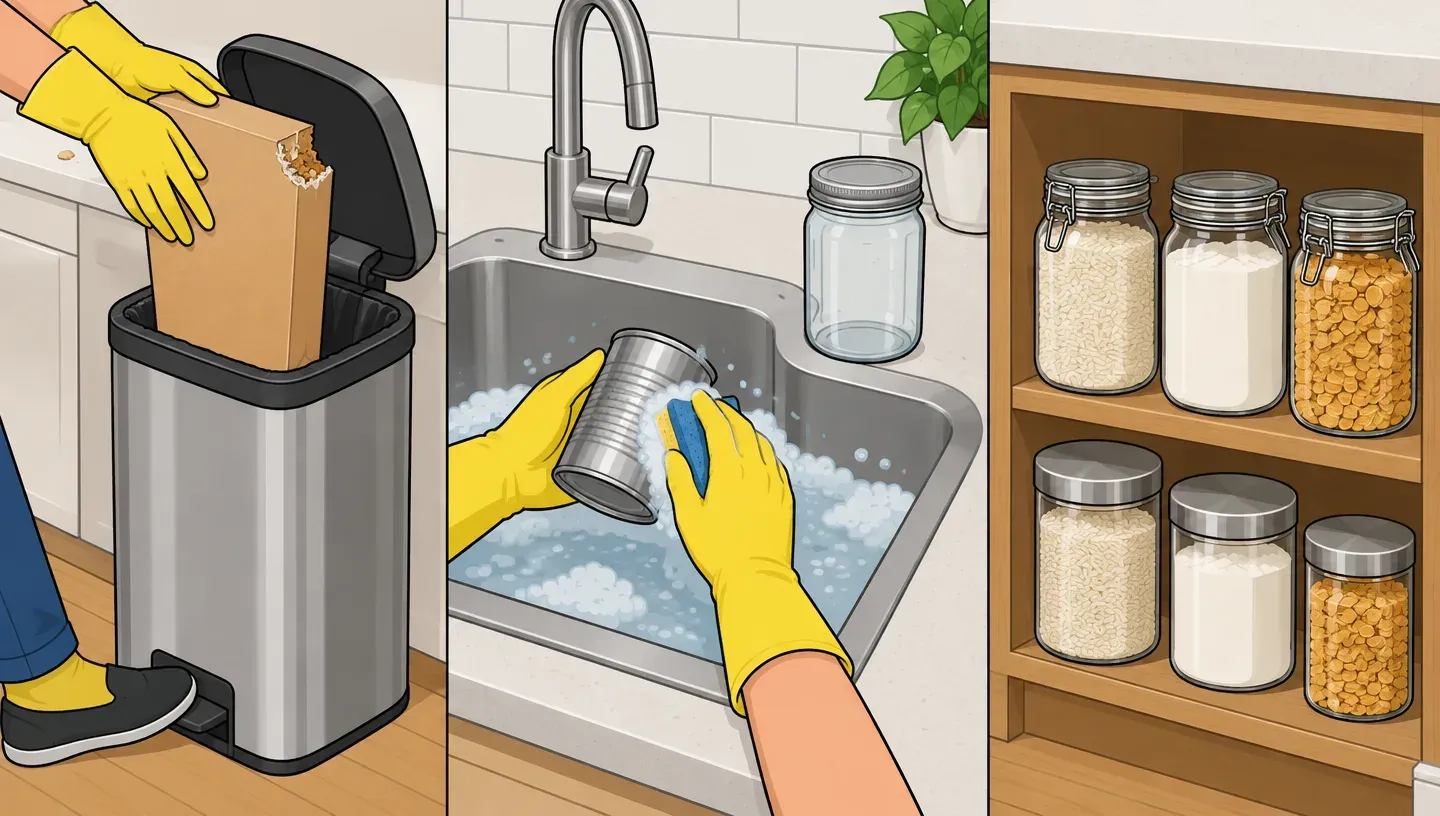
Illustration: chewed boxes go in the trash, undamaged cans get washed, and food goes back in glass and metal.
Where Mice Hide in the Kitchen
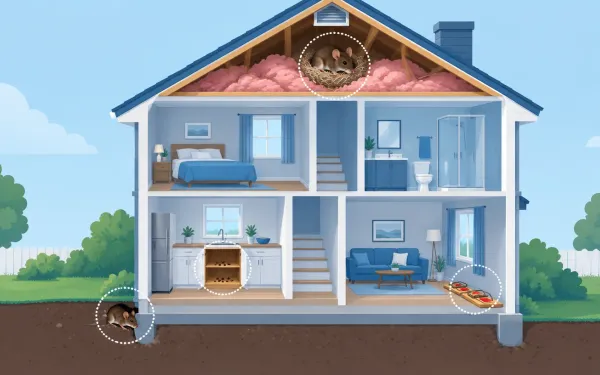
A mouse you keep seeing in the kitchen likely lives there. Mice usually stay within 10 to 25 feet of the nest, and only a few feet when food is plentiful (University of Kentucky). Check:
- Behind and under the stove, including inside the range body.
- Under the dishwasher, where pipes and wires come up through the cabinet base.
- Behind and under the fridge, a favorite den site because it runs constantly.
- Under the sink and the back of lower cabinets and drawers.
How do mice get on counters? They climb rough walls, run along wires and jump up to 12 inches onto a flat surface (UC IPM).
“But my kitchen is spotless.” Most buildings where food is stored or cooked support a few mice, however clean, say ICWDM specialists. Cleaning helps; trapping and sealing end it.
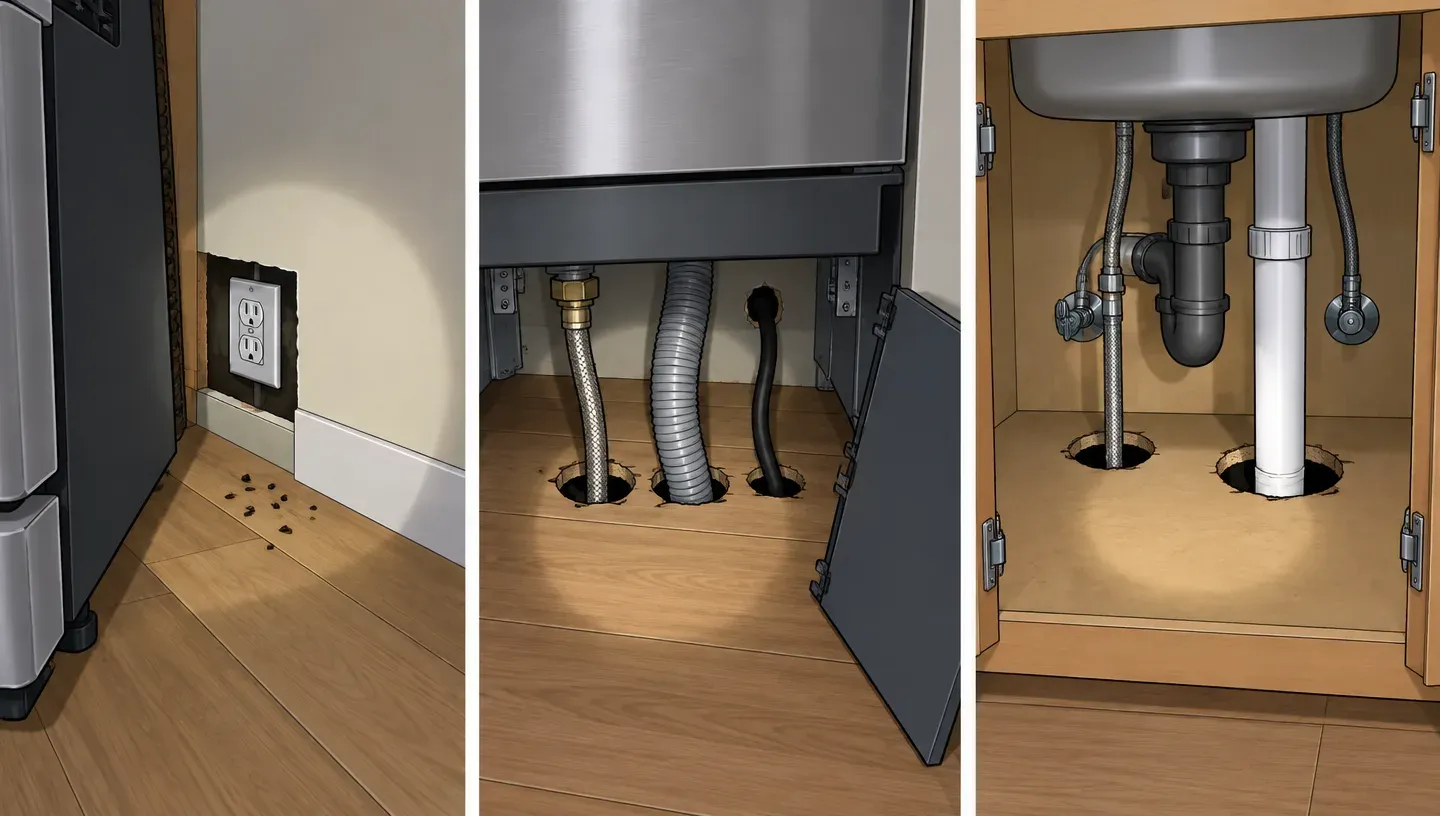
Illustration: behind the stove, under the dishwasher and under the sink, gaps around pipes and wiring lead into the cabinet bases.
Step 1: Check for Mice in the Stove
Pull out the storage drawer under the oven and check the floor with a flashlight. You don’t need to move the stove; with a gas range or a heavy one, don’t.
Don’t run the oven to drive it out. A mouse that dies inside leaves a smell you can’t reach.
Droppings under the burners? One Reddit poster found the nest “in the insulation that’s under my electric stove top.” The CDC’s advice for soiled insulation is to bag and remove it; inside an appliance, that’s a job for an appliance technician.
Step 2: Check for Mice Under the Dishwasher
Mice under the dishwasher usually use the cabinet base as a highway. If the kick panel below the door comes off easily, take it off; if not, or you rent, shine a flashlight under the edge. Look for droppings, nesting material and gaps around the water line, drain hose and wiring, and note every gap for Step 4.
Step 3: Set the Best Mouse Traps for the Kitchen
Plain snap traps are the best mouse traps for the kitchen, and the type the CDC recommends.
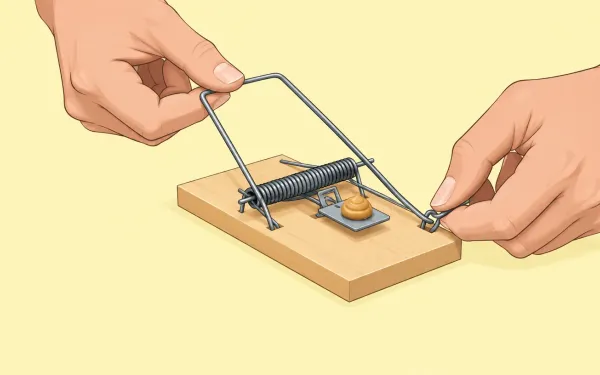
Bait small. A small dab of chunky peanut butter, not a spoonful, is the bait the CDC says works best. Nut allergy at home? Chocolate works too.
Set a “T” in pairs. Trap on the floor, bait end touching the wall, two side by side 1 to 2 inches apart to catch mice that jump the first (UC IPM).
Use 8 traps, not 2. A pair each behind the stove and fridge, under the sink and at the back of a lower cabinet; can’t move the fridge, slide the pair in along its side. Kids or pets? Use a cabinet with a child lock or the door shut.
Check daily and re-bait. It’s over when a week passes with no catches and no new droppings, not five days (why). Setting the spring: how to set a mouse trap; other rooms: where to put mouse traps.
Mouse Droppings on the Kitchen Counter: Clean Wet
Air the kitchen for 30 minutes and put on rubber or plastic gloves. Spray droppings until wet with disinfectant or the stronger bleach mix above, let it soak 5 minutes and wipe up with paper towels (CDC). Then disinfect counters, cabinets and drawers, and wash any dishes that were out. Already swept or vacuumed? See how to clean mouse droppings.
Caught one? With gloves on, spray the mouse and trap with disinfectant, double-bag both and put them in a covered trash can. At about $1 a trap, tossing it is simplest. The same steps work for a dead mouse you find elsewhere.
Step 4: Seal Gaps and Store Food
Sealing is the lasting fix. Close every gap ¼ inch wide or more, about the width of a pencil (CDC):
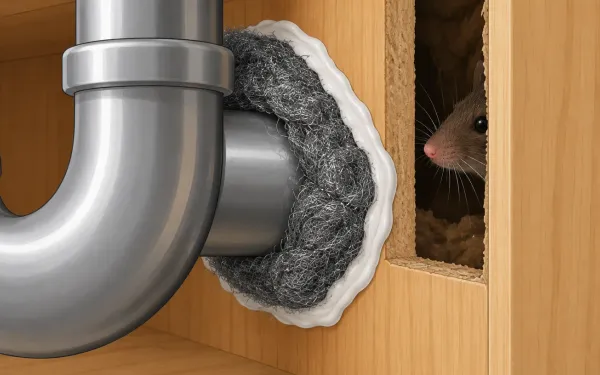
- Pipes under the sink and dishwasher: a metal pipe collar (escutcheon plate), or copper mesh held in place with foam.
- Small holes: steel wool, then caulk or spray foam around it (does steel wool work?).
- Bigger holes behind the stove or fridge: hardware cloth (stiff wire mesh), metal sheeting or cement.
- Food and garbage: tight lids, spills cleaned right away and pet bowls put away overnight.
Check outside too: how mice get in the house. Renting? Tell your landlord in writing about the gaps you found.
Rats in the Kitchen: Bigger Traps, More Patience
New droppings, urine spots or gnawing after a week of mouse trapping may mean rats. UC IPM says rats can squeeze under a door with a ½-inch gap, roof rats often nest in cabinets, and rats avoid new traps for several days. Use rat-size snap traps 10 to 20 feet apart, baited but unset until the bait is taken (rats in the house).
Which Plan Fits Your Situation
| Your situation | Start with | Then |
|---|---|---|
| Renting | Traps and sealed food tonight | Written note to your landlord about gaps |
| Kids or pets | Traps behind the fridge or in locked cabinets | No poison anywhere near food |
| Nest inside the stove or dishwasher | Traps beside the appliance | Appliance technician |
| Bigger droppings, gnawing | Rat traps, baited but unset | The rat guide |
| New droppings after 15 days | Keep trapping | A pro |
What It Might Still Cost
| Item | Typical cost |
|---|---|
| 12 wooden mouse snap traps | $13.74 |
| Mouse kit: 12–24 traps, copper mesh, gloves, bleach | About $57–71 |
| Rat kit: 6 rat traps, copper mesh, gloves, bleach | About $65–87 |
| Pro trap-and-seal job, 53 shared quotes (middle half) | $1,400–$3,000 |
| Pro visit, price-guide range (usually no sealing) | $150–$655 |
| Pro attic insulation cleanup, if upsold | $7,500–$14,000 |
DIY: U.S. list prices from Victor, DoMyOwn and Target, September 30, 2026, before tax. Pro: the middle half of 53 trap-and-seal quotes homeowners shared on Reddit (see the quote table). Price-guide range: This Old House for mice (April 2026) and HomeAdvisor for rats (June 2026); it usually covers a trap-and-bait visit, with sealing extra. Attic cleanup: the middle half of 35 shared quotes that included new insulation. Only the traps are urgent.
Before You Start: A Quick Checklist
- Seal every open food bag and the pet food bin tonight.
- Toss food in chewed paper or plastic packaging.
- Buy a 12-pack of snap traps for 8 placements plus spares.
- Pull the oven drawer and dishwasher kick panel to look, not the whole appliance.
- Mix bleach fresh: 1.5 cups per gallon for droppings.
- List every pipe gap for sealing.
When to Call a Pro
- Mice are nesting inside the stove, fridge or dishwasher: an appliance technician for the appliance, a pest pro for the mice.
- Rodents are in your heating or cooling ducts, which the CDC says needs a professional.
- You’ve trapped and re-baited for at least 15 days, as the CDC advises, and new droppings keep appearing.
Common questions
Scratching behind the stove or under cabinets, chewed bags in the pantry, and droppings on counters or in drawers by morning: ⅛ to ¼ inch, pointed, scattered rather than piled (Nebraska Extension).
Mice are more often around and under it, a favorite den site (Nebraska Extension). Found signs inside? Throw out exposed food as above and disinfect the shelves.
Rarely. Cats catch some mice, but UC IPM says predators seldom control them.
Sources and further reading · 11
- CDC: Trap Up, Seal Up, Clean Up, Controlling Wild Rodent Infestations and About LCM.
- FDA: Food Products Exposed to Filth.
- EPA: Managing Mice and Rats in Child Care and Safely Use Rodent Bait Products.
- UC IPM: House Mouse and Rats.
- Nebraska Extension: Controlling House Mice.
- University of Kentucky: Control of Mice.
- Oregon State Extension: House Mouse IPM in Schools.
- ICWDM: House Mouse Control.
- University of Arizona Extension: Hantavirus and Disease Prevention.
- Poison Control: Mouse and Rat Poisons.
- Chulikhit et al. (2022): herbal oils as mouse repellents.