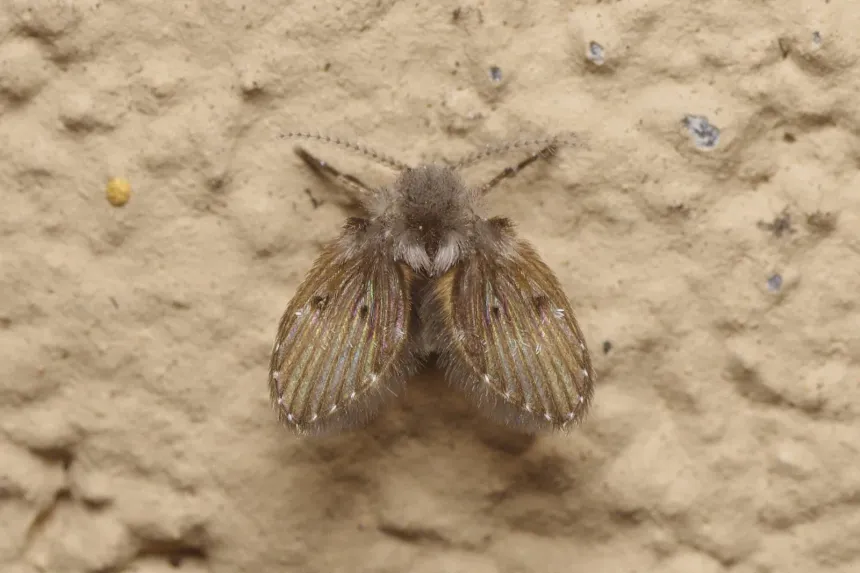
- Scientific name
- Psychodidae (family)
- Also called
- moth fly, sewer gnat, filter fly
- Size
- About 1/8 in
- Color
- Gray to tan, fuzzy, wings held like a roof
- Found in
- Bathroom and kitchen drains, floor drains, sump pits, sewer leaks
- Harmful?
- No. Nuisance; a sign of buildup in drains
- Active
- Year-round indoors
- DIY cost
- $29–46 in suppliesSee the plan
What to do
Drain flies are the fuzzy, moth-like little flies that sit on bathroom walls near sinks and tubs. They breed in the slime inside drains, they don’t bite, and they point straight to the drain they came from. The one thing to do: find the drain with a strip of tape overnight, then scrub the slime out with a long brush.
This page covers how to identify drain flies, tell them from fruit flies and fungus gnats, and confirm the source. It rests on university extension guidance.
How to Identify Drain Flies: Fuzzy and Moth-Like
- Fuzzy, moth-like: body and wings covered in fine hairs.
- About 1/8 inch (2–3 mm), gray to tan or dark gray to black.
- Wings held over the body like a roof when resting, making a heart or leaf shape.
- Short, hopping flights of a few feet; they mostly sit still on walls by day and hover over drains at night.
- Smear to powder when swatted.
They’re also called moth flies, sewer flies, filter flies or drain gnats.
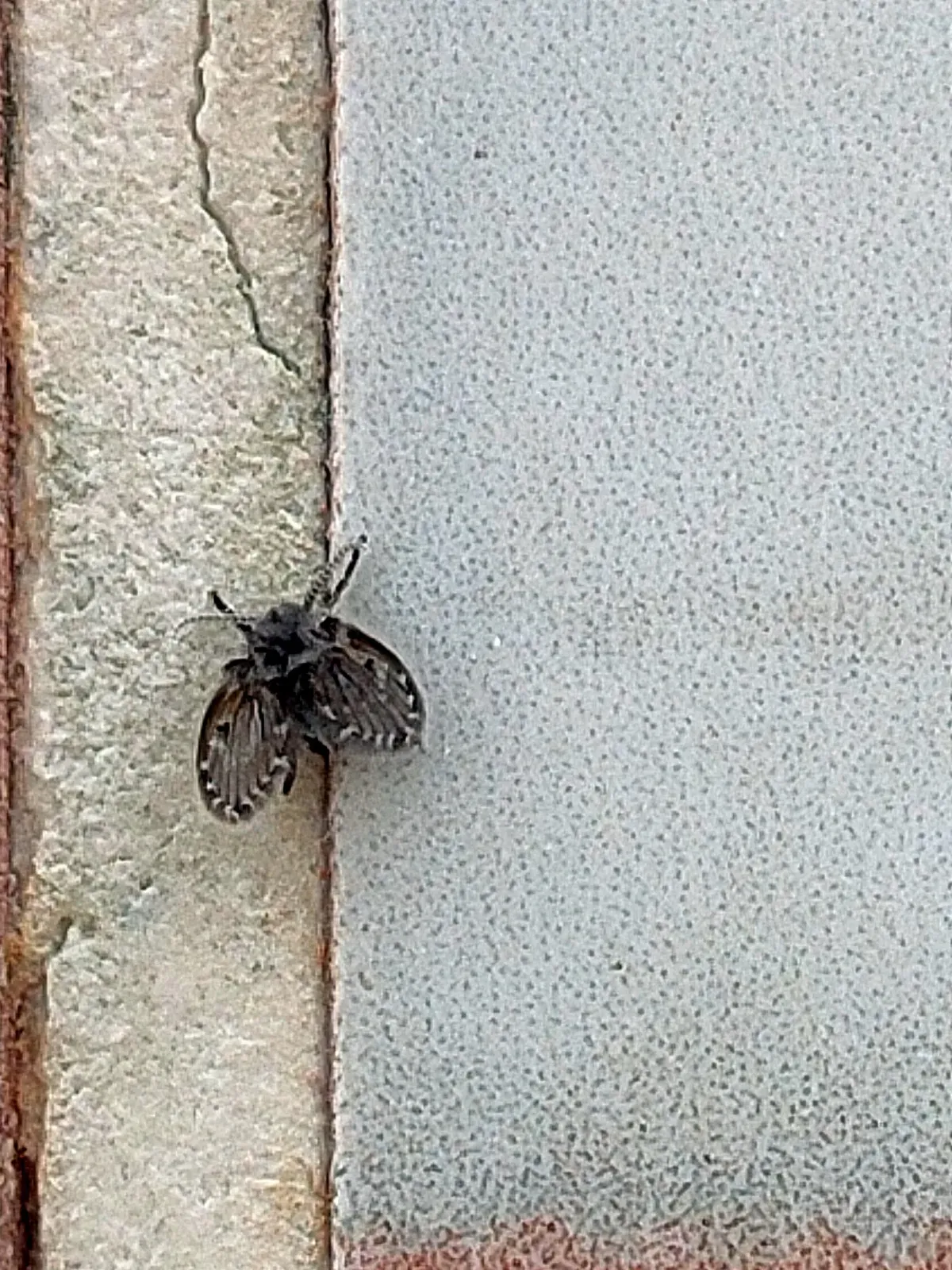
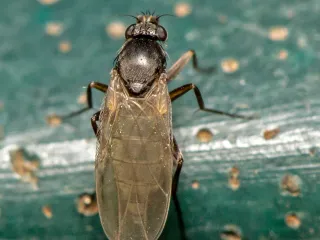
A drain fly resting on a wall, the way you usually spot one indoors. Photo: Сарапулов (CC BY 4.0), via Wikimedia Commons.
Drain Flies vs. Other Small Flies: Fuzz and Location
| Fly | How it differs | Where |
|---|---|---|
| Drain fly | Fuzzy, moth-like, roof-shaped wings | Sinks, tubs, floor drains |
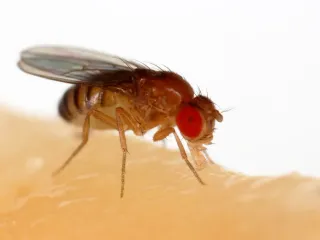
| Fruit fly | Tan, usually red-eyed | Fruit, peels and trash |
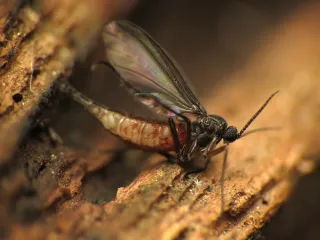
| Fungus gnat | Dark, not fuzzy | Houseplants and damp potting soil |
| Phorid fly | Humpbacked, runs | Drains, garbage, sewer leaks |
Fungus gnats can breed in drains too, so the tape test below works for them as well.
Where Drain Flies Breed: Slime That Stays Wet
- Bathroom sinks, tubs, showers and their overflow holes
- Kitchen sinks, dishwashers and garbage disposals
- Toilets and tanks that aren’t used often
- Basement floor drains and sump pits
- Drip pans under refrigerators, dehumidifiers and air conditioners
- Broken sewer lines under slabs, or water under loose tiles
The larvae live in the gelatinous biofilm inside drains and traps, feeding on its bacteria, algae and fungi. Females lay 30 to 100 eggs at a time that hatch in under 48 hours (Texas A&M AgriLife), and the whole cycle takes about 10 to 15 days at 70°F (University of Kentucky).
Why Drain Flies Keep Coming Back: A Missed Breeding Spot
Usually one source was missed:
- The overflow hole of a sink or tub you already scrubbed.
- A drain you never use, like a basement floor drain, laundry sink or guest shower.
- Appliance drip pans and condensate lines.
- Outdoors: wet, shady spots where the AC condensate drains, clogged gutters and leaky septic lines. The University of Kentucky says to look outside if nothing shows up on the tape indoors.
The larvae are hard to drown, too: they trap air bubbles and survive a day or more underwater (Virginia Tech), which is why pouring water or bleach alone doesn’t end it.
Are Drain Flies Harmful? No
They don’t bite or sting and aren’t known to spread disease to people. They don’t damage pipes either. They show that organic buildup is sitting in a drain. A burst of flies after a vacation usually fades once water runs through the drains again.
How to Confirm the Source: The Tape Test
- Lay clear tape across the middle of each suspect drain at bedtime, sticky side down, leaving a gap on each side.
- Check in the morning: flies stuck to the tape mean that drain is breeding them.
- Test every suspect, including overflow holes, floor drains and unused toilets. An oiled clear cup turned upside down over the drain works too.
- Retape after cleaning: if the tape still catches flies a week after scrubbing, treat again or look for another source.
What to Do: Scrub the Slime, Not Spray the Air
Scrub the inside of the drain with a long, flexible brush to remove the slime layer, then flush with hot water. A bacterial or enzyme drain gel helps with drains you can’t reach. Pouring bleach or insecticide down the drain doesn’t remove the film the larvae live in, and bug spray kills only adults. If every drain is clean and flies keep coming up from floor cracks, call a plumber. Home remedies are compared in drain fly home remedies, and the full plan is in how to get rid of drain flies. For other pests, browse all pest guides.
Often confused with
Sources
- Drain Flies or Moth Flies (University of Kentucky Entomology, EF615)
- Drain Flies (University of Maryland Extension)
Last reviewed Oct 5, 2026.