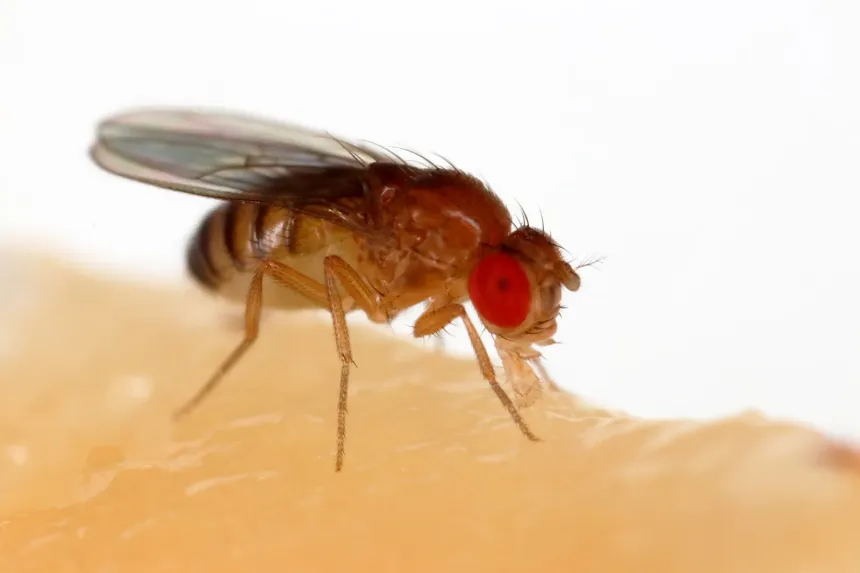
- Scientific name
- Drosophila melanogaster
- Also called
- vinegar fly
- Size
- About 1/8 in
- Color
- Tan to yellowish brown, usually bright red eyes
- Found in
- Fruit bowls, trash, recycling, drains, compost bins
- Harmful?
- Contaminates food; not a bite risk
- Active
- Year-round indoors; peaks in late summer and fall
- DIY cost
- $6–21 in suppliesSee the plan
Fruit flies are the tan, red-eyed little flies that hover over ripe fruit, trash and kitchen drains. They breed in anything fermenting, they don’t bite, and a few become a cloud quickly because one female can lay about 500 eggs. The one thing to do: find and remove what they’re breeding in, then catch the adults in a jar of cider vinegar with a drop of dish soap.
This page covers how to identify fruit flies, tell them from other small flies and find where they breed. It rests on university extension guidance.
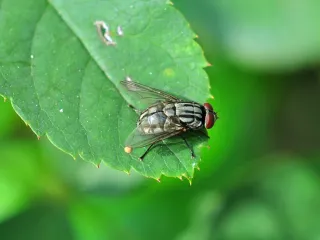
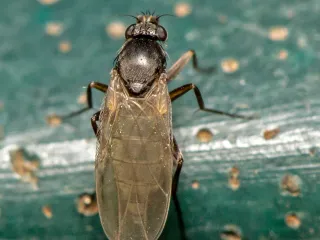
How to Identify Fruit Flies: Tan Body, Red Eyes
- Small: about 1/8 inch.
- Tan to yellowish brown, with bright red eyes in most.
- Darker bands across the back of the abdomen.
- Slow, hovering flight around fruit, sinks and trash.
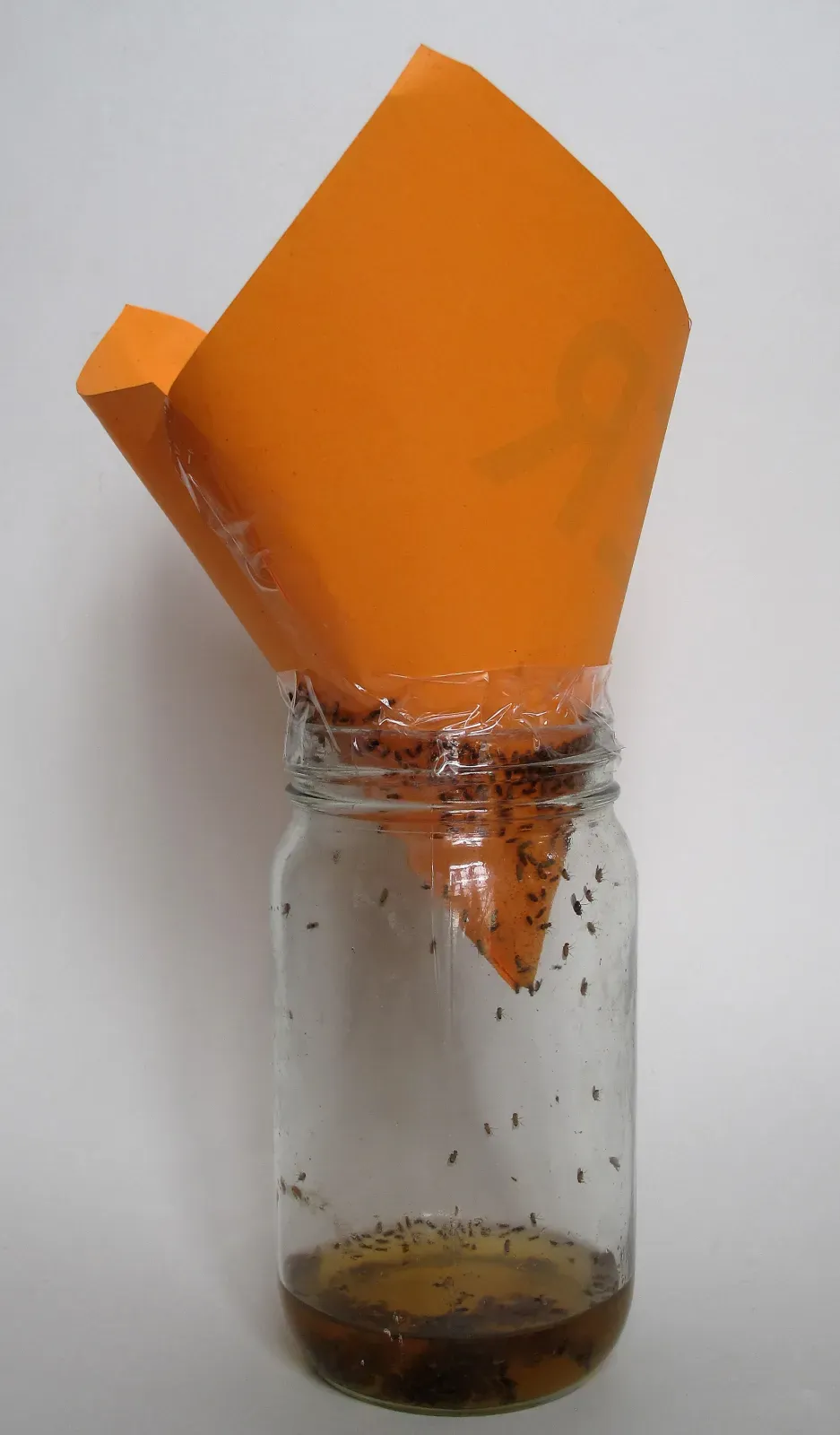
A homemade jar-and-paper-cone trap full of caught fruit flies. Photo: Downtowngal (CC BY-SA 3.0), via Wikimedia Commons.
Fruit Flies vs. Other Small Flies: Eyes and Where They Gather
| Fly | Looks like | Hangs around |
|---|---|---|
| Fruit fly | Tan, red eyes | Ripe fruit, trash, recycling |
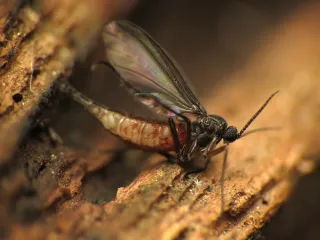
| Fungus gnat | Dark, like a tiny mosquito | Houseplants, windows |
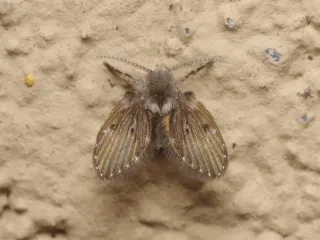
| Drain fly | Fuzzy, moth-like | Bathroom walls, sinks, drains |
| Phorid fly | Humpbacked; runs rather than flies | Drains, garbage, sewer leaks |
Flies rising from potting soil are almost always fungus gnats, and a new wave without red eyes probably isn’t fruit flies; vinegar traps won’t fix either. How to get rid of gnats sorts all of them.
Where Fruit Flies Breed: Anything Fermenting
- Ripe or damaged fruit and vegetables, especially bananas, tomatoes and onions
- Trash cans, recycling bins and compost pails
- Kitchen drains and garbage disposals
- Under appliances where juice or soda has spilled, and refrigerator drip pans
- Mops, sponges and wet rags
They ride in as eggs or larvae on produce from the store or garden, and adults slip in through screens and door gaps when they smell food. They can show up year-round but peak in late summer and fall. The University of Kentucky says a single rotting potato or onion forgotten at the back of a closet, or juice spilled under the refrigerator, can breed thousands of fruit flies, and so can a recycling bin in the basement. All they need is a moist film of fermenting material.
Fruit Fly Life Cycle: 8 to 10 Days
Eggs laid before you clean keep hatching for one more life cycle, which takes 8 to 10 days (University of Maryland Extension). That’s why the flies seem to come back after a cleanup: you’re done when no new flies show up for 10 days.
Are Fruit Flies Harmful? A Nuisance
They don’t bite, and University of Minnesota Extension says they generally aren’t considered a health problem. They do land on food, though, and Texas A&M AgriLife says they can spread bacteria onto fruit and counters. Throw out anything with larvae in it, and cut away cracked or damaged parts of fruit, where eggs and larvae may be.
How to Confirm It’s Fruit Flies
- Look for red eyes and a tan body on a fly resting on fruit.
- Set a vinegar jar by the fruit bowl, sink and trash; the one that fills fastest is nearest the source.
- Tape a clear plastic bag loosely over a suspect drain overnight; flies in the bag mean the drain is breeding them.
What to Do: Remove the Source, Then Trap
Throw out overripe produce, rinse recycling, clean trash cans and scrub drains. Bleach and drain cleaner are largely ineffective against the film in drains, and boiling water alone won’t remove it (Texas A&M AgriLife). Then set traps: a jar with about an inch of cider vinegar and a drop of dish soap, or a paper funnel over cider vinegar or a banana slice. Colorado State says no trap controls them on its own, so trap after cleaning, not instead of it. No insecticide is needed: a household fly spray kills only the flies present and nothing that hatches tomorrow (Nebraska Extension). If you can fruit or make wine, cider or beer, seal the containers well, and keep tight-fitting 16-mesh screens on windows and doors (University of Kentucky). The full plan, including four DIY traps, is in how to get rid of fruit flies. For other pests, browse all pest guides.
Often confused with
Sources
- Fruit Flies (University of Kentucky Entomology, EF621)
- Fruit Flies (University of Maryland Extension)
- Fruit Flies in the Home (University of Wisconsin Extension)
Last reviewed Oct 4, 2026.