- Scientific name
- Sciaridae (family)
- Also called
- houseplant gnats, soil gnats
- Size
- About 1/8 in
- Color
- Dark gray to black, clear or smoky wings
- Found in
- Houseplants, potting soil, windows, damp mulch
- Harmful?
- No. Larvae can harm seedling roots
- Active
- Year-round indoors; worse in winter with overwatering
- DIY cost
- $6–21 in suppliesSee the plan
Fungus gnats are the tiny black flies that rise out of a houseplant when you water it. They breed in damp potting soil, they don’t bite, and the problem almost always comes down to soil that stays wet. The one thing to do: let the top 1 to 2 inches of soil dry between waterings and catch the adults on yellow sticky cards.
This page covers how to identify fungus gnats and their larvae, tell them from other small flies and find where they breed. It rests on UC IPM and university extension guidance.
How to Identify Fungus Gnats: Tiny Black Mosquito Look
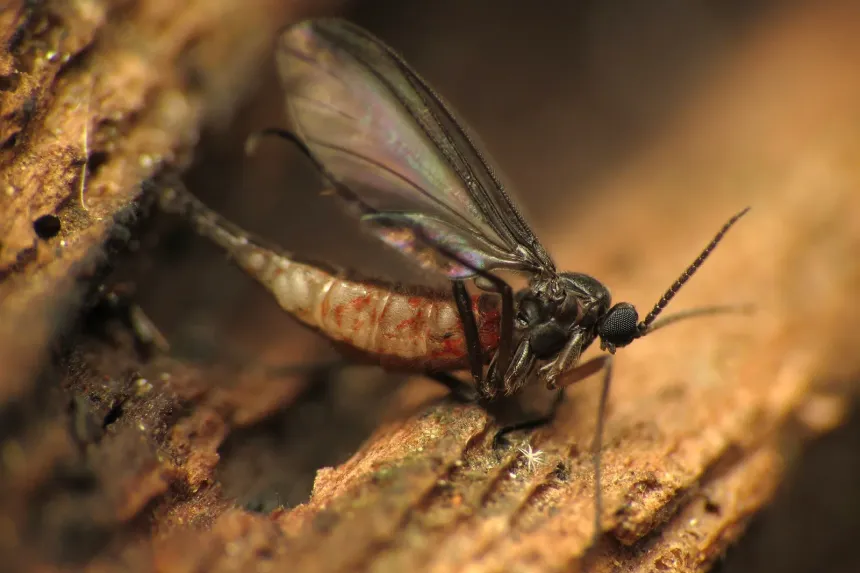
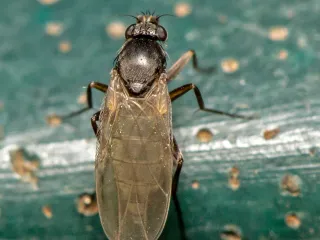
- Tiny and dark: about 1/16 to 1/8 inch, gray to black, like a small mosquito.
- Long legs and long, beaded antennae.
- Weak, zigzag flight, staying close to plants, soil and windows; they often walk on the soil.
- Larvae: clear-white, legless worms with shiny black heads, in the top inch or two of soil.
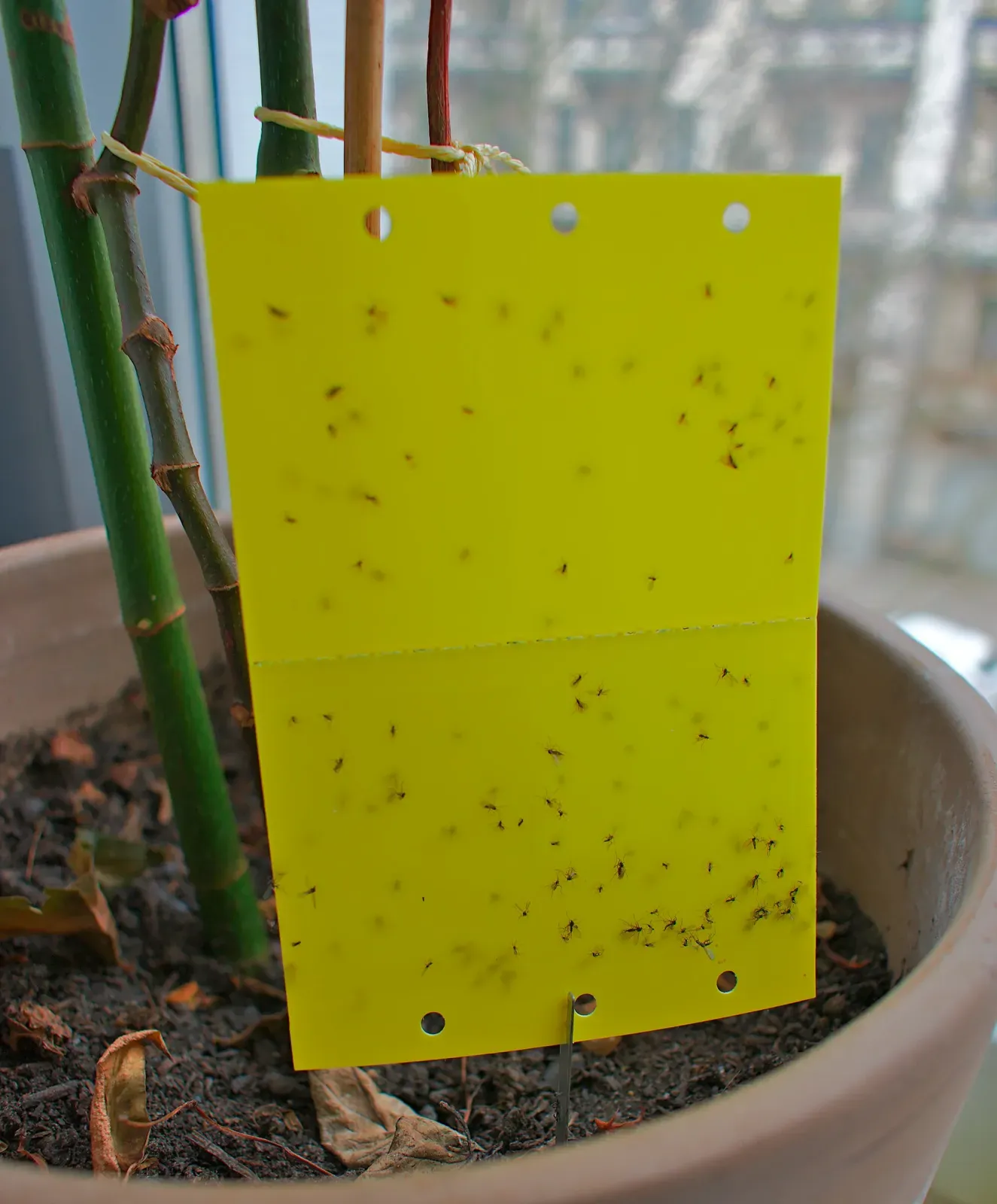
Fungus gnats caught on a yellow sticky card in a houseplant pot. Photo: Wikimedia Commons user “Ich” (CC BY-SA 4.0), via Wikimedia Commons.
Fungus Gnats vs. Other Small Flies: Where They Hang Around
| Fly | Looks like | Hangs around |
|---|---|---|
| Fungus gnat | Tiny black mosquito | Houseplants, windows |
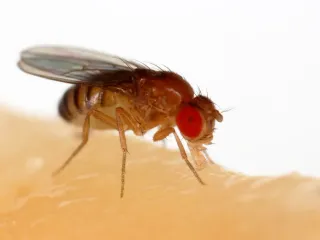
| Fruit fly | Tan, red eyes | Ripe fruit, trash, recycling |
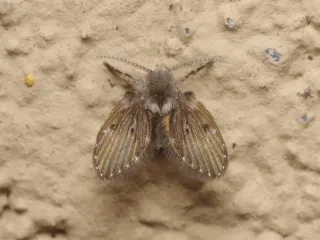
| Drain fly | Fuzzy, moth-like | Sinks, tubs, floor drains |
| Phorid fly | Humpbacked, runs | Drains, garbage, sewer leaks |
Tiny specks that jump in the soil instead of flying are probably springtails, which also point to wet soil. Sorting all of them is covered in how to get rid of gnats.
Fungus Gnat Life Cycle: Why They Keep Coming for Weeks
At 75°F, eggs hatch in about 3 days, larvae feed for about 10 days, and adults emerge about 4 days later, so a full generation takes about 17 days (UC IPM). Adults live about 7 to 10 days, and a female can lay up to 200 eggs in that time (Colorado State University Extension). Most of the life cycle happens in the soil, which is why swatting adults never ends it.
Where You’ll Find Them: Wet Potting Soil
- Overwatered houseplants and seed trays
- Pots without drainage holes, self-watering pots and full saucers
- Bags of potting mix stored damp
- Windows and lamps near plants; adults are drawn to light
They peak in late fall and winter, when plants use less water and soil stays wet longer. No plants? Larvae can live in any moist organic material: drains with buildup, leaks under a sink, stored compost or organic fertilizer, and rarely damp wall voids.
Are Fungus Gnats Harmful? Not to People
Adults don’t bite people or pets and don’t damage plants; UC IPM calls them primarily a nuisance. Large numbers of larvae can chew roots and stunt seedlings and young plants. A wilting houseplant more often has a watering or root-rot problem. Expect adults for about two weeks after you start treating: pupae already in the soil still hatch.
How to Confirm It’s Fungus Gnats
- Press a 1/4-inch slice of raw potato onto the soil and check its underside after a few days for tiny clear worms with black heads.
- Stake a yellow sticky card in each pot; the one with the most catches marks the worst plant.
- Cover a suspect drain with cheesecloth if some flies aren’t near plants.
- Keep counting: you’re done when fresh sticky cards stay clean for a week or two.
What to Do: Dry the Soil, Trap, Then Bti
Let the top 1 to 2 inches of soil dry between waterings, water from the bottom, and empty saucers. Yellow sticky cards catch egg-laying adults. Bti (the israelensis strain, sold as mosquito granules) watered in every 5 to 7 days for about three weeks kills the larvae, and the EPA says it isn’t toxic to people. Repot badly infested plants in fresh, pasteurized mix. For a light problem, drier watering plus a 1/2- to 1-inch top layer of coarse sand or fine gravel can get them in check in three to four weeks (Wisconsin Horticulture). For a large indoor collection, UC IPM lists Steinernema feltiae nematodes as another biological option. Cinnamon and apple cider vinegar traps don’t work on fungus gnats. The full plan is in how to get rid of fungus gnats. For other pests, browse all pest guides.
Often confused with
Sources
- Fungus Gnats (UC IPM)
- Fungus Gnats (University of Maryland Extension)
- Fungus Gnats as Houseplant and Indoor Pests (Colorado State University Extension)
Last reviewed Oct 4, 2026.
.jpg)