What Do Bed Bugs Look Like? Adults, Nymphs and Eggs
An adult bed bug is about the size of an apple seed, 3/16 to 1/4 inch long (EPA). It’s flat, oval and brown to reddish brown, with no wings. After a meal it swells up, turns redder and gets longer. Young bed bugs (nymphs) are smaller and pale, and the eggs are white specks the size of a pinhead.
Difficulty: easy. Call a pro if you find live bed bugs, eggs or shed skins. Bed bugs usually take a licensed professional and several visits; if you rent, tell your landlord in writing first.
Most people spot the adults or the dark spots they leave on the mattress first. Below are real photos of every stage, the signs to look for and the bugs most often mistaken for bed bugs.
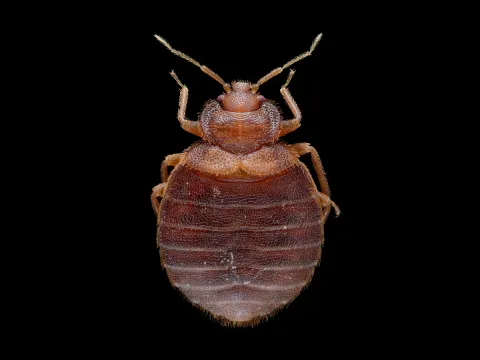 BitesAdult, not fedFlat and oval; apple-seed size.
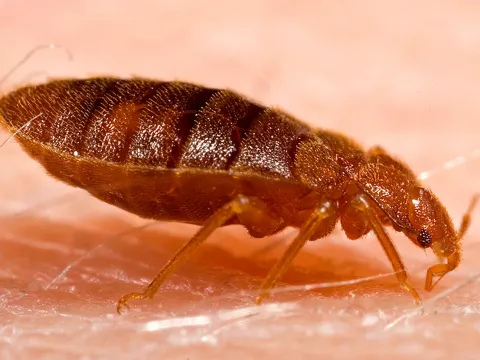 BitesAdult, feedingSwollen, redder and longer.
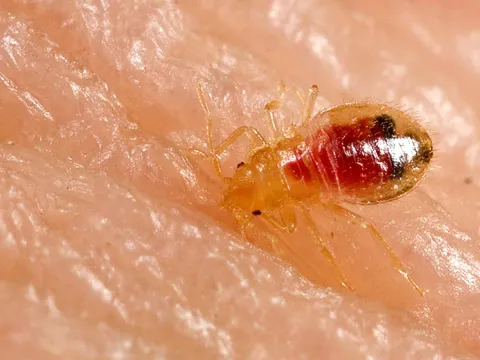 BitesNymphSmaller and pale until it feeds.
What an Adult Bed Bug Looks Like
- Size: 5 to 7 mm (3/16 to 1/4 inch), about an apple seed (EPA). The University of Kentucky says it’s closer to a lentil in size.
- Shape: flat and oval when it hasn’t fed; balloon-like and longer after a meal (EPA).
- Color: brown when hungry, reddish brown after feeding (EPA); UC IPM calls it rusty red or mahogany.
- No working wings. Bed bugs don’t fly or jump, but they crawl quickly over floors, walls and ceilings (University of Kentucky).
- Smell: a musty-sweetish odor from glands on the underside (EPA). UC IPM says heavily infested rooms can smell foul or “buggy.”
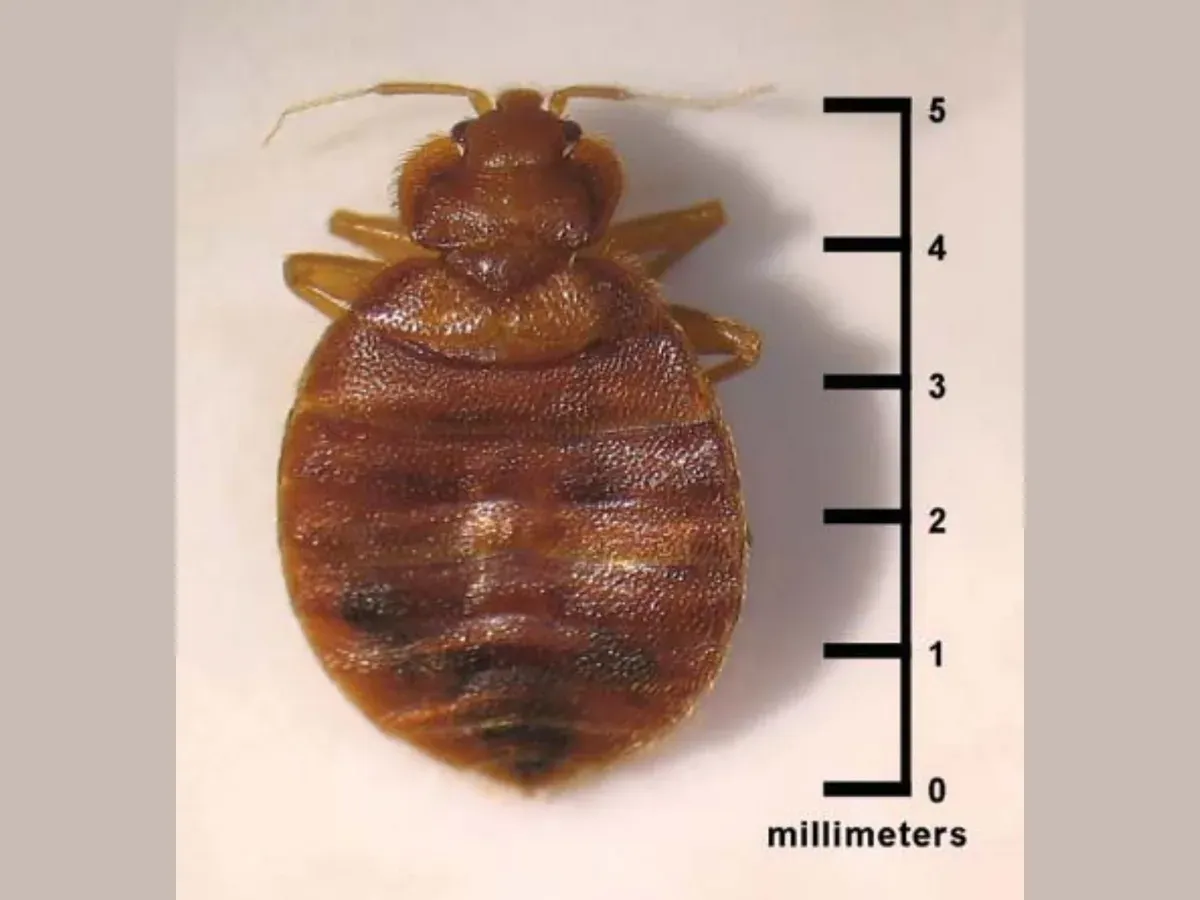
An adult bed bug next to a millimeter ruler: about 5 mm long. Photo: CDC (public domain), via Wikimedia Commons.
What Baby Bed Bugs (Nymphs) Look Like
A bed bug goes through five nymph stages, and each needs a blood meal before it can molt to the next (UC IPM).
- Newly hatched: straw-colored and no bigger than a pinhead (University of Kentucky).
- Color: translucent or whitish yellow. A nymph that hasn’t fed can be nearly invisible (EPA).
- After feeding: the blood shows through the pale body, as in the nymph photo above.
- Shape: like a small, pale adult (University of Kentucky).
| Stage | Length (EPA) | About |
|---|---|---|
| Egg | 1 mm | A pinhead |
| Nymph, 1st stage | 1.5 mm | 1/16 inch |
| Nymph, 2nd to 4th stage | 2 to 3 mm | 1/12 to 1/8 inch |
| Nymph, 5th stage | 4.5 mm | 3/16 inch |
| Adult | 5 to 7 mm | An apple seed |
Inches are our conversion. From egg to adult takes five weeks to four months, depending on temperature and how often the bugs feed (UC IPM).
Eggs, Shed Skins and Dark Spots
You’ll often find these before you see a live bug:
- Eggs: pinhead-size and pearl white, with a dark eye spot once they’re more than five days old (EPA). They’re sticky when laid, so they stay glued in place, and they hatch in about a week (University of Kentucky). You need a magnifier to see them (UC IPM). More photos: bed bug eggs.
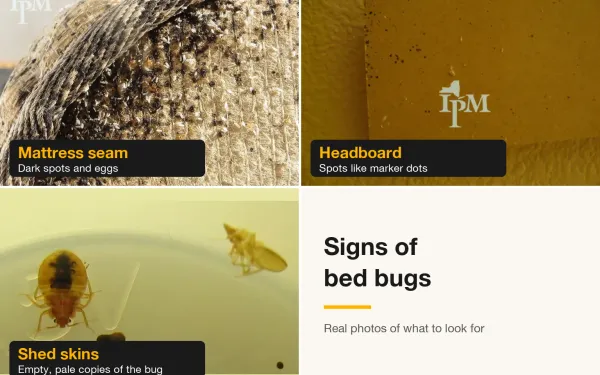
- Shed skins: light-colored (UC IPM) and shaped like empty bed bug bodies (NPIC). Nymphs shed five times before they’re adults (University of Kentucky).
- Dark spots: droppings about the size of this dot: •. They can bleed into fabric like a marker would (EPA).
- Rusty or reddish stains on sheets, from bugs crushed after feeding (EPA).
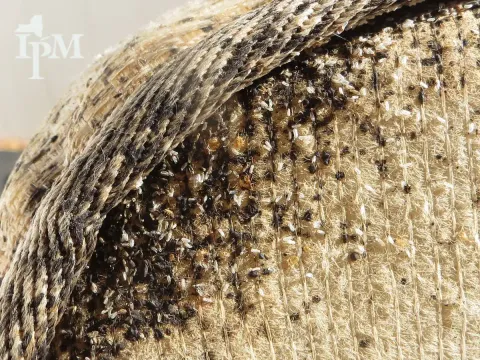 Eggs in a seamWhite, glued in clusters.
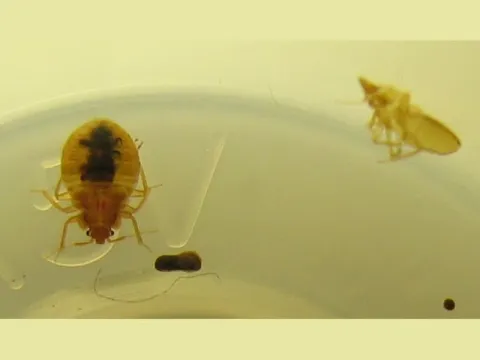 Shed skinAn empty, pale copy of the bug.
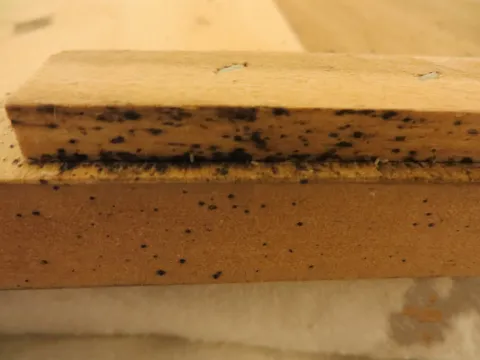 DroppingsBlack dots, like marker ink.
Bugs Mistaken for Bed Bugs
The University of Kentucky says bed bugs are sometimes mistaken for ticks, cockroaches and carpet beetles, and NPIC adds fleas and bat bugs.
| Bug | How it differs from a bed bug |
|---|---|
| Bat bug | Nearly identical; only the hairs behind the head tell them apart, under a magnifier (UC IPM) |
| Carpet beetle | A beetle, not a true bug; the EPA says carpet beetles are easily mistaken for bed bugs |
| Kissing bug | Up to 3/4 inch, with wings as an adult; bed bugs are smaller, rounder and wingless (UC IPM) |
| Flea | Flat from side to side, not top to bottom (UC IPM), and it jumps (University of Kentucky) |
Photos of each, plus ticks and young cockroaches, are in bugs that look like bed bugs.
Where Bed Bugs Hide
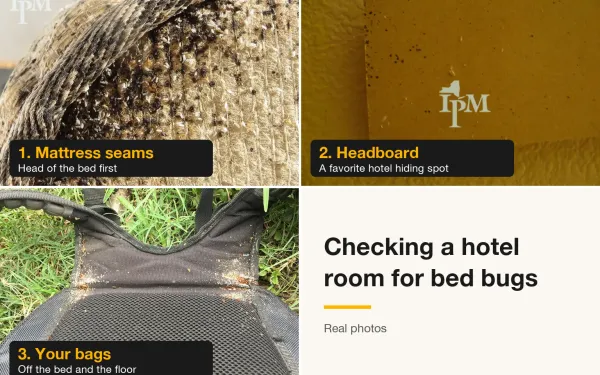
UC IPM says their hiding places are typically within 6 feet of where people sleep or rest:
- Mattress seams and tufts, and the wood joints of box springs
- Cracks in bed frames, behind headboards and baseboards
- Under loose wallpaper and behind picture frames
- Inside upholstered furniture; NPIC adds couches and recliners
They favor wood, paper and fabric over metal and plastic (UC IPM). Check with a flashlight and a magnifier.
Found One? What to Do Next
- Make sure it’s a bed bug. The EPA warns that carpet beetles and other insects are easy to mistake for bed bugs, and treating the wrong bug wastes time and money. Compare it with the photos above or identify it from a photo.
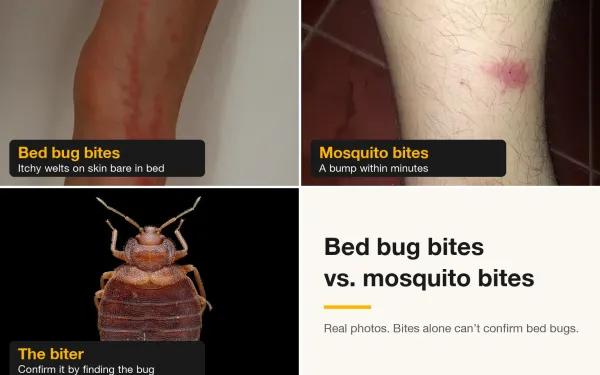
- Don’t go by bites. UC IPM says skin reactions should never be used to diagnose bed bugs, since other pests bite and people react differently.
- Look for more. Check the seams and the bed frame for eggs, skins and dark spots.
- Plan the treatment. How to get rid of bed bugs walks through each step and when to call a pro.
More on bed bugs: signs of bed bugs, bed bug bites, where bed bugs come from, checking a hotel room and preventing bed bugs.
Common questions
Yes. You can see adults and groups of nymphs without a magnifier, but the eggs need one (UC IPM). A young nymph that hasn’t fed is hard to see because it’s tiny and nearly clear (EPA).
Adults are brown to reddish brown and turn redder after feeding (EPA). Nymphs are pale, translucent or whitish yellow, and eggs are pearl white.
No. They have no working wings and don’t jump; they crawl (University of Kentucky). A tiny bug that jumps is more likely a flea.
Sources and further reading · 7
- EPA: Bed Bugs Appearance and Life Cycle: adult size, shape and color, smell, nymph and egg appearance, stage sizes.
- EPA: How to Find Bed Bugs: dark spots, rusty stains, look-alikes.
- UC IPM: Bed Bugs: color, five nymph stages, life cycle length, hiding places, eggs need a magnifier, shed skins, bat bugs and kissing bugs, bites can’t diagnose.
- University of Kentucky: Bed Bugs (EF636): lentil size, no flying or jumping (fleas jump), hatching, straw-colored nymphs, five molts, look-alikes.
- UC IPM: Fleas: fleas are flattened from side to side.
- NPIC: Bed Bugs: shed skins, hiding places, insects often confused with bed bugs.
- Cover photos: adult bed bug by Gilles San Martin (CC BY-SA 2.0); nymph and shed skin by Verslinykas (CC BY-SA 3.0); mattress seam by NY State IPM Program at Cornell University (CC BY 2.0); via Wikimedia Commons.