What Do Roaches Smell Like? How to Find the Source
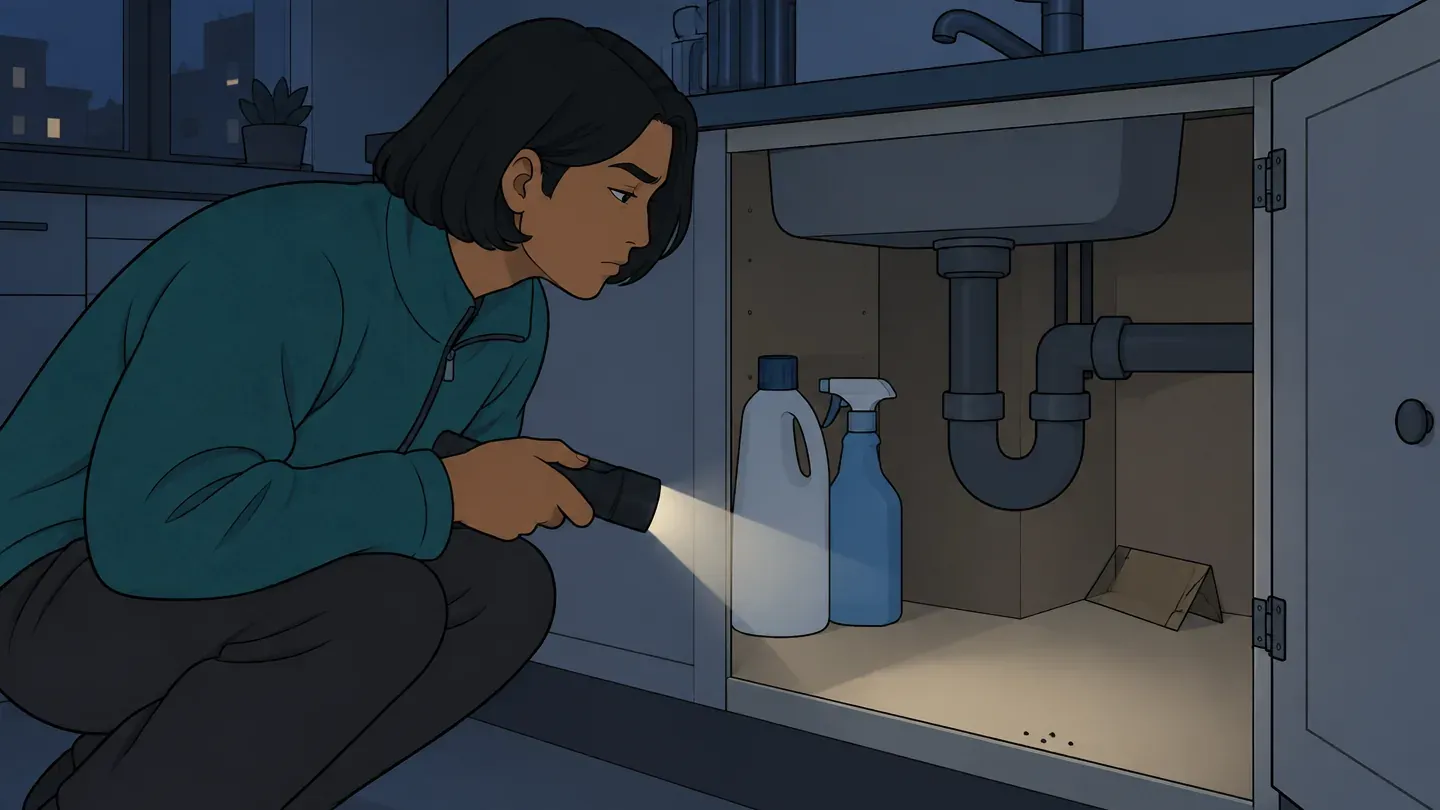
Illustration: an open under-sink cabinet lit by a flashlight, with a sticky trap in the back corner.
Roaches smell musty and oily, an odor strongest in closed cabinets and behind appliances. It comes from their droppings, oily secretions and the scent they use to gather, so a smell you notice usually means a colony has settled in. To confirm, set sticky traps overnight where the smell is strongest; catches mean live roaches. Skip the air freshener.
Difficulty: easy. Call a pro if the smell fills several rooms, you see roaches in the open during the day, or traps show the roaches coming from a neighboring unit or wall you can’t reach.
A smell means roaches have settled in, not that you’re beaten: with bait, the University of Kentucky expects a substantial drop within a few weeks. This guide covers what the smell means, how to tell it from mice, mold or a dead animal, how to find the source and how to get rid of it. We haven’t tested products ourselves; it rests on university extension, EPA and ASPCA guidance plus list prices.
Roach Smell or Something Else?
| What you smell | Most likely source | How to tell |
|---|---|---|
| Musty, oily smell in closed cabinets, with pepper-like specks | Roaches | Roach droppings show ridges and squared-off ends under a magnifier |
| Musky smell with small droppings | Mice | ICWDM calls a musky odor a positive sign of house mice |
| Rotting smell from one wall or floor | A dead animal | Foul rather than musty; poisoned rodents often die out of reach |
| Moldy smell after a leak, with no visible mold | Hidden mold | The EPA says to suspect hidden mold if it smells moldy but you can’t see it |
Size won’t separate roach and mouse droppings; see cockroach poop. If the smell is foul, here’s how to find a dead mouse by smell.
What Does a Roach Infestation Smell Like?
Musty and oily. University of Florida entomologists say roaches secrete an oily liquid with an “offensive and sickening odor,” and their droppings add to it. It can rub off on dishes that look clean, food and clothes.
The smell comes from the oily film roaches leave where they walk, and from droppings, pepper-like specks and smears that pile up where they hide. Those droppings also carry a scent that tells other roaches “this is home,” so more gather in the same cracks and the smell builds there. One Reddit poster called it “almost a greasy, earthy smell” in a new apartment that turned out to have German cockroaches; no candle or airing out fixed it.
German, Oriental and Stink Roaches: Which One You’re Smelling
The common small, light brown kitchen roach with two dark stripes is the German cockroach. Dark Oriental roaches in damp basements smell strongly too. In the Southeast, the Florida woods cockroach, nicknamed the “stink roach,” sprays a smelly oily liquid when threatened, but it rarely breeds indoors.
What Roach Smell Says About Infestation Size
Do roaches smell when there are only a few? Usually not much. Extension sources tie a noticeable odor to heavier infestations, and the University of Florida adds that you may smell roaches before you see them, and that roaches out in daylight may mean an extremely large population.
One roach and no smell is likely early; the other signs of roaches and a sticky trap tell you more. Smell plus droppings or roaches at night means an established infestation, so plan on a few weeks of baiting. Smell but nothing else? Roaches may be in a wall or next door, or the odor is left from an old one.
How to Confirm Where the Smell Is Coming From
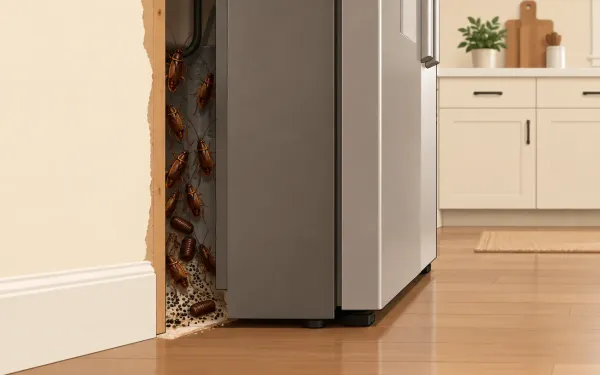
Step 1: Sniff test each room. Start in the kitchen and bathrooms: under sinks and toilets, behind the fridge, dishwasher and stove, near the trash, and inside cabinets and pantries. Open each cabinet after it’s been shut overnight, and pull out drawers to sniff behind them.
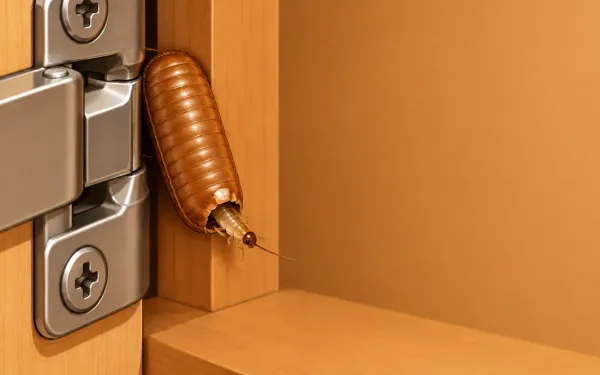
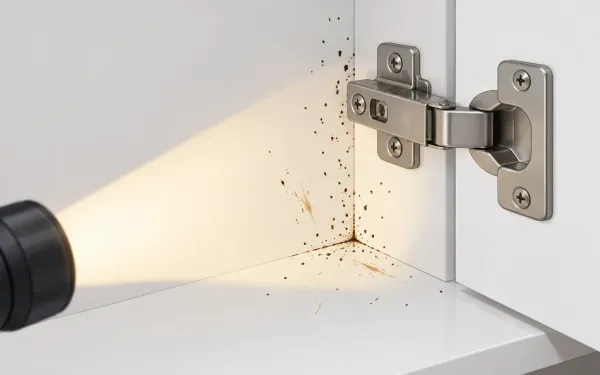
Step 2: Look with a flashlight. Where the odor is strongest, look for pepper-like droppings, dark smears along hinges, pale shed skins and small brown egg cases.
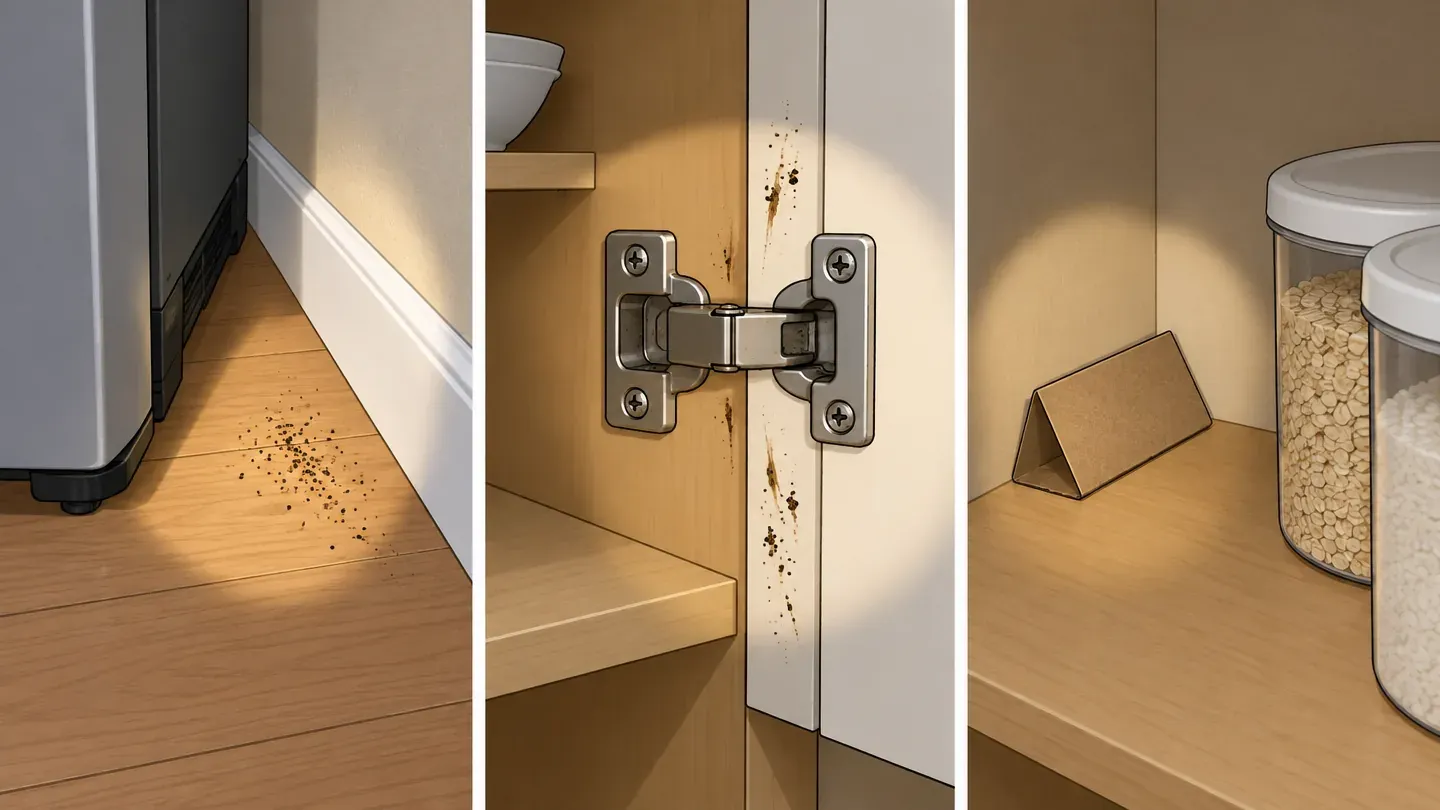
Illustration: droppings on the floor behind a fridge, smears along a cabinet hinge, and a sticky trap in a pantry corner.
Step 3: Set sticky traps where the smell is strongest. University of Florida entomologists call sticky traps your “eyes,” working 24/7, and plain glue boards are enough. Put them flat against the wall in the smelliest cabinet, beside the fridge and stove, and near the trash, behind appliances or inside latched cabinets if you have kids or pets. Number them and check every morning; the one with the most catches sits closest to where they live.
Step 4: Check shared walls in an apartment. German roaches often travel between adjoining apartments through walls, pipes and wires, so traps that fill up along a shared wall point next door. Renting? Send your landlord dated photos of your catches and ask in writing for treatment.
How to Get Rid of Roach Smell: Scrub, Then Bait
The smell stays as long as the roaches and their droppings do, so air fresheners only cover it. Vacuum up droppings and shed skins, then scrub specks and smears with plain hot, soapy water; University of Florida entomologists say scrubbing cuts the scent in droppings that draws roaches back. Rewash dishes, food containers and clothes from infested cabinets.
Once it’s dry, put many pea-sized dabs of roach gel bait in cracks and corners where you found droppings, not a few big ones: the University of Kentucky says many small placements work better, and roaches find bait while foraging, not from across the room. Keep cleaners and sprays off the bait, since they could discourage roaches from taking it.
Baits are of minimal hazard to children or pets (University of Kentucky). Put gel deep in cracks, and where a toddler or cat gets into cabinets, use enclosed bait stations. If a pet eats some, stomach upset is typically the only problem (ASPCA); if a child does, call Poison Control at 1-800-222-1222.
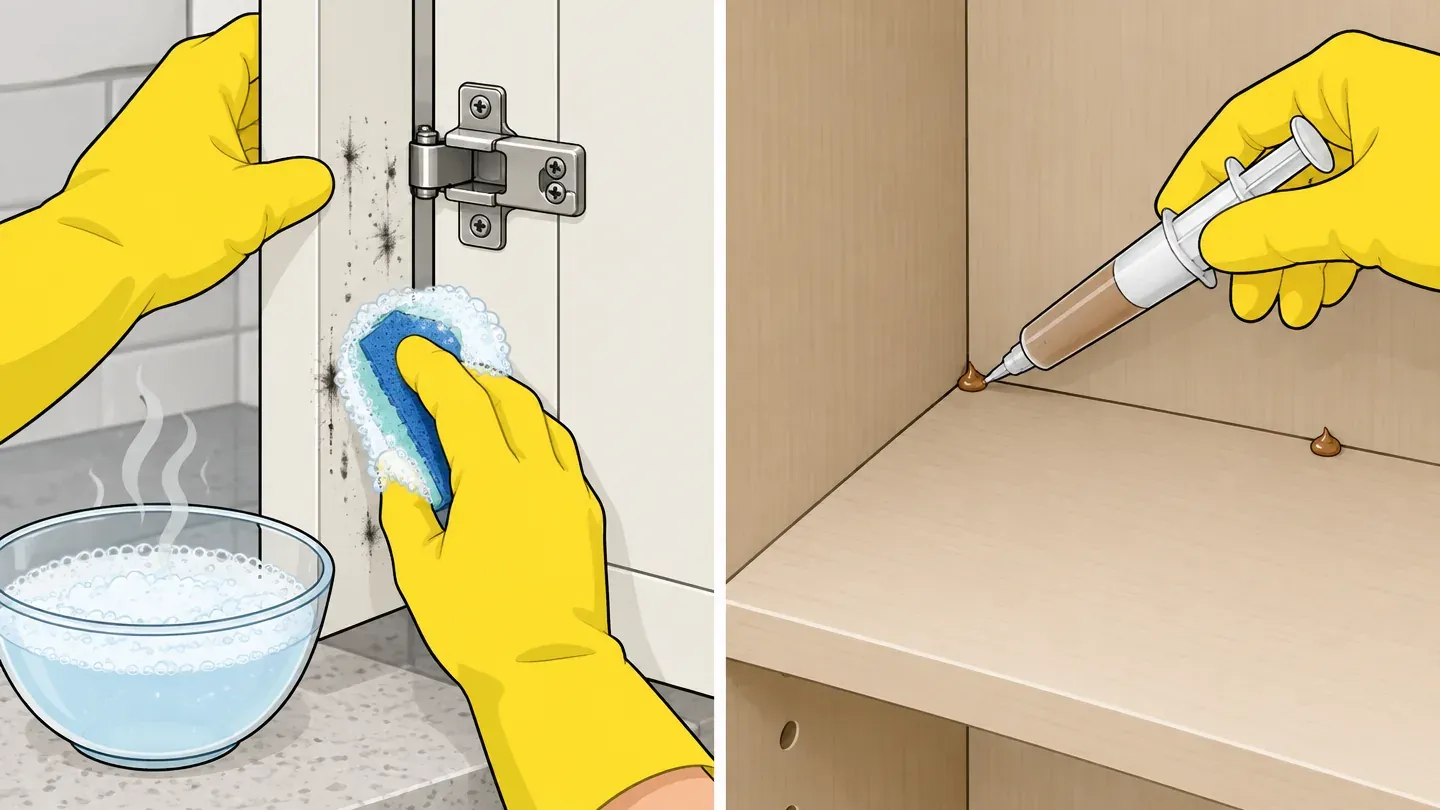
Illustration: scrubbing droppings off a cabinet hinge (left), and a small dab of gel bait in a dry cabinet corner (right).
How long until it goes away? Expect it to ease as trap catches fall over a few weeks. Rutgers considers roaches eliminated only when none turn up on traps or in inspections for four weeks. A smell that survives deep cleaning clings to spots you can’t see: the University of Kentucky points to the hollow space under kitchen and bathroom cabinets as a German cockroach hiding place. If traps stay empty for four weeks and the smell remains, look for mold or a dead animal.
Is Cockroach Smell Dangerous?
The smell itself isn’t what health agencies warn about; the allergens behind it are. The EPA says proteins in cockroach droppings and saliva can cause allergic reactions and trigger asthma in some people, and NC State Extension calls German cockroaches one of the leading causes of asthma in young children. Vacuuming up droppings and shed skins clears both the smell and the allergens. If anyone at home has asthma, tell their doctor about the roaches.
What to Do Next
The full treatment plan is in getting rid of roaches.
- Open shut cabinets and sniff for the strongest spot.
- Seal open food in containers with tight lids.
- Set numbered sticky traps there and behind the fridge and stove.
- Vacuum and scrub droppings with hot soapy water.
- Bait in many small dabs where the traps catch most.
- Keep traps out until four weeks pass with no catches.
| Item | Typical cost |
|---|---|
| 12 plain glue boards (enough to find the source) | $10.49 |
| 10 cockroach glue traps with food bait inside | $19.99 |
| Gel bait, 4 tubes | $26.98 |
| Pro cockroach visit, 25 shared quotes (middle half) | $200–$400 |
| Pro cockroach treatment, price-guide range | $100–$600 a round |
| Pro full treatment with follow-ups, 10 shared quotes (middle half) | $450–$1,500 |
| Pro annual pest plan | $200–$1,000 per year |
Bare minimum: plain glue boards plus one box of gel bait, about $37 (our math). DIY: U.S. list prices from Catchmaster (traps) and DoMyOwn (gel bait), checked October 1, 2026, before tax and shipping. Pro: the middle half of 25 single-visit and 10 full-treatment quotes homeowners shared on Reddit. Price-guide range and annual plans: This Old House (March 2026). If you hire one, ask whether they’ll bait cracks rather than spray baseboards, and how many visits the price covers.
Common questions
Roaches hide in cracks by day, so you may smell them before you see them, or smell an old infestation. Sticky traps overnight tell you which.
Yes. A 2023 study in the Journal of Experimental Biology found smell sensors along the whole length of the American cockroach’s antennae, and roaches were drawn to an extract of their own droppings. That’s why bait works best placed next to droppings.
The Florida woods cockroach’s spray irritates skin and eyes on direct contact (University of Florida). Don’t pick one up bare-handed; it usually arrives on firewood.
Sources and further reading · 10
- University of Florida IFAS: Cockroaches and Their Management (IG082), Assessment-Based Pest Management of German Cockroaches (IN1190) and Florida Woods Cockroach (IN915).
- University of Kentucky Entomology: Cockroach Elimination in Homes and Apartments (ENTFACT-614).
- NC State Extension: German Cockroach Surveillance and Management.
- UC Riverside Entomology: Ebeling, Urban Entomology, Chapter 6.
- UC IPM: Cockroaches (Pest Notes 7467) and Rutgers NJAES: German Cockroach (FS1322).
- Hoffmann et al., “Active smelling in the American cockroach,” Journal of Experimental Biology (2023).
- EPA: Asthma Triggers and A Brief Guide to Mold, Moisture and Your Home.
- ICWDM: House Mice and Utah State University: Rats and Mice IPM Manual.
- ASPCA: Five Items Pet Parents Shouldn’t Worry About and Poison Control: Is Ant Bait Safe Around Children?.
- This Old House: Roach Exterminator Cost.