Roach Eggs: What They Look Like and How to Kill Them
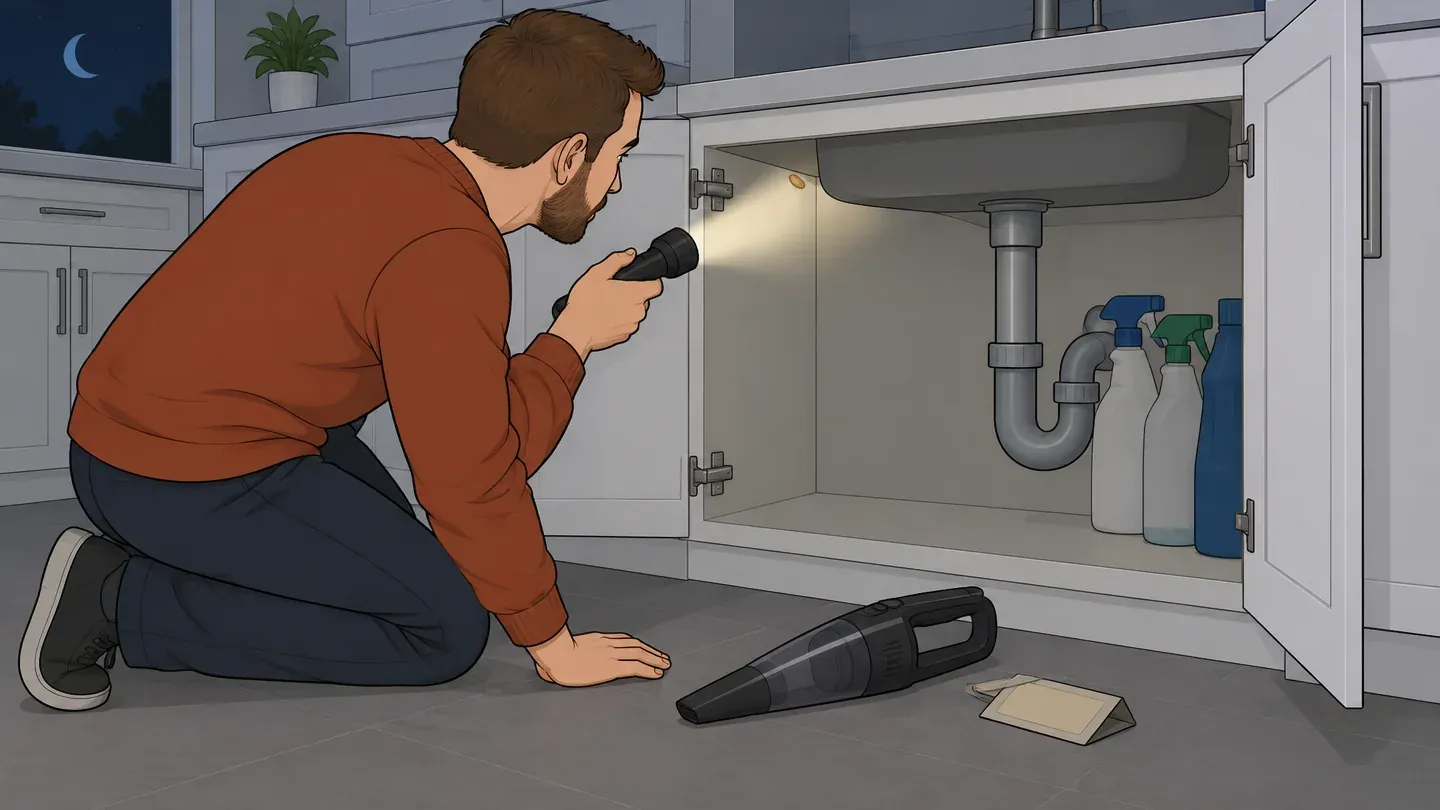
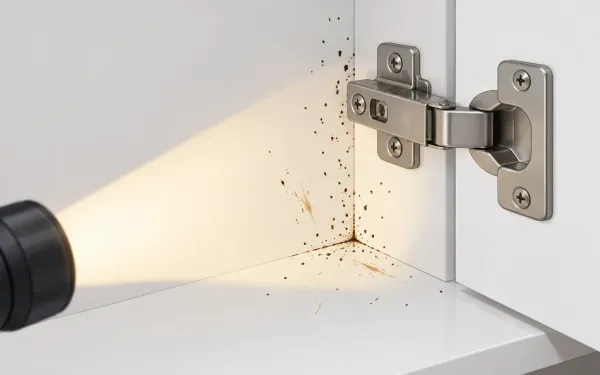
Illustration: checking under-sink cabinet corners and hinges with a flashlight.
Roach eggs come sealed in a hard, bean-shaped case ¼ to ⅜ inch long, light tan to nearly black, holding a dozen to 40-plus eggs depending on the species. Most sprays can’t get through it. Vacuum up every case you find, bait the nymphs that hatch, and stop after a full month with no roaches on sticky traps.
Cost: about $47–49 in supplies. Difficulty: moderate. Call a pro if you still catch roaches after two or three rounds of baiting, egg cases keep turning up in several rooms, or roaches are moving between apartments.
This page covers what roach eggs look like by species, how to tell them from droppings, where they hide, when they hatch and what to do next. We haven’t tested products ourselves; it rests on UC IPM, Rutgers and other extension guidance, NPIC, the ASPCA and Poison Control, plus list prices.
Roach Egg Cases by Species at a Glance
| Species | Egg case | Usually found | Hatches in |
|---|---|---|---|
| German | Small (¼ inch), light tan, 30–40 eggs | Carried by the female until hatching | About 28 days |
| Brown-banded | Small, light brown, sometimes in clusters | Glued to ceilings, furniture, closets | Several weeks |
| American | Large (⅜ inch), brown, black in 1–2 days, about 16 eggs | Cemented to a sheltered surface | About 2 months+ |
| Oriental | Large, dark red-brown | Dropped in debris or food | Not given |
| Smokybrown | Large, dark brown to black | Not given | 24 to 70 days |
Sources: UC IPM, Rutgers, Oklahoma State and University of Florida.
What Do Roach Eggs Look Like?
Cockroaches lay their eggs in groups inside a leathery capsule called an ootheca, or roach egg sack. University of Minnesota Extension compares it to a dry kidney bean; the eggs sit in two rows, often with a ridge along the side marking each one. Only a brand-new case looks pale.
An empty case is split open along the top seam, where the nymphs wriggled out, so baby cockroaches are already in the same cracks. A sealed case hasn’t hatched yet, so get it out now.
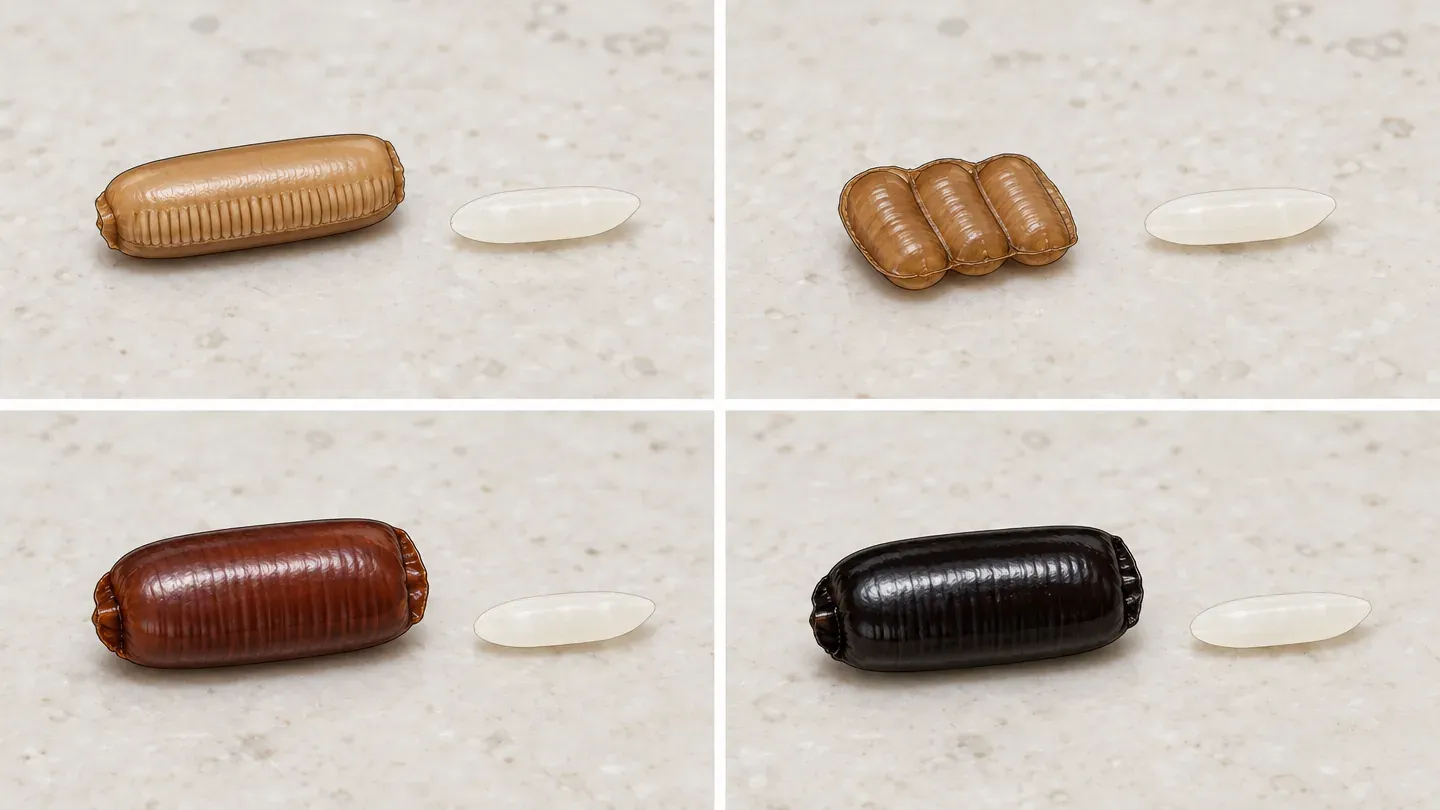
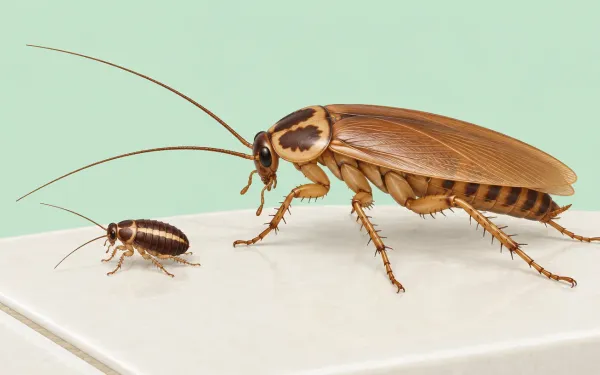
Illustration: German, brown-banded, oriental and American roach egg cases next to a grain of rice.
Here’s what real roach egg cases look like:
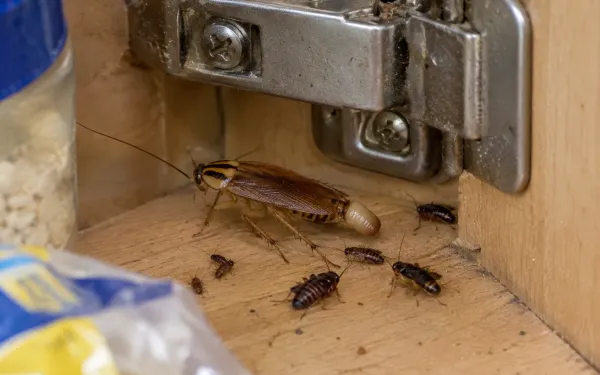
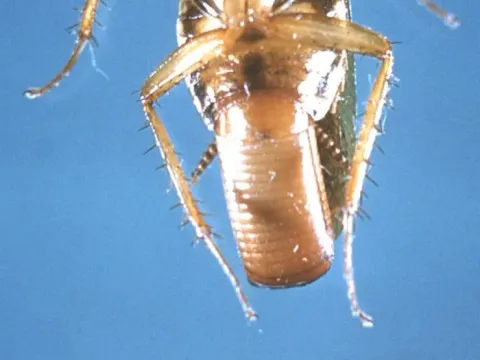 Most commonGerman roach, case attachedShe carries it until the eggs are about to hatch.
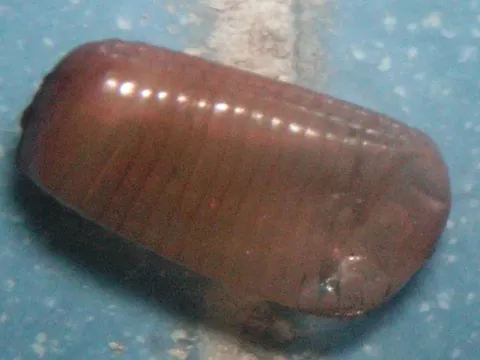 Already hatchedHatched German caseSplit along the top seam: the nymphs are already out.
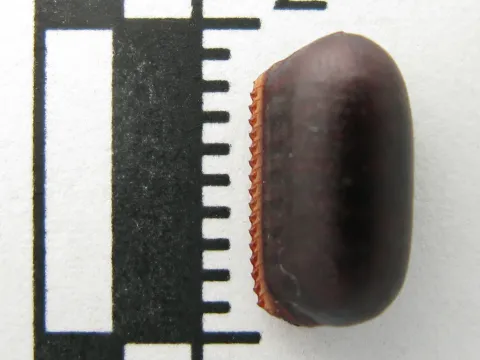 Bigger speciesLarger roach egg caseDark, hard and bean-shaped, often glued in a hidden spot.
Roach Eggs vs. Roach Poop: Black Dots or Egg Cases?
Black dots are poop, not eggs. Roach eggs are always inside a capsule you can pick up. Tiny brown-to-black dots around hinges, corners and drawer backs are droppings, which NC State describes as one of the most common signs of German roaches. Cockroach poop stays on surfaces for a long time, so old specks don’t prove roaches are still active.
Are cockroach eggs clear or white? Only a case in its first hours looks pale. Tiny round clear or white eggs sitting loose on a surface belong to some other animal; see bug eggs and larvae.
Where Do Roaches Lay Eggs?
In dark, moist crevices (UC IPM), where roaches hide by day: under the sink and in cabinet corners (especially upper ones), behind drawers and around hinges, around the fridge and stove including the fridge’s motor compartment, around pipes entering the wall, under furniture and in cardboard boxes and clutter.
Brown-banded roaches are the exception: they hide near electrical appliances, away from the kitchen.
One Egg Case: Not Proof of an Infestation
Cases ride in on cardboard boxes, used furniture and secondhand appliances. A case glued in place points to brown-banded or American roaches; one lying in debris fits oriental roaches. A loose German case was probably dropped just before hatching, so expect nymphs within days. Sticky traps tell you whether roaches live with you (UC IPM): empty for a few weeks means you likely removed a hitchhiker.
Sprays and Bug Bombs: They Don’t Kill the Eggs
The case shields the eggs from pesticides, so a spray that kills adults leaves the cases to hatch later. Bug bombs do worse: UC IPM says they don’t reach the cracks where roaches breed and can scatter roaches to other rooms. Removing the cases and baiting the hatchlings is what works.
How Long Does It Take for Roach Eggs to Hatch?
About 28 days for German roaches at room temperature (Oklahoma State Extension), and about 2 months or longer for American roaches. The German female carries her case for most of that time and drops it a day or two before hatching (UC IPM). So a roach sighting three months after your last one isn’t a late-hatching case; it points to hidden survivors or new arrivals.
How Many Eggs in a Cockroach Egg Case?
A German roach lays about 30 to 40 eggs per case and 200 to 250 in her life, over 5 to 8 cases (Rutgers). An American roach lays about 16 per case, roughly one case a month (University of Florida).
| Species | Eggs per egg case | Over her life | Source |
|---|---|---|---|
| German | About 30–40 | 5 to 8 cases, 200 to 250 eggs | Rutgers |
| American | About 16 | Roughly one case a month | University of Florida |
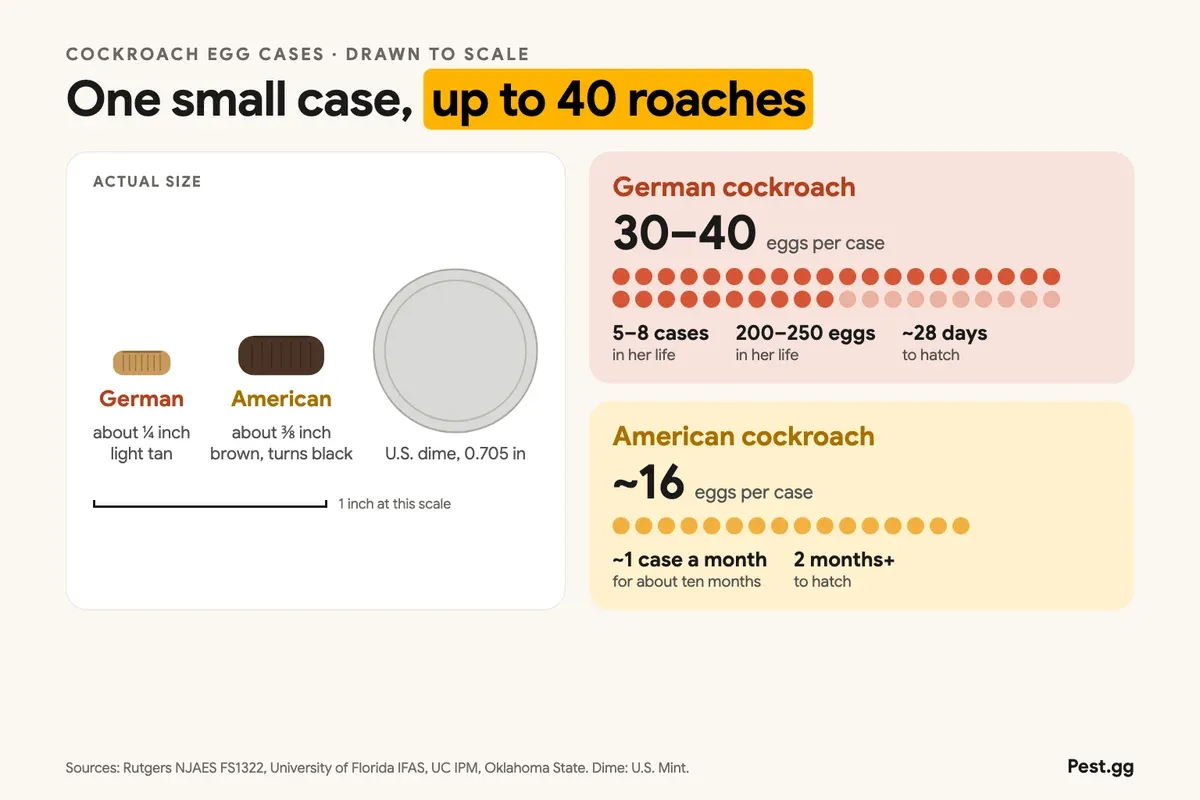
Infographic: German and American egg cases drawn to scale with egg counts. Sources: Rutgers, University of Florida, UC IPM, Oklahoma State.
That makes the German roach the fastest breeder: one female and her offspring can produce over 30,000 roaches in a year if nothing stops them, against about 800 for the American roach (UC IPM). Baiting the first nymphs breaks that chain; how long cockroaches live covers the full life cycle.
How to Confirm Roaches Are Breeding
- Search with a flashlight and mirror behind appliances and in the spots above (UC IPM).
- Set sticky roach traps where floors meet walls, under the sink and behind the fridge and stove; check daily.
- Search hardest around the busiest trap.
- Check each case: split open means it hatched; sealed means it’s still to come.
Are Roach Eggs Dangerous? The Roaches Are the Problem
The cases aren’t the concern. NPIC says some people get allergy and asthma symptoms from breathing in cockroach skin and waste. Put sticky traps where kids and pets can’t reach (Rutgers) and gel deep in cracks. The ASPCA says pets like roach bait but the amount is so small that an upset stomach is typically the only problem; for a child who tastes bait, call Poison Control at 1-800-222-1222.
What to Do Next
Step 1: Vacuum every case. Use the crevice tool along hinges, corners and gaps under appliances, ideally with a HEPA filter (UC IPM), then bag the contents for the outdoor trash.
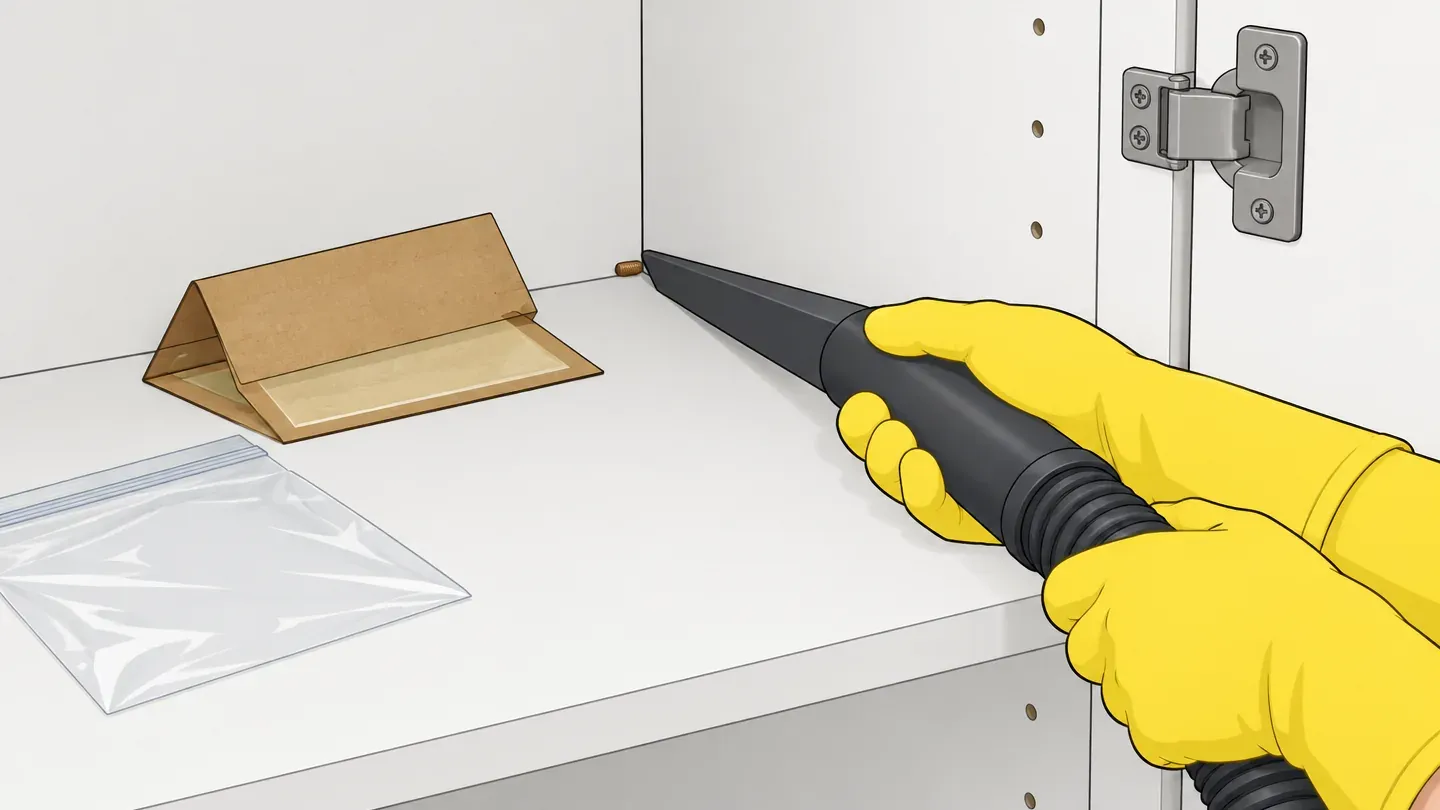
Illustration: vacuuming a cabinet corner with the crevice tool, and a sticky trap set along the back wall.
Step 2: Bait the nymphs as they hatch. Rutgers recommends many pea-sized dots of roach gel bait, not a few big ones; a one-bedroom apartment may need 10 to 30 grams. Keep sprays away from bait. Growth regulators can stop eggs hatching (Mississippi State) but are an add-on for heavy infestations, not one case.
Step 3: Keep checking for a month. Rebait every 2 to 4 weeks until no roaches turn up for at least a month after the last catch (Rutgers). That covers a missed German case. The full plan is in how to get rid of roaches, or German roaches for the small striped kind.
| Item | Typical cost |
|---|---|
| Gel bait, box of four 30 g tubes | $26.98 |
| Cockroach sticky traps, 10 to 25 boards | $19.99–$21.99 |
| DIY total (plus a vacuum you own) | About $47–49 |
| Pro cockroach visit, 25 shared quotes (middle half) | $200–$400 |
| Pro cockroach treatment, price-guide range | $100–$600 a round |
| Pro full treatment with follow-ups, 10 shared quotes (middle half) | $450–$1,500 |
DIY: U.S. list prices from DoMyOwn, Catchmaster and Home and Garden Supply, October 1, 2026, before tax. Pro: the middle half of 25 single-visit and 10 full-treatment quotes homeowners shared on Reddit. Price-guide range and annual plans: This Old House (March 2026).
Call a pro if you still catch roaches after two or three rounds of baiting, cases keep turning up in several rooms, or roaches move between units. Renting? Tell your landlord in writing, with photos.
- Vacuum the case and bag it for the outdoor trash.
- Seal food and pet food tonight.
- Set sticky traps under the sink and beside the fridge and stove.
- Bait in pea-sized dots near the busiest traps.
- Skip sprays and bug bombs.
- Rebait every 2 to 4 weeks until a full month passes with no roaches.
Common questions
On walls, yes. Brown-banded roaches glue their cases to ceilings, under furniture and in closets, and American roaches cement theirs to sheltered surfaces (UC IPM). A case on clothing usually came from a closet, drawer or box: shake out and wash the clothes, and vacuum the space.
For a German roach, usually not. Rutgers says a case detached from the female typically won’t hatch unless it was a day or two from hatching. Bag the roach and case anyway.
Sources and further reading · 12
- UC IPM: Cockroaches (Pest Notes 7467) — egg cases by species, vacuuming, bait timing.
- Rutgers NJAES: German Cockroach (FS1322) — German egg cases, bait amounts, follow-up schedule.
- NC State Extension: German Cockroach Surveillance and Management
- Oklahoma State: German Cockroach and Virginia Tech: German Cockroach
- University of Minnesota Extension: Cockroaches
- UF/IFAS: Cockroaches and Their Management (IG082) and American Cockroach (IN298)
- Mississippi State Extension: Control Cockroaches (P3346)
- UC Riverside: Ebeling, Urban Entomology, Chapter 6 — egg case biology.
- NPIC: Why do I have cockroaches in my home?
- ASPCA: Five Items Pet Parents Shouldn’t Worry About
- Poison Control: Is Ant Bait Safe Around Children?
- PCT: The Amazing Case of the Cockroach Egg