Cockroach Poop: What Roach Droppings Look Like
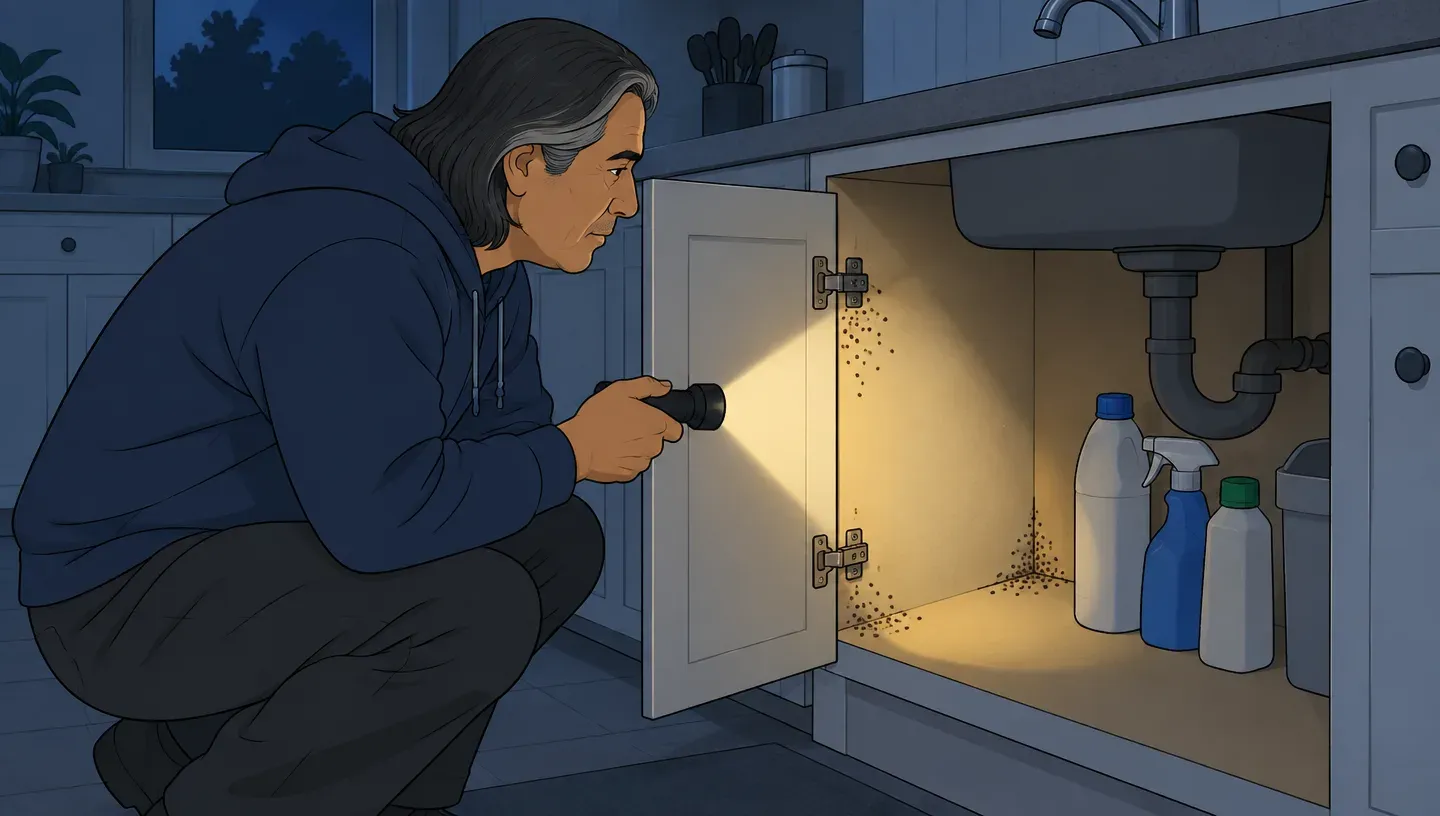
Illustration: a flashlight check of a lower kitchen cabinet, with dark specks clustered around the door hinge.
Cockroach poop from small roaches such as the German cockroach looks like black pepper: clusters of tiny dark specks or smears near where they hide. Big roaches like the American cockroach leave dark pellets about ¼ inch long with flat ends and ridges. Hot soapy water cleans it up; sticky traps show whether roaches remain.
Cost: about $0–22 in supplies. Difficulty: easy. Call a pro if droppings keep turning up in several rooms or you share walls with other units, or someone at home has asthma or allergies and the roaches aren’t going away.
Droppings can be old, so don’t panic. This guide covers how to tell roach poop from mouse droppings and other look-alikes, where to look, how to test whether roaches are still there, the health risks and cleanup. We haven’t tested products ourselves; it rests on university extension, EPA and ASPCA guidance plus list prices.
Roach Poop vs. Look-Alikes at a Glance
| What you found | Size | Shape | Usually where |
|---|---|---|---|
| German cockroach poop | Pepper-fine specks | Dots and smears in clusters | Tight spots near food, cabinet hinges |
| American cockroach poop | About ¼ inch | Ridged sides, flat blunt ends | Basements and ground floors |
| Mouse droppings | About ¼ inch, rice-grain size | Smooth, pointed ends | Along walls, in drawers |
| Bed bug spots | Specks, much like roach spotting | Dots | On and around beds |
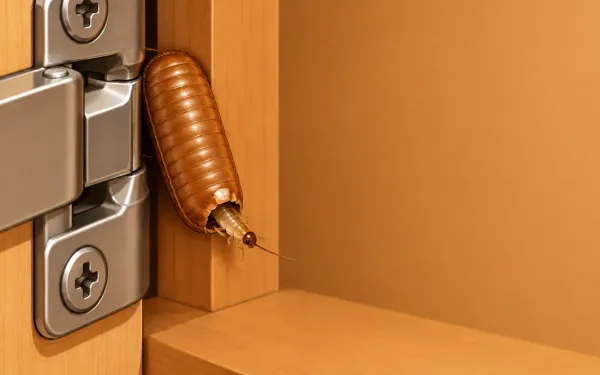
| Roach egg cases | Capsules, not specks | Tan and long (German) or reddish-brown, bean-shaped (American) | Near hiding spots |
Sources: University of Arizona, University of Kentucky and Cornell. Rat droppings are bigger still; see rat poop vs. mouse poop.
German Cockroach Poop: Pepper Specks Near Food
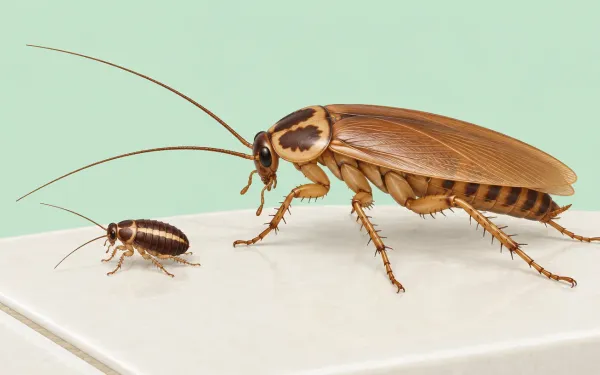
Fecal spots are one of the most common signs of German cockroaches (about ½ inch long), usually hidden near where food is stored and prepared. German roaches live and breed indoors, so specks in a kitchen cabinet usually point here. Tiny baby cockroaches leave them too.
American Cockroach Poop: Ridged Pellets With Flat Ends
The pellets are about ¼ inch long with flat ends (University of Arizona), and the ridges along the sides set them apart from smooth, pointed mouse droppings of the same length. These reddish-brown roaches, about 2 inches long, wander in from sewers and drains to ground floors, so pellets in a basement fit.
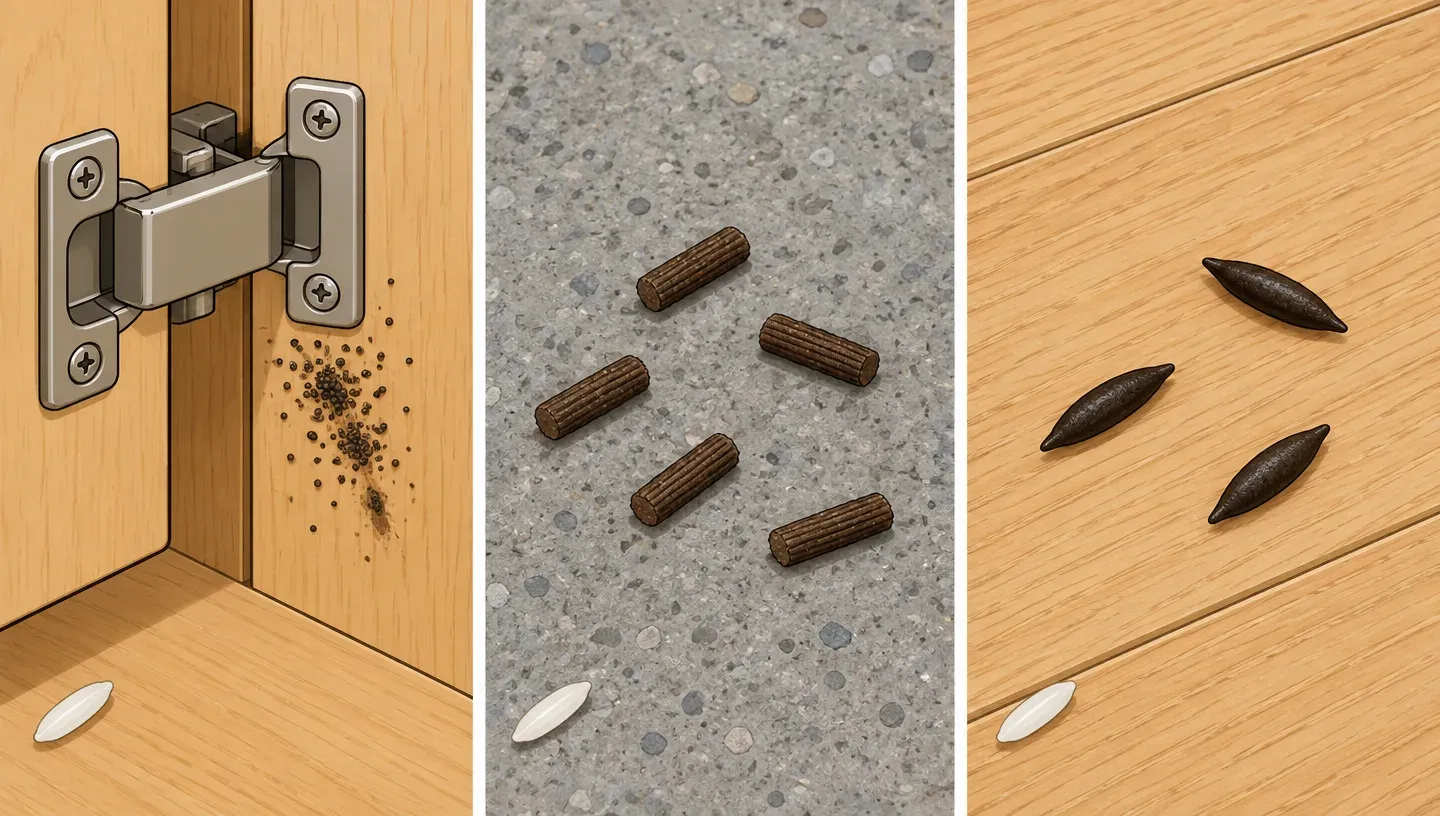
Illustration: German cockroach specks by a hinge (left), American cockroach pellets with flat ends and ridges (middle) and a smooth mouse dropping with pointed ends (right), each beside a grain of rice.
Bed Bug Spots and Egg Cases: Check the Location
Cockroach spotting looks much like bed bug spotting, but location usually settles it: roaches seldom gather on beds the way bed bugs do. Egg cases are capsules, not specks; cockroach eggs covers what to do with one. For droppings from bats, rats and more, see the pest droppings guide. Still not sure? Your county extension office can identify droppings or a trapped roach from a bagged sample.
Where to Find Roach Poop: Cabinets, Walls and Hinges
Droppings point to the hiding spot, so shine a bright flashlight into the nearest crack or gap. German roach specks sit right beside it; the bigger American roach pellets fall below it, so look up.
Check under the kitchen counter, behind drawers, at the back of cabinets and around door hinges; along cracks behind the stove, fridge and sink and around pipes through the wall; inside the microwave, toaster and coffee maker, since some roaches hide in small appliances; and under the bathroom sink and behind the toilet.
How to Confirm Roaches Are Still There
Roach poop with no roaches is common: roaches come out at night, and droppings, egg cases or shed skins often turn up before a live roach. German cockroach feces can also stay on surfaces for a long time. So test instead of guessing.
Step 1: Clean the droppings off completely (steps below), so new ones stand out.
Step 2: Set at least six sticky roach traps, Purdue’s number for a home, flat against the wall where the droppings were, at the back of the cabinet, under the sink and beside the stove and fridge. A 25-board supermarket pack splits into 75 small traps, far more than you need.
Step 3: Number each trap, so you can tell which spot catches roaches. That’s where bait goes later.
Step 4: Check every morning for several days. Roaches are often caught within the first 24 hours (UC IPM). New specks or roaches on the traps mean an active infestation; nothing after several days suggests the droppings were old, say from a previous owner or tenant.
How Much Roach Poop Means an Infestation?
There’s no official count, and the amount of droppings is only a rough hint. Clusters of specks in several cabinets, not one spot, point to more than a straggler. So do stains at shelf corners and door hinges, which show up in heavy infestations; roaches in daylight, which may mean a large, growing infestation; and a musty smell on things roaches have touched.
A few specks in one cabinet and quiet traps are the small end. Small populations are also the easiest to control, so the trap test is worth doing this week.
Is Roach Poop Dangerous? Mainly for Allergies and Asthma
The risk grows with the number of roaches. Proteins in cockroach feces and saliva can cause allergic reactions or trigger asthma symptoms in some people (EPA). Even small amounts can make a person allergic to roaches, and heavy infestations are linked to ongoing asthma. If symptoms seem worse at home, mention the roaches to your doctor.
Roaches also walk from filth to food and can carry bacteria such as Salmonella. Throw out uncovered food with droppings on it, and rewash dishes, cups and utensils from that shelf before using them.
How to Clean Up Cockroach Droppings
Hot, soapy water, not bleach or a special product: it removes the droppings and the scent that draws other roaches.
Empty the shelf and vacuum loose droppings from cracks and corners; a HEPA-filter vacuum keeps fine bits out of the air, and without one, wipe instead of sweeping. Scrub with hot soapy water and paper towels or a disposable sponge, wearing gloves, then rinse and dry. Bag the waste, vacuum contents included, and take it outside.
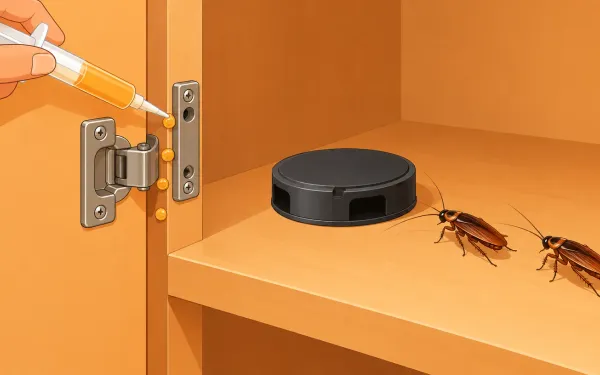
Clean first, then trap or bait. Spraying cleaners or insecticides around bait can discourage roaches from taking it (University of Kentucky), so don’t spray near your traps. Once traps or new specks confirm roaches, put many small dabs of gel bait in cracks near the trap that caught the most.
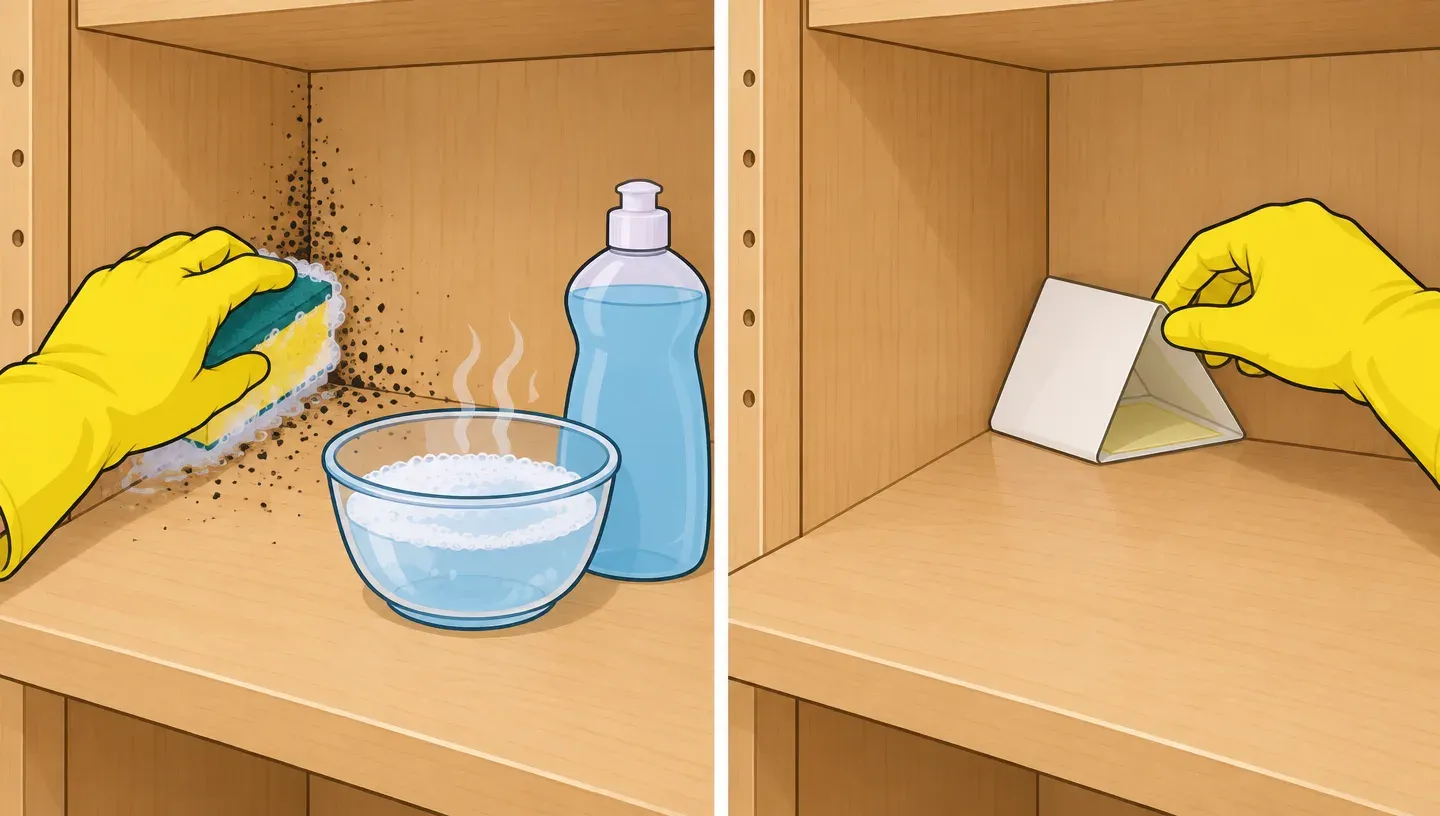
Illustration: gloved hands scrub the shelf with hot soapy water (left), then set a sticky trap in the back corner of the clean cabinet (right).
Kids or pets at home? Put sticky traps inside closed cabinets and behind appliances; if a child, cat or dog gets stuck, don’t pull, but work kitchen or baby oil into the glue until it slides free (NC State). Cats and dogs like gel bait, but there’s so little that stomach upset is typically the only problem (ASPCA). If someone swallows bait, call Poison Control at 1-800-222-1222 for a child, or your vet or ASPCA Animal Poison Control at (888) 426-4435 for a pet (a fee may apply).
What to Do Next
If traps confirm roaches, our plan for getting rid of roaches covers treatment. Keep counters, sinks and floors clean, store food in airtight containers and seal cracks around cabinets. Renting? Send your landlord photos of the droppings and ask in writing for the cracks to be sealed and the roaches treated.
- Photograph the droppings before you clean.
- Wipe them up with hot soapy water, never a broom.
- Seal open food in airtight containers.
- Set six numbered sticky traps where the droppings were.
- Check the traps each morning for several days.
- Bait only where traps catch, and don’t spray near the bait.
| Item | Typical cost |
|---|---|
| Flashlight, dish soap, paper towels | $0 (what you already have) |
| Sticky traps, 25-board pack (splits into 75; set 6 to start) | $21.99 |
| Gel bait, 4 × 30 g tubes (only if roaches are active) | $26.98 |
| Pro cockroach visit, 25 shared quotes (middle half) | $200–$400 |
| Pro cockroach treatment, price-guide range | $100–$600 a round |
| Pro full treatment with follow-ups, 10 shared quotes (middle half) | $450–$1,500 |
DIY: list prices from HomeandGardenSupply and DoMyOwn, October 1, 2026, before tax and shipping. Pro: the middle half of 25 single-visit and 10 full-treatment quotes homeowners shared on Reddit. Price-guide range and annual plans: This Old House (March 2026). If you hire one, ask which species they found, where they’ll put bait, how many follow-ups the price includes and, in a shared building, whether neighboring units will be treated too.
Common questions
Clean homes get roaches too. German cockroaches often ride in on grocery bags, beverage cartons and secondhand furniture, and in apartments they travel between units (University of Kentucky); American roaches come in through gaps around doors, windows, vents and utility openings. The droppings may also be old, so run the trap test.
They poop where they rest and travel, and pheromones in droppings draw more roaches to the same runways and hiding spots.
Sources and further reading · 11
- NC State Extension: German Cockroach Surveillance and Management — fecal spots, how long they last, what the amount tells you, glue board safety.
- University of Kentucky Entomology: Cockroach Control (ENTFACT-614) — bed bug look-alike, cleaners near bait, bait safety, how roaches get in.
- University of Arizona: The American Cockroach — pellet size and shape vs. mouse droppings.
- Cornell: Cockroaches, Mouse and Rat Biology and Behavior and Identifying Your Pest with Poop? — where each species leaves droppings, ridges, egg cases, sensitization, small populations.
- UC IPM Pest Notes: Cockroaches (Publication 7467) — brown-banded hiding spots, sticky trap monitoring, allergens, HEPA vacuuming.
- Purdue Extension: Cockroach Control in Multi-Family Housing (E-241) — how many traps, where to buy them.
- UC Riverside: Ebeling, Urban Entomology, Chapter 6 — stains at hinges, musty odor.
- Virginia Tech Extension: Cockroaches Found in Living Spaces (ENTO-528) — droppings before roaches, pheromones, hot soapy water.
- ASPCA: Five Items Pet Parents Shouldn’t Worry About and Animal Poison Control — pets and roach bait.
- EPA: Asthma Triggers and NPIC: Cockroaches.
- University of Minnesota Extension: Cockroaches.