How to Get Rid of Ladybugs (Asian Lady Beetles) in Your House
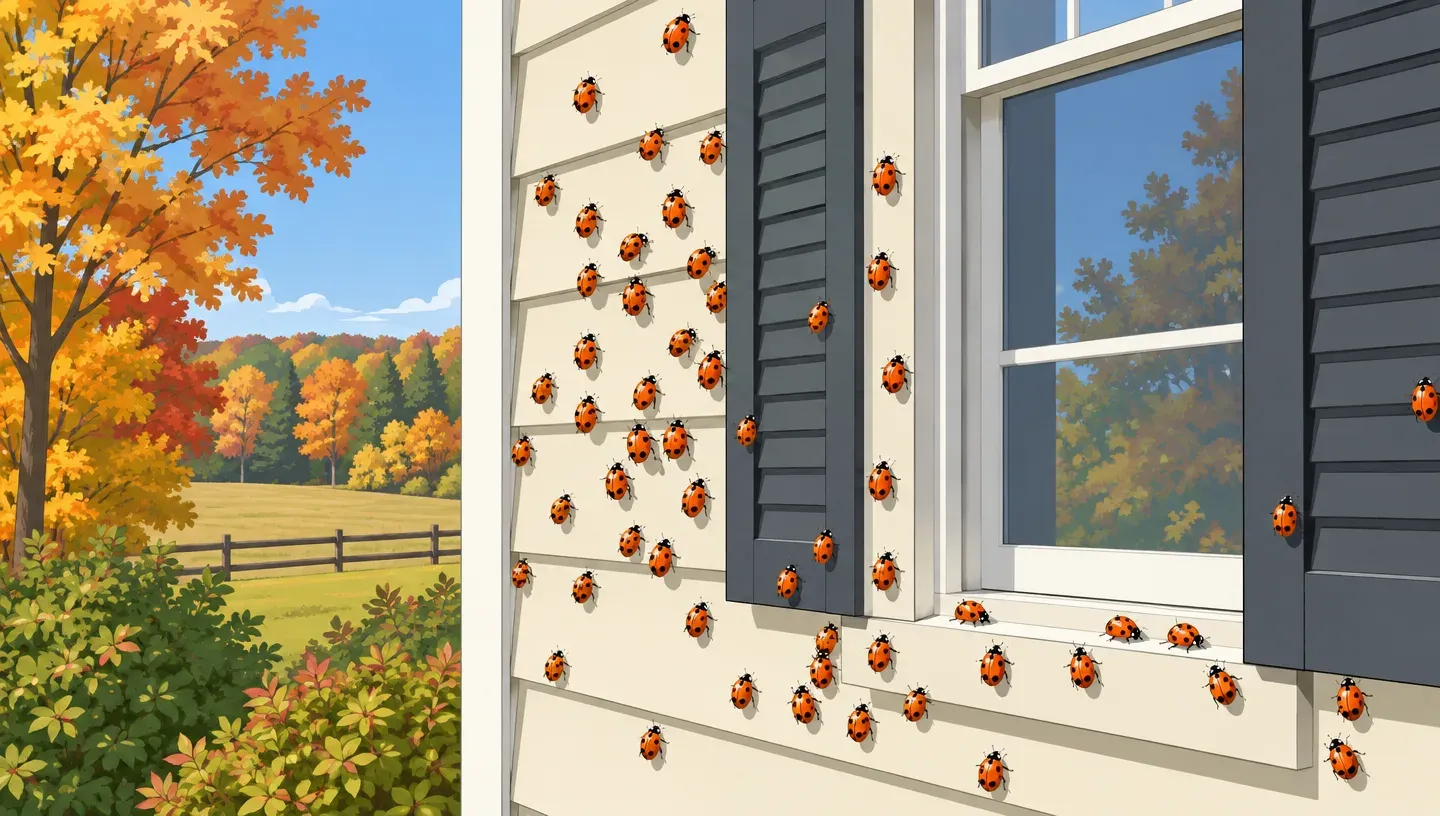
Illustration: Asian lady beetles gathering on a sunny wall with contrasting shutters in fall.
How to get rid of ladybugs in your house: vacuum them up with a knee-high stocking in the hose so they don’t stain or stink, and seal the cracks around windows, doors, siding and attic vents before they arrive next fall. Indoor sprays don’t help. They’re under control when you only see a few stragglers on sunny days.
Cost: about $15 in supplies. Difficulty: easy. Call a pro if the gaps they use are high on the house where you can’t reach safely, or you want an exterior insecticide band applied in late September before they arrive.
This page covers how to tell Asian lady beetles from native ladybugs, why they pick your house, the three steps (vacuum, attic light trap, seal), sprays, bites and the roughly $15 in supplies. We haven’t tested these methods ourselves; this rests on University of Kentucky and University of Minnesota Extension guidance, plus store list prices.
Found a swarm of ladybugs tonight? Don’t sweep or squash them; they release a yellow, smelly fluid that stains. Vacuum them with a stocking in the hose (Step 1), tie it off and throw it out. They don’t breed indoors, so this is a cleanup, not an infestation that grows.
What Works and What Doesn’t Against Asian Lady Beetles
A vacuum and a caulk gun do almost all the work; indoor sprays, crushing and “ladybug houses” don’t.
| Method | Works? | Cost | Main limitation |
|---|---|---|---|
| Vacuum with a stocking in the hose | Yes, for beetles already inside | A stocking from your drawer | Repeat every few days while they’re active. |
| Caulk cracks around windows and trim | Yes, the most permanent fix | $4.99 for a 2.8 oz tube | Has to be done in late spring or summer, and won’t stop every beetle. |
| Door sweeps and vent screens | Yes | $10.43 for a 36-in. sweep | High gaps under siding or soffits need a ladder or a pro. |
| Light trap | Only in attics | — | Catches relatively few beetles in living spaces. |
| Exterior insecticide band | Partly, if applied before arrival | — | Works only late September to early October; most people hire an exterminator. |
| Indoor sprays, foggers, bug bombs | No | — | Tend to be ineffective and can stain surfaces. |
| Sweeping or crushing | No | Free | Releases a yellow fluid that stains and smells. |
| “Ladybug houses” | No | — | No effect on keeping beetles out of your home. |
Ladybugs or Asian Lady Beetles?
The “ladybugs” swarming a house in fall are almost always multicolored Asian lady beetles, a species brought from Asia that ranges from tan to orange to red, with a small dark M- or W-shaped mark on the white area behind the head (University of Kentucky). Native ladybugs normally live outdoors and feed on plant pests; our Asian lady beetle vs. ladybug page shows the differences side by side.
Why Are There So Many Ladybugs in My House?
They’re looking for a place to spend the winter. From late September to late October, on sunny afternoons after a cool spell, they fly to buildings once temperatures climb back above about 65°F (University of Minnesota Extension). They pick:
- Sunny walls. They gather on the south and west sides of buildings that get afternoon sun (University of Kentucky).
- Contrast. Dark shutters on a light house, light trim around windows, and gutters on contrasting siding draw them in.
- Houses near woods or fields. These get more than houses in open areas.
- Gaps. They squeeze through openings as small as 1/8 inch into wall voids, attics and soffits.
Then on warm winter and spring days they wake up, head toward light and end up on your windows and ceilings. They don’t breed indoors: every beetle you see in winter or spring got in the fall before (University of Minnesota Extension). They don’t eat wood, food or fabric, and none of it means your house is dirty.
Step 1: Vacuum Them Into a Stocking
Vacuum, don’t sweep: a broom is more likely to cause staining (University of Kentucky).
Stuff a knee-high nylon stocking into the vacuum’s extension hose and fold the top over the end, held with a rubber band. The beetles collect in the stocking instead of the bag (University of Minnesota Extension).
Vacuum the clusters on windowsills, ceilings, light fixtures and corners.
Pull out the stocking, close it with the rubber band and throw it away, or empty it and reuse it. No stocking? Change the vacuum bag often so they don’t crawl out or leave a smell.
Repeat every few days while they’re active. On cold days they hide again; on the next sunny day more come out.
Step 2: Light Traps for the Attic
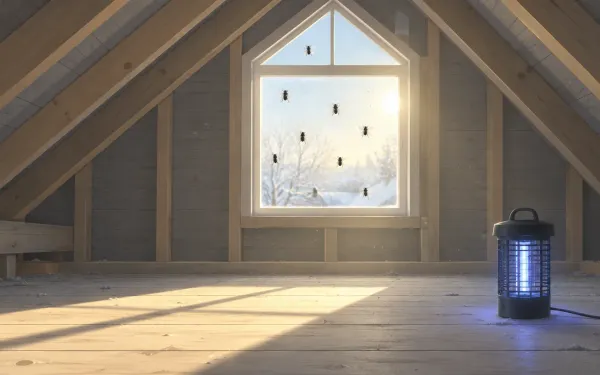
Use a light trap in the attic, not the living room. Lady beetles are drawn to light, and a trap can help in dark, closed spaces like attics, but the University of Kentucky says it catches relatively few beetles in living spaces.
Step 3: Seal Cracks Before Next Fall
Sealing is the most permanent fix, and the time to do it is late spring or summer, before they fly to the house (University of Kentucky). Start with the sunny south and west sides.
- Caulk cracks around windows, doors, fascia boards and where different materials meet, such as brick and wood siding. University of Minnesota Extension suggests silicone, elastomeric latex or silicone/acrylic caulk.
- Seal where utilities enter: cable and phone lines, pipes, outdoor faucets and dryer vents. Bigger gaps take spray foam, steel wool or copper mesh.
- Screen attic, roof and soffit vents, and repair screens in bathroom and kitchen fans.
- Install door sweeps or thresholds on exterior doors, and a rubber seal along the bottom of the garage door.
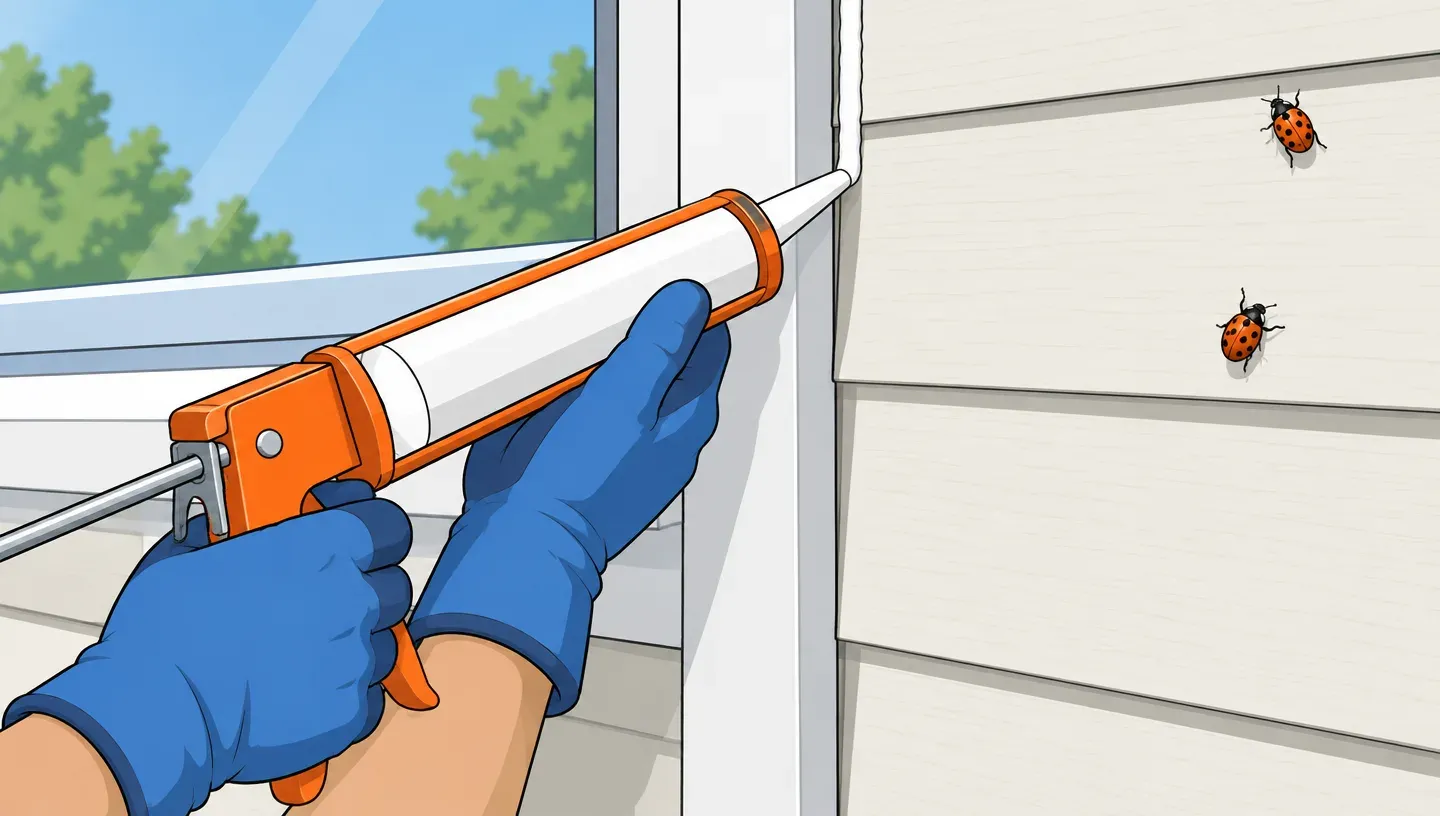
Illustration: caulking the trim of a sunny, south-facing window before next fall.
Sealing won’t stop every beetle, but it cuts the number that get in, and it also keeps out stink bugs, flies and spiders.
Do Ladybug Sprays Work?
Not indoors. The University of Kentucky says foggers, bug bombs and indoor sprays are generally not recommended: they tend to be ineffective and can stain surfaces. Beetles already in wall voids will come out in winter or spring no matter what you spray.
Outdoors, an insecticide band around windows, doors, eaves and vents can reduce entry if it goes on before they arrive, typically late September to early October (University of Minnesota Extension). It does nothing in late winter or spring, because the beetles got in the fall before. Most people hire a pest control company for this; if you do it yourself, the label must list the surfaces you’re spraying.
Skip “ladybug houses.” They have no effect on keeping beetles out of your home (University of Kentucky).
Do Asian Lady Beetles Bite?
Sometimes. They have chewing mouthparts, and when they land on skin they can give a pinch that feels like a pinprick and is seldom serious (University of Kentucky); some bite hard enough to break the skin briefly (University of Minnesota Extension). They don’t spread disease.
The bigger issue is allergies: dead beetles indoors can trigger allergic reactions in some people, from eye irritation to asthma. Wash your hands after handling them, don’t rub your eyes, and see a doctor if you suspect an allergy. Not sure what bit you? See our bug bites guide.
Which Plan Fits Your Situation
| Situation | What to do | Why |
|---|---|---|
| You rent | Vacuum inside; ask the landlord in writing, with photos, to seal gaps and fix torn screens | Exterior caulking and screens are usually the building’s job. |
| Someone has allergies or asthma | Vacuum dead beetles off sills too, and wash hands after handling them | Dead beetles indoors can trigger reactions from eye irritation to asthma. |
| Kids or pets at home | Vacuum instead of indoor sprays or bug bombs | Indoor sprays are generally not recommended and can stain. |
| Beetles pouring out of the attic | Light trap in the attic, then screen the attic and soffit vents | Light traps only pull their weight in dark, closed spaces. |
| A swarm on the windows right now | Stocking vacuum every few days; seal next summer | They don’t breed indoors, so the number won’t grow. |
| Huge numbers every year, or high gaps | A pro for high sealing or a late-September exterior band (cost compared) | The band must go on before they arrive, and high gaps aren’t safe from a ladder. |
What It Might Still Cost
| Item | Price |
|---|---|
| 100% silicone caulk, 2.8 oz tube | $4.99 |
| Aluminum door sweep, 36 in. | $10.43 |
| Knee-high nylon stocking | From your drawer |
| DIY total | About $15 |
Caulk: Target list price, October 2, 2026. Door sweep: Home Depot list price (Frost King A59/36H), October 2026. Before tax; assumes you own a vacuum and caulk gun.
Before You Start: A Quick Checklist
- Look for the M-shaped mark behind the head to confirm Asian lady beetles.
- Put a stocking in the vacuum hose, not a broom in your hand.
- Vacuum every few days while they’re coming out on sunny days.
- Skip foggers and indoor sprays; they stain and don’t reach the wall voids.
- Mark the gaps on the sunny south and west walls now.
- Caulk and screen in late spring or summer, before late September.
When to Call a Pro
Usually you don’t need one: vacuuming and sealing handle most homes. Consider a pro when:
- The gaps they use are high on the house, under siding or around soffits you can’t reach safely from the ground.
- Huge numbers return every year and you want an exterior insecticide band applied in late September.
Book the band for late September, not when you first see beetles inside: by then they’re already in the walls, and spraying does nothing until next fall.
Other Fall Invaders
The same cracks let in other bugs looking for a winter home. If you’re seeing these too:
- Boxelder bugs: black and red-orange bugs on sunny walls near boxelder or maple trees.
- Clover mites: tiny red specks on windowsills that leave red smears when crushed.
- Cluster flies: sluggish flies buzzing at attic and upstairs windows.
- Stink bugs: brown, shield-shaped bugs that smell when disturbed.
Common questions
Many do. Most beetles that crawl into cracks die quickly, and others survive in wall voids and attics until spring (University of Minnesota Extension); the University of Kentucky notes survival is better in protected spots with enough moisture. Dead beetles left on sills can trigger allergies, so vacuum them up too.
Native ladybugs eat aphids in the garden, and Asian lady beetles do the same outdoors. Inside, they’re just a nuisance. Carry a few out to the garden if you like; the rest go in the vacuum.
The Bottom Line
Vacuum Asian lady beetles into a stocking instead of crushing them, and skip indoor sprays. The lasting fix is about $15 of caulk and a door sweep on the sunny walls, done in summer before they return in late September.
Sources and further reading · 3
- University of Kentucky Entomology: Asian Lady Beetle Infestation of Structures (ENTFACT-416), revised 3/26 — identification, why they choose sunny, contrasting walls, no indoor reproduction, bites, allergies, vacuuming, sealing, sprays, light traps.
- University of Minnesota Extension: Multicolored Asian Lady Beetles — timing, 1/8-inch gaps, caulk types, stocking method, exterior barrier timing.
- Prices: Target (silicone caulk) and Home Depot (Frost King door sweep).