Small White Worms in the House: What Are They?
Small white worms in the house are almost always insect larvae, not true worms, and where you found them is the best clue to which kind.
Difficulty: easy. Call a pro if maggots keep turning up with no trash, food or pet waste to explain them (possibly a dead animal in a wall or crawl space), or flea larvae keep appearing after every pet is treated and you’ve vacuumed for four weeks.
Find your spot:
- In flour, cereal or nuts: pantry moth larvae.
- Near the trash or spoiled food: fly maggots.
- In a sink, tub or floor drain: drain fly larvae.
- In houseplant soil: fungus gnat larvae.
- In carpet or a pet bed: flea larvae.
- On wool, fur or felt: clothes moth larvae.
Are they dangerous? Usually not to you directly; none of these bites people. But each one means something is breeding in your food, trash, drain, soil, carpet or closet, and it won’t stop until you clear that spot. Real photos and the fix for each are below.
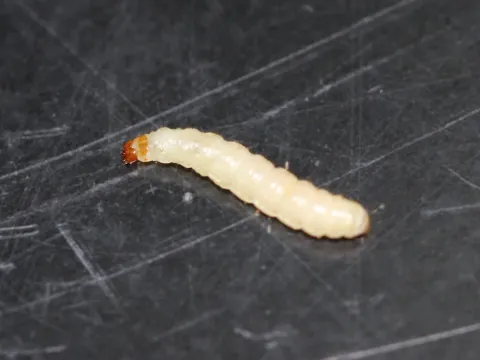 Pantry moth larvaUp to 1/2 inch; webbing in food.
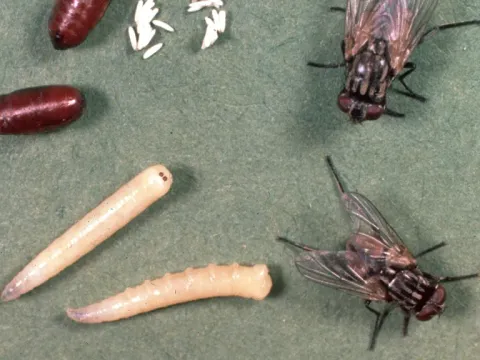 Fly maggotsCream-colored, pointed at the head.
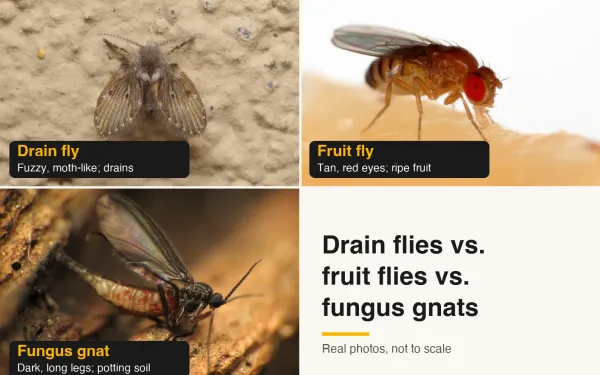
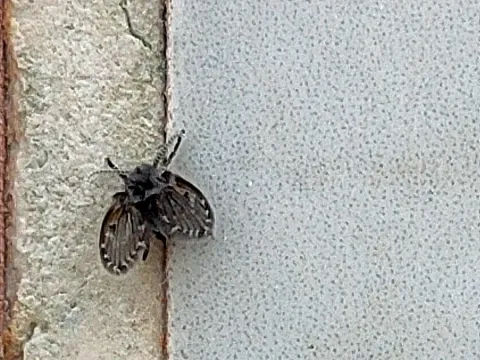 Drain fly (adult)Its larvae live in drain slime.
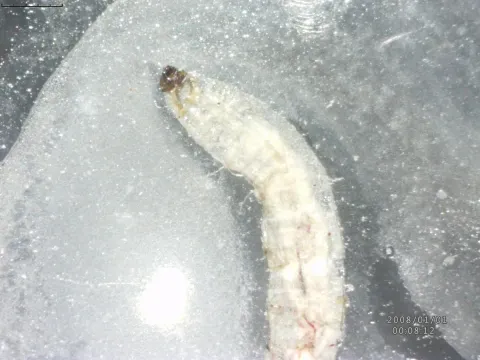 Fungus gnat larvaClear body, shiny black head.
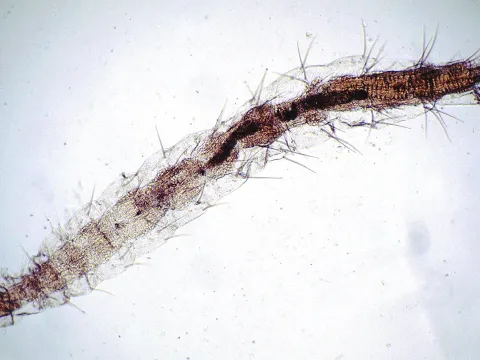 Flea larvaUp to 3/16 inch; hairy.
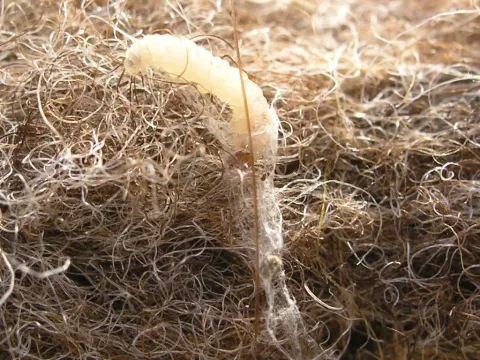 Clothes moth larvaUp to 1/2 inch; silk tubes on wool.
The drain fly card shows the adult, the fuzzy moth-like fly you’ll see on the bathroom wall; the larvae stay inside the drain.
Small White Worms by Where You Found Them
| Where | Likely larva | Looks like | Size |
|---|---|---|---|
| Flour, cereal, nuts | Pantry moth | White with a greenish or pinkish tint; silk webbing in the food | Up to 1/2 inch |
| Trash, spoiled food | House fly (maggot) | Cream-colored, blunt rear, tapering to a point at the head | Grows in 3 stages |
| Sink, tub or floor drain | Drain fly | Legless; pale in the middle, darker at the ends | About 3/8 inch |
| Houseplant soil | Fungus gnat | Clear to whitish and legless, with a shiny black head | Tiny |
| Carpet, pet bed | Flea | Hairy and wormlike, brownish head, no legs or eyes | Up to 3/16 inch |
| Wool, fur, felt, feathers | Clothes moth | Creamy-white caterpillar, silk tubes or a case | Up to 1/2 inch |
Sources: UC IPM (pantry pests, flies, fungus gnats, fleas), Texas A&M AgriLife (drain flies), University of Kentucky (clothes moths).
Not worm-shaped? Tiny white specks that crawl are usually mites, booklice or springtails; see tiny white bugs. For eggs and egg cases, see bug eggs and larvae. Hairy, brown, striped “worms” are carpet beetle larvae.
Pantry Moth Larvae: White Worms in Flour or Cereal
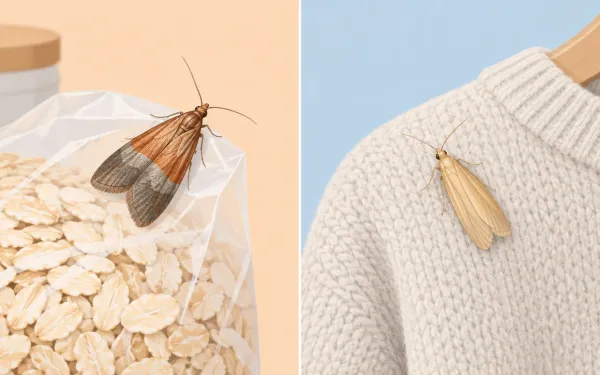
- Look: about 1/2 inch when grown, white with a greenish or pinkish hue (UC IPM, Indian meal moth).
- Clue: they spin webbing as they grow and leave silken threads wherever they crawl (UC IPM).
- Also in pantries: flour beetle larvae, about 3/16 inch, white tinged with yellow (UC IPM).
- Dangerous? They don’t bite, but don’t eat infested food: UC IPM says pantry pests can bring in microbes that may produce mycotoxins.
What to do: throw out infested packages, vacuum the shelves and store dry food in sealed containers. Full plan: how to get rid of pantry moths.
Maggots: White Worms Near the Trash
- Look: cream-colored, with a blunt rear end, tapering to a point at the head (UC IPM, house fly).
- Where they grow: warm, moist organic matter such as garbage, decaying fruit and vegetables, lawn clippings and pet waste (UC IPM).
- Why they’re on the floor: older larvae leave the garbage to find a drier, cooler spot to turn into pupae (UC IPM). Maggots crawling across the kitchen floor usually came from the bin.
- How fast: in summer, house flies can go from egg to adult in as little as 7 days (UC IPM).
What to do: bag trash tightly, empty and wash the bin, and pick up pet waste outdoors. If maggots keep turning up with no trash or food nearby, look for a dead animal (see the call-a-pro note below). More in how to get rid of flies in the house.
Drain Fly Larvae: White Worms in the Bathroom
- Look: small (about 3/8 inch), legless, pale in the middle and darker at the ends (Texas A&M AgriLife); the University of Kentucky calls them gray and wriggling.
- Where: in the slime layer inside sink, tub, shower and floor drains (Texas A&M AgriLife).
- Dangerous? No. The adults are fuzzy, moth-like flies that can’t bite (Texas A&M AgriLife).
What to do: scrub the slime out of the drain with a stiff, long-handled brush and flush with boiling water; bleach adds no benefit (Texas A&M AgriLife). See how to get rid of drain flies, and if you’re not sure which small fly you have, drain flies vs. fruit flies.
Fungus Gnat Larvae: White Worms in Plant Soil
- Look: an elongated, whitish-to-clear, legless body with a shiny black head (UC IPM).
- Where: the top of wet potting soil; also compost and mulch (UC IPM).
- Check: push a chunk of raw potato, cut side down, into the soil and lift it after a few days (UC IPM).
What to do: let the soil dry out between waterings; the larvae don’t survive dry conditions (Texas A&M AgriLife). Full plan: how to get rid of fungus gnats.
Flea Larvae: White Worms in Carpet or Pet Beds
- Look: up to 3/16 inch, hairy and wormlike, with a brownish head and no eyes or legs (UC IPM).
- Where: carpet and pet bedding, where they eat flea dirt, the adults’ droppings (University of Kentucky).
- Dangerous? The larvae don’t bite, but they become adult fleas that do.
What to do: treat every pet with a product your veterinarian recommends and vacuum often. See what do fleas look like and how to get rid of fleas.
Clothes Moth Larvae: White Worms on Wool
- Look: creamy-white caterpillars up to 1/2 inch long (University of Kentucky).
- Clue: webbing clothes moth larvae spin silken tubes or patches of webbing; the casemaking clothes moth carries an open-ended case (University of Kentucky).
- What they eat: only animal fibers: wool, fur, silk, feathers, felt and leather (University of Kentucky).
What to do: wash, dry-clean or freeze infested items and vacuum closet floors and edges. Full plan: how to get rid of clothes moths, or compare with pantry moths vs. clothes moths.
Still Not Sure What It Is?
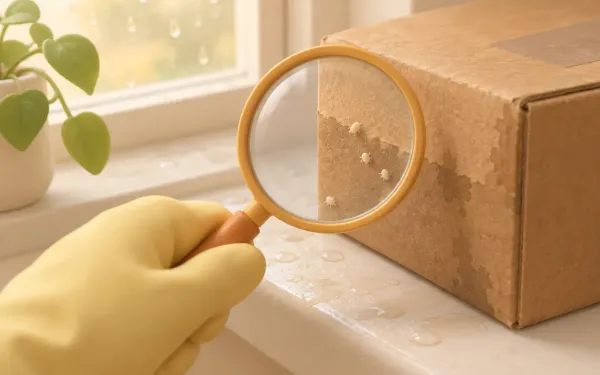
Lift one onto clear tape and look with a magnifier, then compare it with the photos above, and note where you found it; that’s usually the deciding clue. You can also identify it from a photo with our free bug identifier, or take the tape to your county extension office.
Common questions
Most likely drain fly larvae, living in the slime inside a sink, tub or floor drain (Texas A&M AgriLife). If they’re on the floor near a trash can, they’re more likely fly maggots that crawled out of it.
Older house fly larvae leave the garbage to find a drier spot to pupate (UC IPM), so they wander away from the bin. Clean the bin and the area under it.
Usually not to you directly: none of the six larvae here bites people. The risks are indirect: spoiled food, damaged wool, and fleas that will bite once the larvae grow up.
In a pet’s bed, white worms are most likely flea larvae. In your own bed, check the mattress seams: flat, oval, pale bugs there may be bed bug nymphs, which aren’t worm-shaped; see bed bug eggs.
Sources and further reading · 8
- UC IPM: Pantry Pests: Indian meal moth larva size, color and webbing; flour beetle larvae; microbes and mycotoxins.
- UC IPM: Flies (Pest Note 7457): house fly larvae, where they develop, leaving to pupate, egg to adult in 7 days.
- Texas A&M AgriLife Extension: Drain Flies (E-184): drain fly larvae, can’t bite, brush and boiling water, fungus gnat larvae and dry soil.
- University of Kentucky: Drain Flies or Moth Flies (EF615): gray, wriggling larvae.
- UC IPM: Fungus Gnats: larva description, breeding sites, potato test.
- UC IPM: Fleas: flea larva description.
- University of Kentucky: Fleas (EF602): larvae in carpet and pet bedding, feeding on flea dirt.
- University of Kentucky: Clothes Moths (EF609): larva size and color, silk tubes and cases, animal fibers.