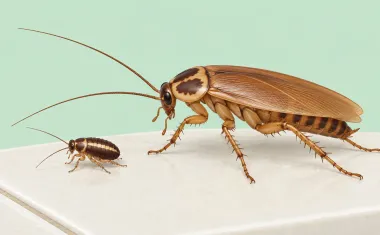
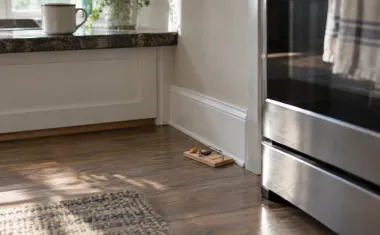
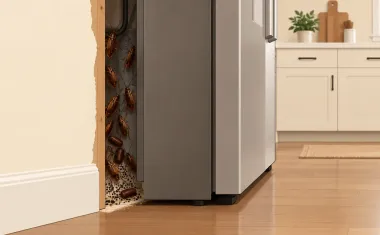
A baby cockroach is a wingless nymph, 1/8 to 9/16 inch, usually dark with a pale stripe down its back. It usually means roaches are breeding indoors. Confirm with $10–20 of sticky traps, then bait.
There is no official 5-day mouse rule. The CDC says the rodents are gone when a full week passes with no catches and no new signs, and to keep checking traps for at least 15 days.
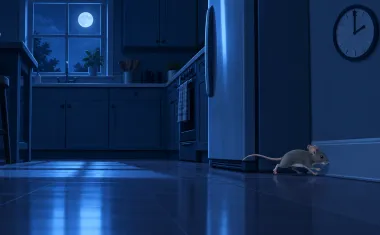
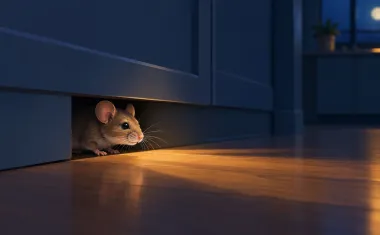
Mostly, yes: house mice peak after dusk and again before dawn, and rats come out at dusk. Set traps before dark and check them each morning. What a daytime sighting means.
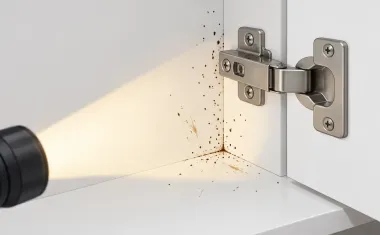
Cockroach poop is pepper-like specks from small roaches or ¼-inch dark pellets with flat ends and ridges from big ones. Wipe it up with hot soapy water, then set sticky traps to see if roaches are still active.
Don’t sweep or vacuum. Air the room 30 minutes, glove up, soak droppings with 1.5 cups of bleach per gallon of water, wait 5 minutes, wipe, bag. About $15 in supplies.
Often, but not always: one mouse can wander in alone. Fresh droppings, flour-patch tracks and 12–24 snap traps (about $14–27) show how many you really have.
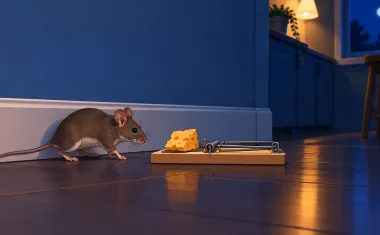
Most mouse traps fail because of setup: too much bait, a stiff trigger, traps away from the wall, too few traps or easier food nearby. Fix those, then pair traps where droppings are.
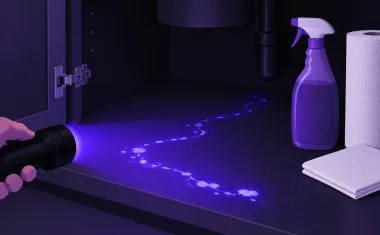
Mouse urine smells musky and ammonia-like. Find it in cabinets and along baseboards, soak it with disinfectant, wipe it up and never vacuum. About $15 in gloves and bleach.
Pantry moths are about twice as long, gray and copper, and fly around the kitchen. Clothes moths are tiny, plain gold and hide near wool. Each lure attracts only its own kind, so buy one $10 pack of the right trap.
Pepper-like droppings, egg cases, shed skins, a strong odor and roaches out in daylight. One adult on a sticky trap usually means a newcomer; nymphs of several sizes mean an established infestation.
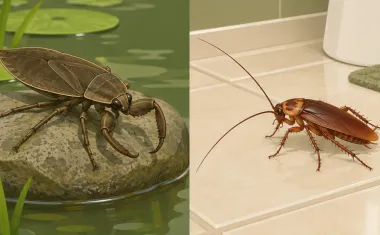
Most "water bugs" in a house are oriental or American cockroaches from drains and damp basements. A true water bug lives in ponds, has pincer-like front legs and tiny antennae, and doesn’t breed indoors.
Mice sound like light scratching, scurrying and gnawing in walls and ceilings at night, with the odd high squeak. Rats are louder. Confirm with droppings, then trap nearby.